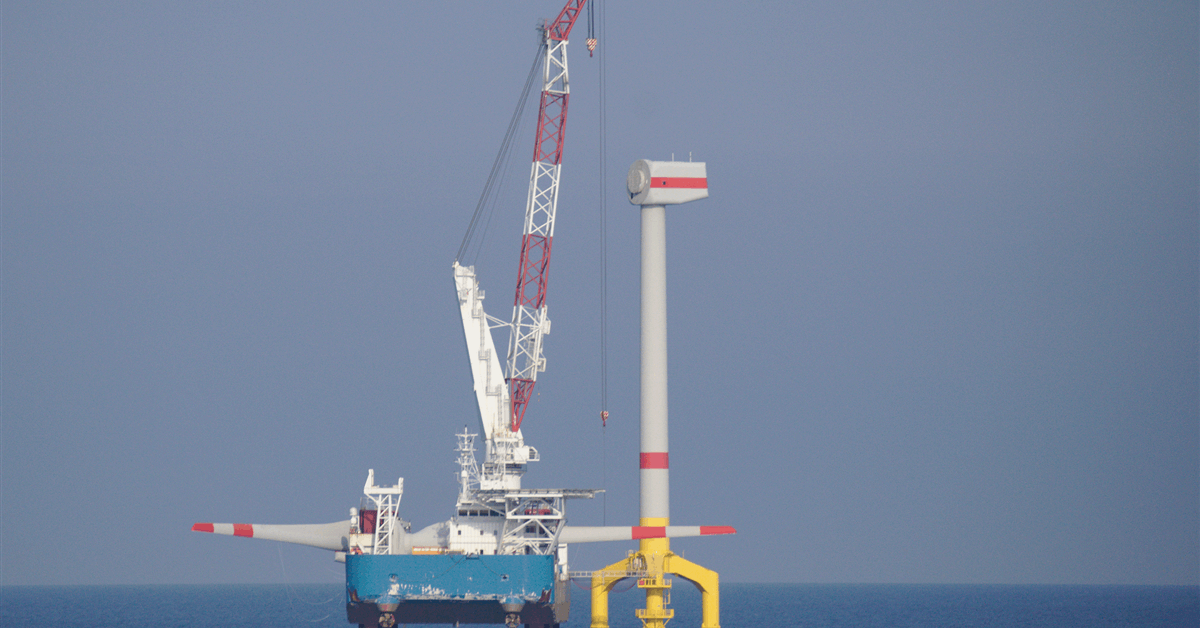
The strategic energy landscape in Europe continues its dramatic recalibration, underscored by significant strides in offshore wind development. A landmark moment has just been achieved in Polish waters, where Orlen Group and Northland Power have successfully installed the inaugural 15-megawatt wind turbine for their Baltic Power project. This milestone represents more than just a construction update; it signals a profound shift in national energy policy and offers critical insights for investors navigating the evolving energy matrix. As Poland moves decisively to diversify its power generation and bolster energy security, the implications for traditional fossil fuel investments and the burgeoning renewables sector are substantial.
The Polish Energy Pivot: Strategic Resilience Through Offshore Wind
Poland’s commitment to energy independence and decarbonization is crystallizing with the Baltic Power project. The completion of the first of these colossal 15-megawatt wind turbines, the largest offshore units installed in Europe to date, marks a pivotal phase in a venture designed to reshape the nation’s energy future. Orlen’s leadership has explicitly framed this initiative as a crucial step towards enhancing long-term energy resilience, particularly vital in the current geopolitical climate. By 2026, the Baltic Power offshore wind farm is projected to meet up to three percent of Poland’s total electricity demand, a significant contribution towards reducing reliance on imported fossil fuels. This project not only delivers tangible power generation capacity but also cultivates invaluable domestic expertise, paving the way for Orlen’s ambitious plan to develop an additional 5.5 gigawatts of offshore wind capacity in partnership with other entities. For investors, this signals a clear strategic pivot by a major European energy player, indicating robust capital allocation towards renewable assets and a long-term commitment to a diversified energy portfolio.
Market Dynamics: Navigating Crude Volatility Amidst Renewable Ascent
While the long-term energy transition gains momentum with projects like Baltic Power, the immediate investment horizon remains heavily influenced by the dynamics of the crude market. As of today, Brent crude trades at $94.93, a relatively stable daily performance following a notable descent from $102.22 just three weeks ago. WTI crude similarly hovers around $91.39. This recent softening in crude prices, representing an approximate 8.8% decline in Brent over the past 14 days, provides a stark contrast to the sustained investment in renewables. Investors are keenly focused on understanding these short-term price fluctuations, with our reader intent data showing a strong demand for base-case Brent price forecasts for the next quarter and consensus outlooks for 2026. The coming days will be critical for crude price discovery, particularly with the OPEC+ Joint Ministerial Monitoring Committee (JMMC) meeting scheduled for April 18, followed by the full Ministerial Meeting on April 20. These events are poised to dictate near-term supply strategies and, consequently, global oil benchmarks, influencing the broader capital allocation decisions across the energy spectrum.
Technological Leadership and Local Content: De-risking Offshore Wind Investments
The Baltic Power project is not merely about scale; it’s a testament to cutting-edge technology and strategic supply chain localization, factors that significantly de-risk large-scale renewable investments. Each turbine tower, exceeding 120 meters in height, forms part of a massive structure reaching 250 meters including foundations, demonstrating the immense engineering capabilities deployed. Notably, some of these towers are constructed from recycled steel, a pioneering move in wind farm development that speaks to both environmental commitment and potentially optimized material sourcing. The manufacturing process itself highlights a robust local content strategy, with many components, including portions of the nacelles, produced in Poland at a new Vestas plant in Szczecin. This localization extends to offshore substation topsides, onshore cables, and foundation elements. For investors, this emphasis on domestic manufacturing and advanced technology mitigates supply chain vulnerabilities, reduces logistical complexities, and fosters local economic benefits, all crucial elements in evaluating the long-term viability and profitability of such monumental infrastructure projects. The sheer logistical challenge, requiring up to 15 specialized vessels like the upgraded jack-up Wind Osprey, further underscores the high barriers to entry and the specialized expertise commanding this sector.
Forward Outlook: Project Milestones and Global Energy Influences
Looking ahead, the Baltic Power project’s full operational commissioning is anticipated in 2026, marking a pivotal moment when it will begin supplying electricity to Poland’s grid. The ongoing installation of monopiles, transition pieces, and the forthcoming deployment of inter-array and export cables are critical near-term milestones that will continue to demonstrate execution capabilities. As this ambitious project progresses, the broader energy investment landscape will remain influenced by a confluence of factors. While the immediate focus for oil & gas investors will be on the outcomes of the upcoming OPEC+ meetings and the weekly EIA and API crude inventory reports on April 21, 22, 28, and 29, the success of ventures like Baltic Power provides a powerful counter-narrative. The continued expansion of offshore wind, with Orlen’s 5.5 gigawatt pipeline, signifies a long-term structural shift in energy demand and supply. Smart investors will monitor both the daily movements in crude and the steady, strategic build-out of renewable capacity, understanding that the future of energy investing lies in adeptly navigating these converging and diverging trends. The expertise gained from Baltic Power is poised to drive subsequent projects, cementing Poland’s role as a key player in Europe’s green energy transition and creating new avenues for capital deployment.


