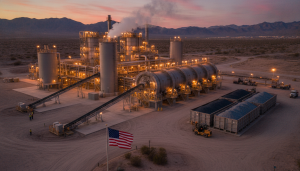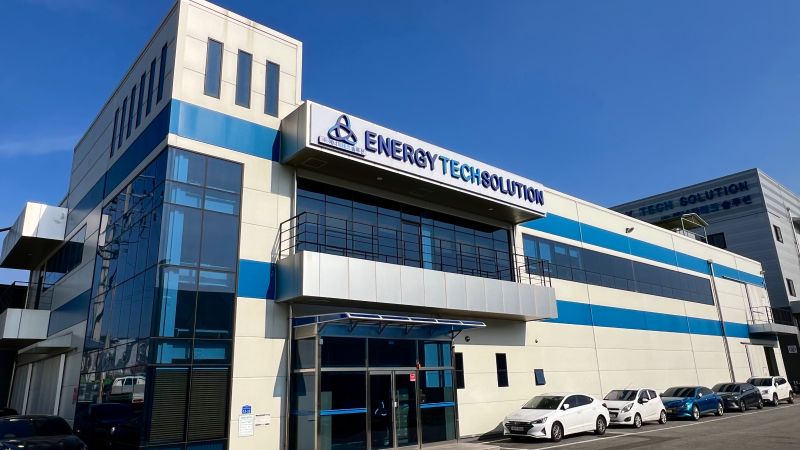
The energy investment landscape is in constant flux, a reality underscored by today’s market movements and the strategic shifts unfolding across the globe. While traditional oil and gas markets grapple with immediate volatility, a critical development in domestic battery manufacturing signals long-term strategic adjustments for investors. A South Korea-based battery factory equipment manufacturer, Energy Tech Solution (ETS), has announced the launch of a ‘Made in America Cell Foundry’ in Michigan. This initiative aims to accelerate commercialization for North American battery startups by offering contract manufacturing services, effectively reducing tariff risks, mitigating hefty capital expenditures, and streamlining the product iteration process. For astute investors, this isn’t just news about batteries; it’s a significant indicator of the evolving energy transition and the strategic pivots required in portfolio management.
The ‘Made in America’ Imperative and Investment Implications
The establishment of a domestic battery cell foundry marks a pivotal moment for US energy independence and supply chain resilience. Historically, American battery innovators seeking comprehensive manufacturing support faced a binary choice: offshore production or rely on domestic research labs with limited capacity. ETS’s Michigan facility fills this critical void, providing end-to-end contract manufacturing for cylindrical, prismatic, and pouch cell formats. This “Made in America” approach significantly de-risks early-stage battery ventures by localizing production, which can shield them from escalating geopolitical trade tensions and tariff volatility. For investors backing these startups, or even those assessing the broader clean energy sector, this means a faster, more secure path to market for innovative battery technologies. Reducing the procurement headaches, equipment downtime, and scrap rates that typically plague early-stage manufacturing operations translates directly into preserved capital and an accelerated timeline for commercial traction, making these ventures more attractive.
Navigating Volatility: Traditional Oil Markets vs. Future Energy Plays
The immediate backdrop for this strategic energy transition news is a challenging one for conventional energy commodities. As of today, Brent crude trades at $90.38, reflecting a significant daily decline of 9.07%, with its range plummeting from $98.97 to $86.08. West Texas Intermediate (WTI) crude mirrored this downturn, sitting at $82.59, down 9.41% for the day. This sharp correction continues a broader trend, with Brent having fallen from $112.78 just two weeks ago. Such dramatic swings underscore the inherent volatility in the global oil market, driven by a complex interplay of supply, demand, and geopolitical factors. Investors are keenly watching upcoming events, particularly the OPEC+ Ministerial Meeting scheduled for April 19th, which could dictate near-term supply strategies. Further insights into market fundamentals will emerge from the API Weekly Crude Inventory report on April 21st and the EIA Weekly Petroleum Status Report on April 22nd. While these events will shape short-term price movements, the emergence of robust domestic battery manufacturing capacity points to a longer-term, structural shift. This dichotomy highlights the diverging investment theses: managing immediate O&G market risks versus capitalizing on the foundational growth of new energy paradigms.
Catalyzing Innovation: Risk Mitigation and Scaling for Battery Startups
The value proposition of the Michigan cell foundry for startups is compelling, directly addressing critical pain points that often derail promising technologies. Early-stage battery companies frequently burn substantial capital and time building out pilot production capabilities, often lacking the necessary expertise to operate these assets efficiently. By shifting manufacturing to a specialized contract partner, startups can leverage established infrastructure and deep operational knowledge, receiving battery cells within weeks of providing a written recipe. This fixed-cost contract model allows them to preserve valuable cash, extending their runway and enabling them to focus resources on core R&D and market development. This strategic outsourcing significantly mitigates the technical and financial risks associated with scaling production, thereby making investment in these innovative battery technologies less speculative. Upon achieving commercial success, these companies can then consult with ETS to establish their own dedicated manufacturing facilities, creating a structured pathway from concept to commercial scale.
Strategic Diversification for the Savvy O&G Investor
Given the persistent volatility in traditional oil markets—with investors frequently asking about the trajectory of oil prices into late 2026 and the production quotas set by OPEC+—the strategic importance of energy transition plays becomes increasingly clear. While some investors focus on the performance of specific oil and gas majors like Repsol in the current environment, the domestic battery foundry signals a fundamental shift that warrants attention across all energy portfolios. The acceleration of US battery innovation and production capabilities will inevitably contribute to the electrification of transport and grid storage, gradually eroding demand for fossil fuels over the long term. For oil and gas investors, this development is not necessarily a direct threat but rather a powerful signal for strategic diversification. Integrating exposure to clean energy technologies, battery materials, or companies facilitating this transition can serve as a hedge against the cyclical nature and long-term demand challenges facing conventional energy. The ‘Made in America Cell Foundry’ is more than a manufacturing plant; it’s a tangible step towards a more electrified future, prompting investors to critically evaluate their long-term energy exposure and consider how such foundational developments will reshape their portfolios.