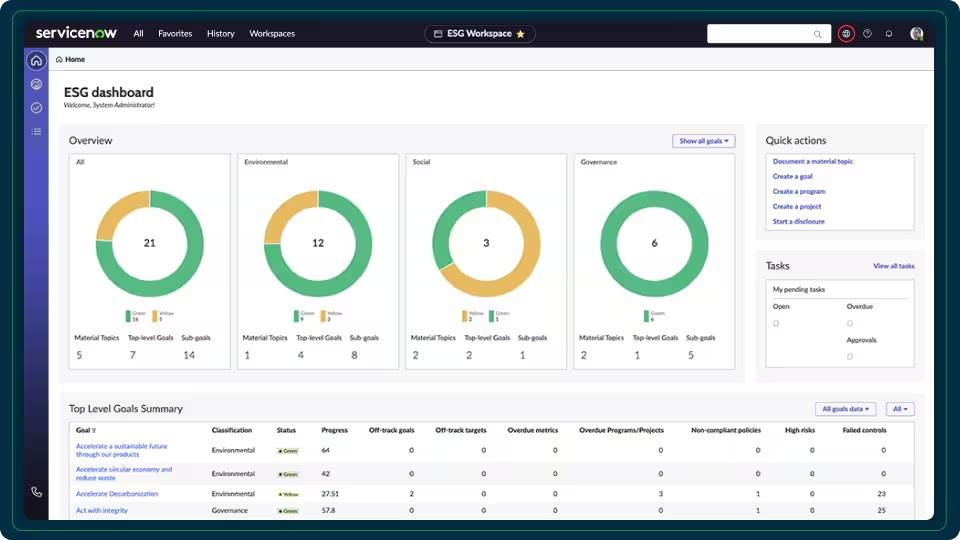
The oil and gas sector continues to navigate a complex investment landscape, characterized by both volatile commodity prices and an ever-intensifying focus on environmental, social, and governance (ESG) performance. In this environment, transparency and robust risk management are no longer just good practice; they are critical drivers of investor confidence and capital allocation. A recent collaboration between digital workflow leader ServiceNow and sustainability tech firm Socialsuite represents a significant step forward, launching an integrated solution designed to help companies, including those in the energy sector, streamline their sustainability and risk management capabilities through advanced AI and software.
The Escalating Demand for O&G ESG Transparency
The imperative for oil and gas companies to demonstrate strong ESG performance is undeniable, driven by a confluence of regulatory mandates and heightened investor scrutiny. New reporting regulations, such as the Corporate Sustainability Reporting Directive (CSRD) and evolving International Financial Reporting Standards (IFRS), demand a more comprehensive and verifiable approach to sustainability disclosures. A key aspect of these regulations is the concept of “double materiality,” which requires companies to assess both the financial impact of sustainability issues on their business and their impact on people and the environment. This represents a significant analytical and reporting challenge for traditionally asset-heavy industries like oil and gas.
Our proprietary reader intent data reveals a consistent investor query: “What data sources are reliable for ESG analysis, and why should I trust specific reporting tools?” This underscores the critical need for solutions that offer verifiable, integrated data streams to build investor confidence. The new ServiceNow-Socialsuite partnership directly addresses this by combining Socialsuite’s AI-powered double materiality and stakeholder engagement platform with ServiceNow’s established enterprise ESG and risk management capabilities. This synergy aims to automate complex sustainability workflows, ensuring compliance with demanding frameworks like CSRD and IFRS, and ultimately providing the robust, auditable data investors increasingly demand.
Automating Compliance: A Strategic Imperative for Operational Efficiency
For oil and gas operators, the administrative burden of ESG reporting can be substantial, diverting resources from core operational activities. The integrated solution from ServiceNow and Socialsuite offers a powerful remedy through automation and unification. By bringing together governance, risk, and compliance (GRC) with sustainability workflows, the platform aims to eliminate silos and reduce manual processing errors. This means O&G firms can more efficiently manage their ESG programs, from initial planning and activation to ongoing management and comprehensive reporting.
The strategic value lies in enhancing operational efficiency while simultaneously de-risking compliance. Automating the collection, analysis, and reporting of sustainability data, especially for complex assessments like double materiality, allows companies to respond more rapidly to regulatory changes and stakeholder requests. This proactive approach not only minimizes the potential for costly fines and reputational damage but also frees up critical internal resources, allowing teams to focus on strategic initiatives rather than administrative overhead. In a sector where margins can be tight and competition fierce, such efficiencies translate directly into improved financial performance and a more attractive investment profile.
Market Volatility Amplifies the Need for Robust ESG Frameworks
The current market environment for oil and gas underscores the critical importance of strong operational and risk management frameworks, including ESG. As of today, Brent crude trades at $98.23 per barrel, marking a 1.17% decline within the day’s range of $97.92-$98.67. WTI crude also saw a dip, resting at $89.93, down 1.36% within its range of $89.57-$90.26. This recent downward pressure continues a noticeable trend, with Brent having shed approximately $14, or 12.4%, from its $112.57 peak just two weeks ago on March 27th. Gasoline prices, while stable today at $3.09, remain a sensitive indicator for consumer demand and economic health.
This significant price volatility in such a short period highlights the inherent risks in the energy sector. In times of market uncertainty, investors increasingly scrutinize non-financial risks, including ESG performance, as indicators of a company’s resilience and long-term viability. Companies with robust, transparent ESG management systems are better positioned to attract and retain capital, even when commodity prices fluctuate. The ability to confidently manage sustainability risks and obligations, as promised by this new integrated solution, becomes a competitive advantage, signaling to the market a commitment to responsible operations and stable governance that can weather economic headwinds.
Proactive Positioning for Future Regulatory Headwinds and Capital Allocation
Looking ahead, the landscape for oil and gas investment will continue to be shaped by both market fundamentals and evolving policy. With critical industry events on the horizon, such as the Baker Hughes Rig Count reports on April 17th and 24th, and the pivotal OPEC+ JMMC and Full Ministerial meetings scheduled for April 18th and 20th, investors are keenly observing signals for market stability and future supply dynamics. Our investor queries frequently touch on “OPEC+ current production quotas” and “the current Brent crude price,” indicating a strong focus on immediate market fundamentals. However, the longer-term capital allocation decisions are increasingly intertwined with verifiable ESG performance.
This new ESG risk tool positions oil and gas companies to proactively adapt to future regulatory shifts rather than reactively scramble. By enabling automated compliance and integrated risk management, firms can demonstrate foresight and adaptability, qualities highly valued by investors seeking sustainable returns. As global energy transitions accelerate, access to capital will increasingly favor companies that can clearly articulate and prove their commitment to sustainability. Tools like the ServiceNow-Socialsuite offering become instrumental in securing competitive financing and attracting a broader pool of ESG-mandated investment, influencing everything from project approvals to M&A valuations.
Maximizing Investor Returns Through Enhanced Risk Mitigation
For investors in the oil and gas sector, the adoption of advanced ESG risk management tools like the ServiceNow and Socialsuite collaboration translates directly into tangible benefits. Enhanced transparency reduces information asymmetry, allowing for more informed investment decisions. Reduced regulatory risk minimizes the potential for fines, legal challenges, and operational disruptions that can erode shareholder value. Moreover, improved ESG performance can lead to a lower cost of capital, as companies become more attractive to a growing cohort of sustainability-focused funds and institutional investors.
Ultimately, a streamlined, intelligent approach to sustainability compliance and risk management is not merely about meeting obligations; it is about unlocking value. Companies that embrace such solutions will likely see improved valuations, better access to capital, and enhanced resilience in the face of an evolving global energy market. In a world where sustainability is increasingly non-negotiable, proactive investment in robust ESG infrastructure provides a crucial competitive edge, protecting and potentially growing investor returns in the long term.


