The $6 Billion AI-Renewables Nexus: A New Headwind for Oil & Gas Investors
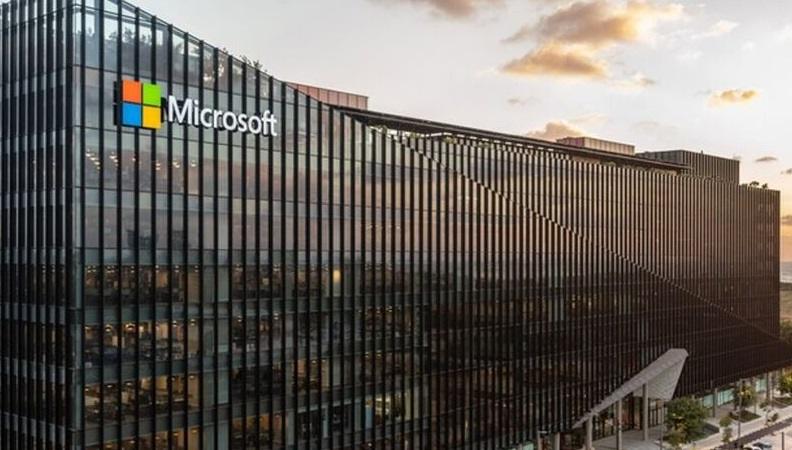
Microsoft’s recent announcement of a $6.2 billion, five-year agreement with Nscale and Aker for a massive renewable-powered AI infrastructure project in Northern Norway isn’t just a tech story; it’s a significant signal for oil and gas investors. This deal, aimed at fueling Europe’s exponentially growing demand for AI compute power entirely with hydropower, underscores a critical shift in how major corporations are addressing their energy needs. For an industry heavily reliant on traditional energy sources, this multi-billion-dollar commitment to green infrastructure for a core business function represents a tangible, long-term demand headwind that warrants close attention from anyone allocating capital in the energy sector.
AI’s Voracious Appetite Meets Green Ambition
The scale of Microsoft’s commitment highlights the immense energy requirements of the artificial intelligence boom. With plans for 100,000 NVIDIA GPUs by the end of 2026 in the “Stargate Norway” project, the associated power draw will be substantial. Microsoft’s strategic choice to source this energy entirely from renewables, leveraging Norway’s abundant hydropower, directly addresses its “moonshot” sustainability goals. While the company has faced challenges in meeting its carbon negative targets by 2030 due to data center expansion, this $6.2 billion investment demonstrates a clear intent to decouple growth in AI infrastructure from an increasing carbon footprint. For oil and gas, this means a significant segment of future industrial energy demand, particularly from the booming tech sector, is being explicitly routed away from fossil fuels. It’s a testament to the growing economic viability and strategic preference for carbon-free solutions in high-growth industries.
Current Market Flux vs. Structural Shifts
Against the backdrop of such long-term strategic energy shifts, the immediate crude oil market presents its own set of dynamics. As of today, Brent Crude trades at $98.17, down 1.23% within a day range of $97.92 to $98.67. WTI Crude follows a similar trajectory at $89.76, down 1.55% for the day. This comes after a notable 14-day trend where Brent shed $14, or 12.4%, falling from $112.57 on March 27 to $98.57 yesterday. Gasoline prices, while less volatile, also reflect a slight dip, trading at $3.08. While these daily and bi-weekly fluctuations are influenced by a myriad of factors from geopolitical tensions to inventory data, the Microsoft deal serves as a stark reminder of the underlying structural changes influencing energy demand. Investors must consider how these green megaprojects, even if their full impact is years away, will gradually erode demand for fossil fuels in sectors previously considered stable growth areas. The declining Brent trend, while influenced by immediate supply/demand balances, also subtly reflects a broader market apprehension regarding future demand profiles.
Investor Focus: Beyond the Immediate Headlines
Our proprietary reader intent data reveals a keen investor focus on market fundamentals and the tools to analyze them. Questions like “What are OPEC+ current production quotas?” and “What is the current Brent crude price and what model powers this response?” dominate investor inquiries this week. This highlights a persistent demand for clarity on immediate supply-side management and accurate price discovery mechanisms. However, while investors rightly scrutinize OPEC+ decisions and daily price movements, the Microsoft deal signals that a parallel evolution is underway. The strategic pivot by a major energy consumer like Microsoft, investing billions into renewable infrastructure for its core growth engine (AI), challenges traditional demand forecasting models. Investors need to integrate these large-scale renewable commitments into their long-term supply/demand equations, understanding that while OPEC+ might manage near-term supply, such significant capital allocation towards green energy chips away at future demand for hydrocarbons, particularly in the industrial and power generation sectors.
Navigating Future Catalysts and Strategic Imperatives
The coming days are packed with traditional energy market catalysts. Investors will be closely watching the OPEC+ Joint Ministerial Monitoring Committee (JMMC) meeting today, April 17th, followed by the full Ministerial Meeting on Saturday, April 18th, for any signals on production policy. Subsequent API and EIA weekly inventory reports on April 21st/22nd and April 28th/29th, alongside Baker Hughes Rig Count updates on April 24th and May 1st, will offer further insights into short-term supply and demand dynamics. However, in the context of Microsoft’s $6.2 billion renewable investment, these immediate events must be viewed through a wider lens. While OPEC+ decisions can move markets by several dollars, projects like “Stargate Norway,” with deployments beginning in 2026, represent billions in capital actively redirecting energy demand. For oil and gas companies, this implies an accelerating need for strategic adaptation. Diversification into carbon capture, hydrogen, or even direct investment in renewable energy for their own operations is becoming less of an option and more of a necessity to remain competitive and attract capital in an increasingly decarbonized global economy. The long-term headwind signaled by this deal is not a sudden storm, but a persistent and strengthening current that will reshape the energy landscape for decades to come.


