The Automation Tsunami: Reshaping Industrial Energy Demand
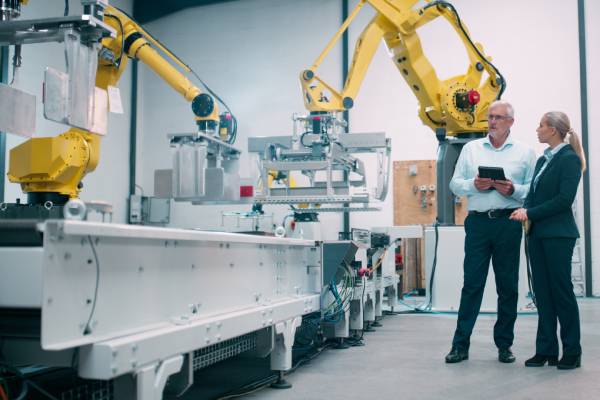
Industrial manufacturing stands on the precipice of a profound transformation, with the share of highly automated processes projected to nearly triple from 18% today to a staggering 50% by 2030. This isn’t merely an incremental shift; it represents a fundamental re-engineering of global production capabilities, with far-reaching implications for energy demand and the strategic positioning of oil and gas assets. This surge in automation, driven by artificial intelligence and advanced robotics, is expected to expand beyond traditional production lines, permeating data capture, analytics, product development, and even after-sales support across the entire value chain.
For investors in the energy sector, this trend signals a sustained and potentially escalating demand for power. Highly automated factories, sophisticated data centers for AI processing, and advanced logistics networks all consume significant amounts of electricity and, by extension, primary energy sources. While individual automated processes might be more efficient, the sheer scale and ubiquity of adoption will create a robust underlying demand floor. Furthermore, the share of company activities relying heavily on advanced technologies is set to soar from 26% to 68% by the end of the decade, highlighting the deep integration of these energy-intensive systems. As of today, Brent Crude trades at $90.38, reflecting recent market dynamics, including a notable 19.9% decline from its March 30th high of $112.78. This short-term volatility underscores a period of market reassessment. However, the long-term energy demand shift from widespread automation could provide a foundational lift, potentially counteracting some of the transient bearish pressures observed in current price trends.
Operational Evolution: O&G’s Own Automation Imperative
The manufacturing sector’s embrace of automation is not an isolated phenomenon; it serves as a powerful harbinger for the oil and gas industry itself. To remain competitive and efficient, O&G companies must mirror this drive towards advanced technological integration. Leading industry analyses identify “future-fit” manufacturers—the fastest-moving and most digitally advanced—who already report 29% highly automated processes, significantly ahead of the 15% seen in other manufacturers. By 2030, this gap is expected to widen further, with future-fit organizations reaching 65% automation compared to 45% for the rest of the sector. This creates a clear mandate for O&G firms: those that strategically invest in automation will extend their operational and cost advantages.
Automation and AI are poised to revolutionize every segment of the oil and gas value chain. In upstream operations, advanced robotics can enhance drilling efficiency, optimize reservoir management, and improve safety in hazardous environments. Midstream logistics can benefit from AI-driven pipeline monitoring, predictive maintenance, and optimized transportation routes. Downstream, refineries can leverage automation for process optimization, reducing downtime and improving yields. Investors frequently inquire about the future trajectory of oil prices, with questions ranging from the near-term direction of WTI to predictions for the price of oil per barrel by the end of 2026. The widespread adoption of automation within the O&G sector itself will be a critical determinant of global supply efficiency, potentially lowering the cost curve for production and influencing long-term price stability. The Baker Hughes Rig Count, released on April 24th and May 1st, offers a snapshot of current drilling activity. However, savvy investors should increasingly look beyond mere rig numbers to metrics like drilling efficiency and the adoption rates of advanced automation technologies within the O&G services sector, as these factors will subtly impact the supply-side dynamics that OPEC+ will deliberate at its Ministerial Meeting on April 25th.
Investor Focus: Navigating the Automated Future
Our proprietary reader intent data reveals a consistent focus on future oil price trajectories and specific company performance, underscoring the market’s quest for clarity amidst evolving demand drivers. Investors are keenly focused on the near-term trajectory of benchmark crudes like WTI, which currently trades at $82.59. The long-term trend for oil prices will be heavily influenced by this automation surge, as the demand for energy to power these increasingly automated processes globally will be a significant factor. For individual companies, such as those within integrated majors or independent producers, their ability to integrate advanced automation and AI into their own operations, as well as their strategic positioning to supply the industrial sector, will be critical. Companies like Repsol, which readers frequently ask about, will need to demonstrate clear strategies for technological adoption to secure their competitive edge and deliver investor value.
This industrial metamorphosis demands a re-evaluation of investment criteria. Investors should scrutinize capital expenditure plans for technology adoption, looking for companies that demonstrate “future-fit” characteristics—those actively investing in and deploying automation across their entire enterprise. This also extends to the refining and petrochemical sectors, where increased industrial output fueled by automation translates directly into higher demand for feedstocks. The expansion of automation beyond production lines into data capture, analytics, and product development (a projected rise from 26% to 68% for advanced tech reliance) means a higher demand for robust digital infrastructure, which O&G companies can either build or leverage. This shift creates new avenues for value creation and new risks for those who lag in adoption.
Strategic Implications for O&G Investment
The tripling of manufacturing automation by 2030 fundamentally alters the investment landscape for oil and gas. Beyond merely supplying the energy for automated factories, O&G companies must also become leaders in automation themselves to maintain efficiency and competitiveness. The stark contrast between “future-fit” organizations aiming for 65% automation by 2030 and the rest of the sector at 45% highlights a growing divergence in operational capability and, consequently, investor attractiveness. This differentiation will become a primary driver of long-term returns in the energy sector.
For portfolio construction, this means prioritizing O&G companies that are not only financially robust but also technologically agile. Look for firms with aggressive digital transformation strategies, significant R&D investments in AI and robotics, and a proven track record of implementing advanced solutions in their exploration, production, processing, and distribution networks. Furthermore, consider the implications for natural gas and refined products. As manufacturing scales up with automation, the demand for stable, reliable energy sources like natural gas for electricity generation will likely increase, alongside specialized petroleum products used in advanced materials and industrial processes. The upcoming API and EIA weekly inventory reports, scheduled for April 21st, 22nd, 28th, and 29th, will offer short-term snapshots of supply-demand balances. However, discerning investors will increasingly view these numbers through the lens of long-term industrial transformation, understanding how burgeoning automation capacities will steadily draw on global energy supplies, shaping demand curves over the coming decade and influencing the fundamental value of energy assets.