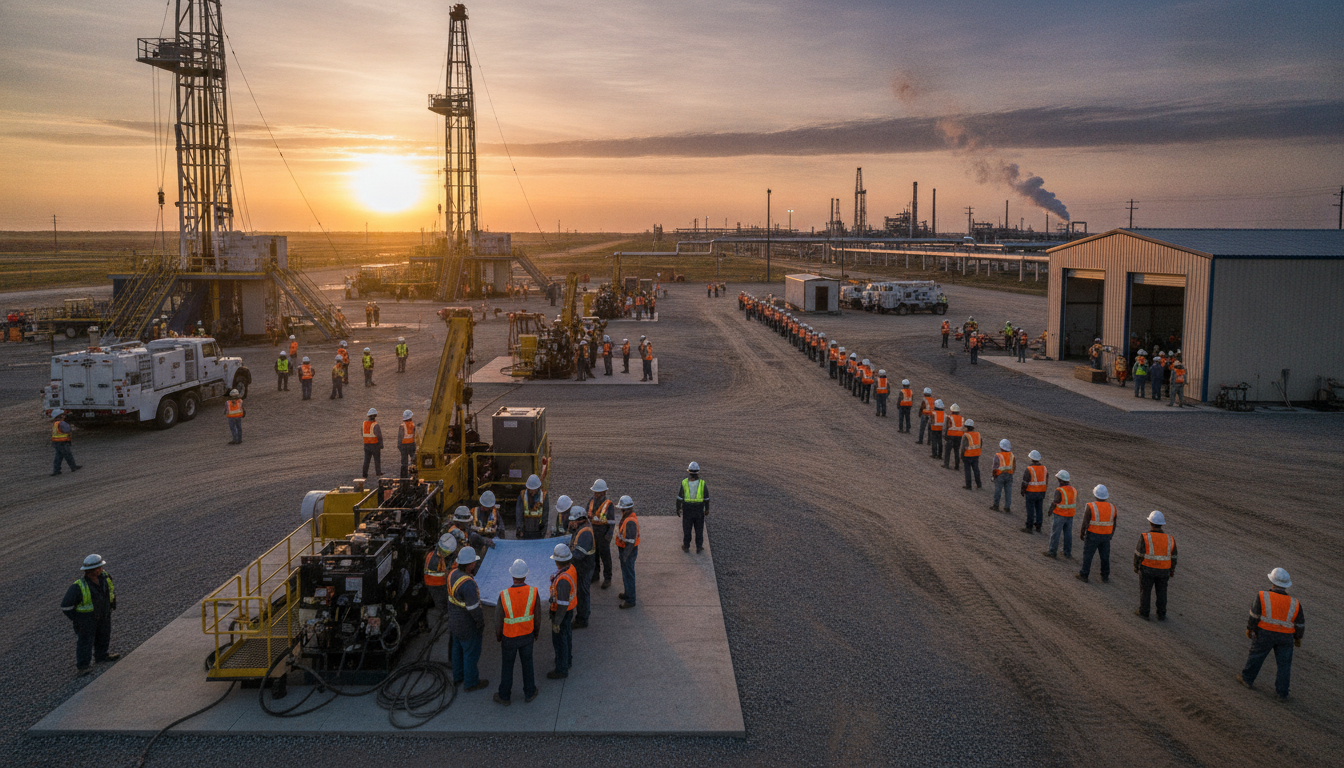
The United States energy services sector is demonstrating a robust, albeit cautious, rebound, with May marking the third consecutive month of significant job creation. This sustained workforce expansion signals improving activity levels across key segments of the industry, offering a critical barometer for investors tracking the health and trajectory of oil and gas operations.
According to the latest industry reports, U.S. energy services employment surged by 3,619 positions in May, pushing the total workforce to 633,115. This upward momentum extends a recovery phase that commenced earlier in the year, providing a clear indication that the sector is recalibrating for sustained operational demand.
A Steady Ascent: Workforce Growth Trajectory
The May employment figures underscore a remarkable turnaround from the sector’s recent low point. After bottoming out at 625,057 jobs in January, the energy services segment has systematically added over 8,000 positions. This consistent growth, now spanning three months, suggests a fundamental strengthening in demand for the specialized services and technologies critical to oil and gas exploration and production.
For investors, this trend represents more than just statistics; it reflects tangible increases in drilling, completion, and well maintenance activities. The meticulous data, compiled from preliminary U.S. Bureau of Labor Statistics figures and in-depth industry analysis, paints a picture of a sector responding strategically to evolving market dynamics.
Leadership Perspective: Navigating Growth with Discipline
Industry leaders are characterizing the current hiring wave not as a frantic scramble, but as a deliberate and measured expansion. Molly Determan, President of the Energy Workforce & Technology Council, emphasized this nuanced approach, stating, “We continue to see a slow-and-steady increase in activity across portions of the energy services sector. Companies are receiving more requests for work and responding with measured workforce growth, but they remain disciplined in their hiring decisions and long-term planning.”
This “slow-and-steady” mantra is particularly insightful for oil and gas investors. It suggests a departure from the historical boom-and-bust cycles that often plagued the sector, where rapid expansions were frequently followed by sharp contractions. Instead, companies appear to be prioritizing capital efficiency and sustainable operational growth, a strategy that could foster greater stability and predictability in earnings.
Determan further articulated the complex balancing act facing service providers. They are simultaneously addressing rising client demands while carefully monitoring a landscape fraught with uncertainty. Key challenges include the inherent volatility of commodity prices, the unpredictable nature of global energy markets, and the ever-present geopolitical developments that can swiftly alter supply and demand fundamentals.
Strategic Growth Over Rapid Expansion
The industry’s current posture is firmly rooted in long-term viability rather than short-term gains. “While activity is improving, this is not a rapid expansion cycle,” Determan clarified. “Service companies are focused on sustainable growth, maintaining a skilled workforce, and positioning themselves to meet future demand as market conditions continue to evolve.”
This commitment to sustainable growth resonates strongly with investors seeking resilience in their oil and gas portfolios. Companies that prioritize a skilled workforce are better equipped to deliver high-quality services efficiently, which translates into stronger operational performance and potentially higher margins. Furthermore, strategic positioning for future demand indicates a proactive approach to anticipating shifts in energy consumption and production paradigms.
Broader Economic Context and Investor Implications
The energy services sector’s employment gains occurred within a broader U.S. labor market that also exceeded expectations. The Bureau of Labor Statistics reported that employers nationwide added 172,000 jobs in May, a testament to overall economic robustness despite persistent concerns surrounding inflation and the pace of economic growth.
While the overall economy shows resilience, the energy services industry’s calculated approach to hiring stands out. This cautious optimism from energy service companies suggests a strategic allocation of resources, adding workers precisely where increased activity warrants growth, rather than embarking on the aggressive hiring sprees characteristic of past industry upturns. For investors, this indicates a sector learning from its history, aiming for enduring value creation over speculative booms.
The consistent job growth in energy services serves as a vital signal for investors monitoring the upstream segment of the oil and gas industry. It suggests a healthy underlying demand for the specialized equipment, technology, and personnel required to bring energy to market. This trend, coupled with leadership’s emphasis on disciplined and sustainable growth, provides a compelling narrative for long-term investment in a sector increasingly focused on efficiency and strategic resilience amidst global uncertainties.
Investors should continue to watch these employment figures closely, as they offer invaluable insights into the operational pulse of the energy sector. The measured expansion reflects a mature industry prioritizing stability, profitability, and adaptability, positioning itself to navigate the complex energy transition while continuing to meet global energy demands.