Matador Resources Bolsters Permian Position with $1.3 Billion EnCap Asset Acquisition
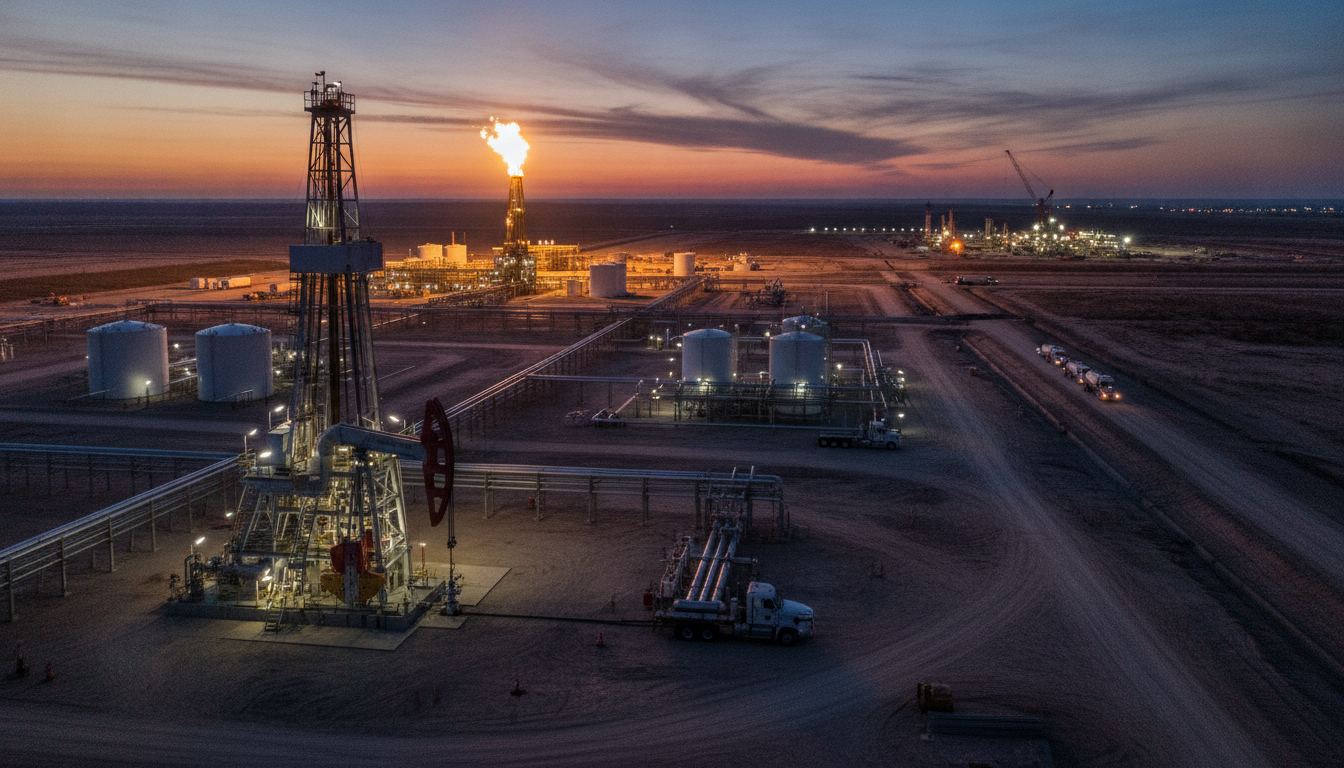
Dallas-based Matador Resources Co. is significantly expanding its footprint in the prolific Permian Basin, sealing a major agreement to acquire key assets from EnCap Investments LP for approximately $1.3 billion in cash. This strategic move underscores the relentless drive among U.S. shale producers to fortify and extend their valuable drilling inventories within the nation’s most critical oil-producing region, the Delaware Basin.
The centerpiece of this transaction involves the acquisition of over 16,000 net undeveloped acres from EnCap-backed Paloma Permian LLC. These prime parcels are strategically located in Eddy and Lea counties, situated in southeastern New Mexico—areas recognized as the top-producing regions in the United States last year. This acquisition targets the heart of premium drilling real estate, vital for sustaining long-term production growth and capital efficiency.
In a related and complementary maneuver, Matador also confirmed an agreement to purchase additional, primarily undeveloped acreage in West Texas and southeastern New Mexico from Ridge Runner Resources II LLC, another entity supported by EnCap. While the financial details of this secondary acquisition remain undisclosed, it is expected to further consolidate Matador’s operational position and streamline future development efforts across its expanded portfolio.
Upon the announcement, Matador’s shares experienced a slight dip, trading at $54.13 by mid-morning in New York, a 1.6% decrease. This immediate market reaction provides an interesting counterpoint to the underlying strategic value the company clearly sees in these assets, reflecting the nuanced assessments investors make regarding significant capital outlays in a dynamic energy market.
Valuation Signals Scarcity in the Delaware Basin
This substantial investment by Matador, particularly the $1.3 billion for the Paloma Permian assets, vividly illustrates the robust valuations currently attributed to undeveloped drilling locations within the Delaware Basin. This prolific segment of the larger Permian formation, straddling West Texas and southeastern New Mexico, continues to command significant premiums despite a noticeable deceleration in the pace of blockbuster shale mergers that characterized the sector’s previous wave of consolidation.
Industry analysts have quickly weighed in on the implications. Experts at Tudor Pickering Holt & Co. noted in their investor brief that the Paloma acquisition “continues to highlight the robust valuations being ascribed to undeveloped locations in the Delaware Basin which, in our view, continues to reflect that inventory is becoming more scarce in a world of maturing shale basins.” This perspective is crucial for investors, suggesting that access to high-quality, undeveloped acreage is increasingly seen as a differentiator and a key driver of long-term value for E&P companies.
The intensifying competition for top-tier drilling acreage means that prime locations within the Permian are largely already under the control of major integrated energy companies or established independent producers. Consequently, many independent operators, including Matador, are strategically shifting their focus towards what are known as “bolt-on acquisitions.” These targeted purchases aim not merely to dramatically boost immediate output but rather to extend drilling runways, enhance existing operational efficiencies, and consolidate positions for optimized development. This refined approach to M&A signifies a maturation in shale investment strategy, prioritizing sustainable growth and capital discipline over aggressive expansion.
Strategic Impact and Future Outlook for Matador
Matador Resources projects that these newly acquired assets will contribute an estimated 11,600 barrels of oil equivalent per day (BOE/d) to its overall production profile during the third quarter. This incremental production is a tangible benefit that will positively impact the company’s financial performance and operational metrics in the near term.
Beyond immediate production gains, the acquisitions are set to significantly expand Matador’s strategic footprint within the core of the Delaware Basin. The company anticipates its net acreage in this highly coveted region will grow to approximately 240,000 acres. Such a substantial and consolidated acreage position provides Matador with greater operational flexibility, opportunities for economies of scale, and an extended inventory of future drilling prospects—essential components for long-term value creation in the upstream energy sector.
For investors monitoring the oil and gas landscape, Matador’s latest moves reflect a calculated commitment to growth through targeted resource expansion. In a market where premium drilling locations are finite, securing high-quality undeveloped inventory becomes a critical differentiator. This strategy aims to ensure Matador maintains a robust pipeline of development opportunities, underpinning its production targets and cash flow generation capabilities for years to come.
The complex legal and financial aspects of these transactions were facilitated by a cadre of expert advisors. Baker Botts LLP provided legal counsel to Matador, ensuring the intricate details of the deal aligned with the company’s strategic objectives. On the other side of the table, RBC Richardson Barr served as the financial advisor to Paloma, Ridge Runner, and EnCap, while Vinson & Elkins LLP acted as their legal advisor. The involvement of such prominent firms highlights the significant value and strategic importance attributed to these Permian Basin assets by all parties involved.
As the energy industry continues to navigate evolving market dynamics, Matador Resources’ substantial investment in the Permian Basin reinforces the basin’s enduring appeal and the strategic necessity for E&P companies to secure and optimize their drilling inventories. This acquisition positions Matador for sustained growth, offering investors a clearer view of its long-term development pathway in one of the world’s most vital hydrocarbon plays.


