The global shipping industry, a colossal consumer of fossil fuels, is increasingly sailing towards an electrified future. While the transition may seem gradual, recent advancements in battery technology for maritime applications signal a clear and accelerating threat to traditional bunker fuel sales. This shift demands a keen eye from oil and gas investors, as the long-term implications for demand fundamentals could be profound. The introduction of highly modular and scalable battery systems, specifically designed for a wide range of vessels, underscores a strategic pivot in maritime power solutions that cannot be ignored. For investors focused on the energy sector, understanding this evolving landscape is crucial for navigating potential headwinds and identifying new opportunities.
The Evolving Maritime Landscape: A New Wave of Electrification
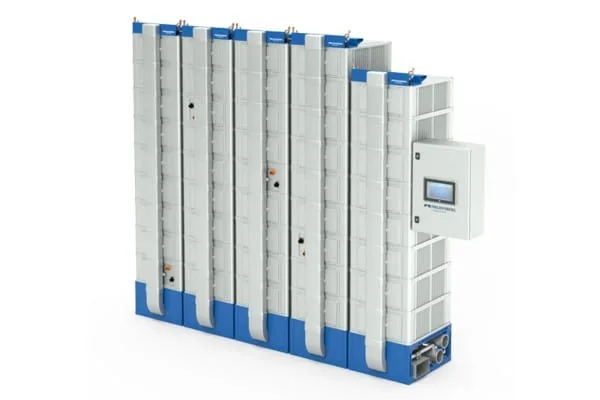
A significant development in maritime decarbonization comes with the announcement of a new stackable battery system, XWAVE, engineered for battery-electric and hybrid-electric vessels. Slated for availability in 2027, this modular solution is designed to meet the growing demands for electrification across the shipping industry. The system features advanced nickel-dominated cells, a sophisticated battery management system, and integrated telematics. What makes XWAVE particularly impactful is its flexibility: each module boasts a capacity of 17 kWh and a nominal voltage of 132 volts, allowing for series connections up to 1,048 volts. This inherent scalability means ship designers can customize power and energy setups to precisely match diverse vessel needs, from ferries to large cargo ships, without compromising space or performance. This move builds on an existing track record of powering over 30 hybrid or fully electric ships globally, indicating a proven capability now being scaled for broader market adoption. Such technological leaps directly challenge the dominance of traditional diesel and heavy fuel oil in the marine sector, carving out an ever-larger segment of demand for electric alternatives.
Oil Market Volatility Signals Long-Term Demand Headwinds
The broader oil market provides a telling backdrop to these technological shifts. As of today, April 18, 2026, Brent crude trades at $90.38 per barrel, marking a substantial daily decline of 9.07%, with prices ranging from $86.08 to $98.97. Similarly, WTI crude is at $82.59, down 9.41% within a daily range of $78.97 to $90.34, while gasoline prices have fallen to $2.93, a 5.18% drop. This recent volatility extends beyond a single trading session; Brent crude has seen a significant contraction over the past fortnight, plummeting from $112.78 on March 30th to $91.87 by April 17th – an 18.5% decline. While immediate market movements are often influenced by geopolitical factors or inventory data, such sharp corrections underscore an underlying sensitivity to demand expectations. The long-term trajectory of bunker fuel demand, potentially eroded by widespread marine electrification, adds another layer of complexity to these price dynamics, suggesting that today’s volatility could be a harbinger of more fundamental demand challenges ahead for crude oil.
Investor Focus Shifts: Navigating the Transition and Production Strategies
Amidst these market shifts and technological advancements, investors are increasingly scrutinizing the long-term outlook for oil. A recurring theme in investor inquiries revolves around the future price of oil per barrel by the end of 2026, reflecting deep-seated concerns about demand sustainability. Similarly, questions regarding the performance of integrated majors, such as Repsol, by April 2026 highlight a focus on how individual companies are positioned to navigate the energy transition. These concerns are directly impacted by developments like marine electrification, which represent a tangible threat to a significant end-use market for oil. In this context, the strategic decisions made by major producers become paramount. Investors are keenly tracking OPEC+ current production quotas, understanding that supply management will be critical in a market potentially facing structural demand erosion from sectors embracing electrification. The upcoming OPEC+ Joint Ministerial Monitoring Committee (JMMC) meeting today, April 18th, followed by the full Ministerial Meeting on April 19th, will be closely watched for any signals regarding output adjustments that could stabilize prices in the face of evolving demand forecasts.
Anticipating Future Market Catalysts and Strategic Responses
Looking ahead, the market will continue to digest a barrage of data points that offer insights into supply-demand balances, all while factoring in the accelerating pace of energy transition in key sectors. Critical data releases such as the API Weekly Crude Inventory reports on April 21st and 28th, alongside the EIA Weekly Petroleum Status Reports on April 22nd and 29th, will provide near-term indicators of inventory levels and refinery activity. These figures, alongside the Baker Hughes Rig Count on April 24th and May 1st, will offer a glimpse into the industry’s immediate operational health. However, investors must interpret these short-term metrics through a long-term lens, considering the persistent pressure from decarbonization efforts. As marine electrification gains traction with solutions like the XWAVE system, traditional oil and gas companies face a strategic imperative to diversify. This could mean increased investment in sustainable aviation fuels, carbon capture technologies, or even direct ventures into alternative energy solutions to hedge against the erosion of conventional demand streams. The smart investor recognizes that while the immediate market reacts to weekly reports and OPEC+ decisions, the foundational shifts in energy consumption patterns, exemplified by maritime electrification, are the true long-term drivers of value.


