The heavy-duty vehicle (HDV) sector, a bedrock of global diesel consumption, is undergoing a profound transformation. The recent announcement from MAN Truck & Bus — initiating series production of its eTruck electric HGVs at its Hauptwerk Munich plant — represents far more than just a corporate milestone. It signals an accelerating shift in a critical segment of road transport, posing a tangible and growing long-term threat to oil demand that investors in the energy sector cannot afford to ignore. This strategic pivot by a major European manufacturer, backed by significant investment and a flexible production model, underscores the increasing pace of the energy transition and its direct implications for crude oil and refined product markets.
Accelerating Heavy-Duty Electrification: A Paradigm Shift
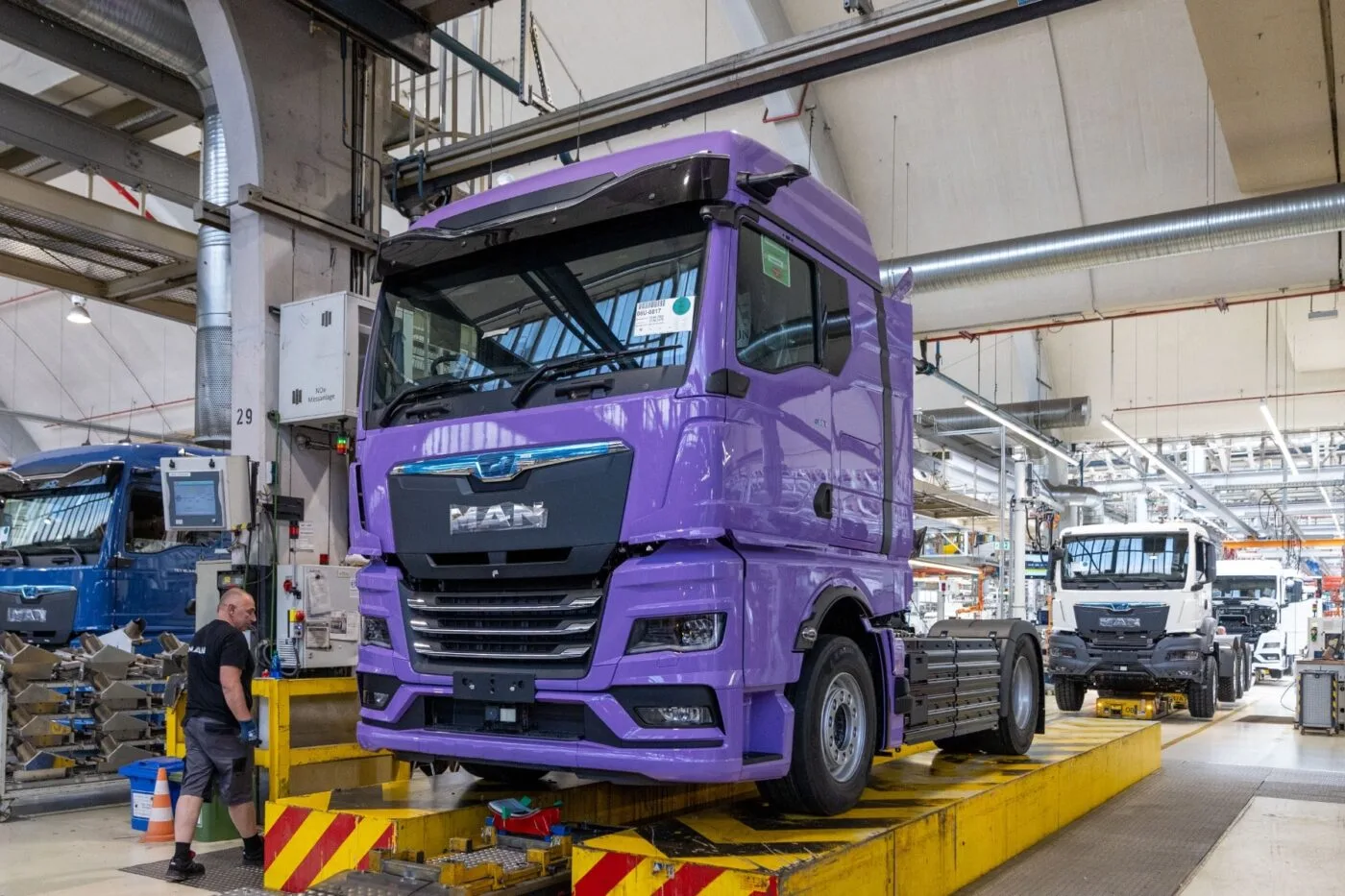
MAN’s commitment to electric HDVs is a powerful indicator of the industry’s direction. The company has invested close to €400 million in research and development to bring its battery-electric drive options to market, demonstrating a serious, long-term play. Critically, MAN plans to deliver the first 1,000 electric trucks by the end of the year, a volume that will rapidly expand the electric fleet on European roads. Their innovative approach of a fully integrated mixed production line, capable of assembling both electric and diesel trucks, offers unparalleled flexibility. This strategy, mirroring competitors like Daimler Truck, allows MAN to adapt quickly to evolving market demand, potentially accelerating the phase-out of diesel models as battery technology improves and infrastructure develops. The meticulous preparation, including training over 5,000 employees in high-voltage technology, ensures operational readiness and scalability. The modular design, with drive-relevant components compactly arranged in an E-Powerpack, also provides body manufacturers and customers with greater design flexibility, likely boosting adoption rates.
Market Headwinds and the Structural Demand Erosion
The implications of this accelerated electrification are set against a backdrop of already volatile oil markets. As of today, Brent Crude trades at $90.38 per barrel, reflecting a significant daily decline of 9.07%, with prices fluctuating between $86.08 and $98.97. Similarly, WTI Crude stands at $82.59, down 9.41% for the day. This recent volatility follows a broader downward trend, with Brent having shed over $20, or 18.5%, since late March. Gasoline prices have also seen a downturn, currently at $2.93, a 5.18% decrease. While immediate price movements are often influenced by geopolitical events, inventory data, and short-term supply-demand dynamics, the structural shift towards electric HDVs introduces a persistent, long-term demand erosion that adds another layer of complexity for crude and diesel markets. Each electric truck replacing a diesel counterpart represents a permanent reduction in fuel consumption, contributing to the demand destruction seen in these market figures. While the impact of 1,000 trucks is marginal in the grand scheme, the scalability indicated by MAN’s 100-truck-per-day maximum capacity for mixed production suggests this is just the beginning of a much larger trend.
Investor Queries: Long-Term Price Outlook and OPEC+ Strategy
Our proprietary reader intent data reveals a prevalent concern among investors: “What do you predict the price of oil per barrel will be by the end of 2026?” This question underscores the deep uncertainty surrounding oil’s future. While short-term price movements are inherently unpredictable, driven by geopolitical tensions and immediate supply/demand shocks, the accelerating pace of heavy-duty electrification, exemplified by MAN’s production ramp-up, introduces a powerful structural demand headwind. This trend will increasingly weigh on long-term price forecasts. Investors are also keenly interested in “What are OPEC+ current production quotas?” The cartel’s upcoming meetings, including the JMMC on April 18th and the Full Ministerial session on April 19th, will be crucial. OPEC+ strategy will need to evolve to account for these demand-side disruptions. As more manufacturers follow MAN’s lead, the collective demand impact from EV trucks will become substantial, complicating supply management and potentially forcing producers to re-evaluate their long-term output strategies to maintain market balance.
Forward-Looking Analysis: Monitoring Key Indicators in a Changing Landscape
For investors navigating this evolving energy landscape, monitoring both traditional and emerging indicators is paramount. While weekly data points such as the API Weekly Crude Inventory (due April 21st and April 28th) and the EIA Weekly Petroleum Status Report (April 22nd and April 29th) will provide crucial snapshots of immediate supply and demand, the deeper trend of electrification requires a broader perspective. The Baker Hughes Rig Count (April 24th and May 1st) will signal upstream activity, but the true long-term risk to demand lies in the adoption curve of technologies like MAN’s eTrucks. The planned delivery of 1,000 electric trucks by year-end is a significant initial push, and the flexibility of their integrated production line suggests rapid scaling is possible. This means that while traditional supply-side responses are monitored, investors must also track the rate of EV adoption in commercial fleets and the expansion plans of manufacturers. The energy transition is not just about passenger vehicles; the electrification of heavy transport represents a critical inflection point for diesel demand, compelling a re-evaluation of long-term investment strategies across the entire oil and gas value chain, including for integrated majors who are frequently the subject of investor inquiries regarding their transition readiness.