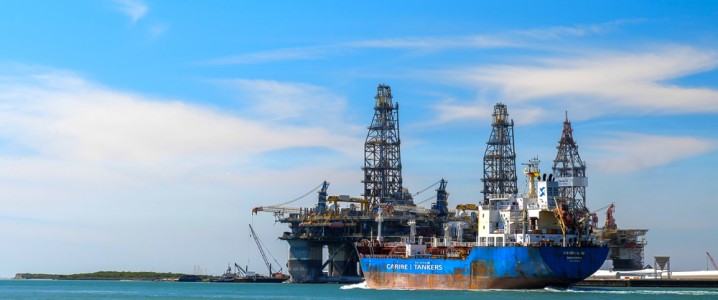
The Eastern Mediterranean energy landscape is shifting back into focus this week as the Leviathan gas field, a cornerstone of regional supply, officially resumes production. After a two-week operational hiatus triggered by heightened geopolitical tensions, the restart orchestrated by U.S. supermajor Chevron marks a significant step towards restoring critical energy flows to key markets like Egypt and Jordan. This development not only alleviates immediate supply concerns but also signals a broader de-escalation of the risk premium that has recently permeated global energy markets. For investors, understanding the implications of this renewed stability, especially against the backdrop of fluctuating crude prices and upcoming market catalysts, is paramount for navigating the evolving investment thesis in the oil and gas sector.
Leviathan’s Return Stabilizes Regional Gas Dynamics
The resumption of output from the massive Leviathan gas field offshore Israel, spearheaded by Chevron and its partner NewMed, marks a crucial turning point for regional energy security. The field, which ceased operations on June 13th following an Israeli strike on Iranian nuclear sites, has now been cleared for restart by the Israeli Ministry of Energy and Infrastructures. Similarly, UK-based Energean plc has also received clearance to bring its own offshore platform back online, further reinforcing the return to normal operations. This dual restart is poised to immediately ease supply anxieties that have plagued Egypt and Jordan, both significant recipients of Israeli gas. The two-week shutdown had forced these nations to scramble for alternative supplies, highlighting the critical role Leviathan plays in the regional energy mix. Mathios Rigas, Energean’s chief executive officer, underscored this commitment, stating their focus on safely restoring production to deliver energy security to Israel and the wider region. The market’s previous pricing of geopolitical risk, which saw Brent crude decline by nearly 9% from $102.22 on March 25th to $93.22 just yesterday, has been significantly influenced by this de-escalation.
Navigating Current Market Signals and Investor Questions
The immediate market reaction reflects a recalibration of risk. As of today, Brent crude trades at $95.8, posting a modest daily gain of 1.07% within a trading range of $91 to $96.89. This slight upward movement comes after a period where the market had largely priced in the de-escalation, as evidenced by the recent $9 decline in Brent over the past fortnight. WTI crude also shows positive momentum, trading at $92.9, up 1.77% for the day. While crude markets show resilience, the primary beneficiary of the Leviathan restart is the natural gas complex. European gas prices, which had seen an uptick amidst fears of supply disruption from the Middle East conflict, are now expected to face downward pressure. Investors are keenly asking about a base-case Brent price forecast for the next quarter, and this stabilization in the Eastern Mediterranean offers a crucial input. The easing of what could have been a prolonged regional gas supply crisis reduces one significant tailwind for broader energy prices, suggesting that the risk premium attributable to this specific flashpoint is dissipating. Similarly, the impact on Asian LNG spot prices, another area of high investor interest, will likely be indirect but positive, as Egypt’s domestic gas supply stabilizes, potentially freeing up more LNG for export markets.
Forward-Looking Catalysts and Strategic Implications
Looking ahead, the next two weeks are packed with events that will shape the energy investment landscape, and the Leviathan restart provides a new context for these discussions. The upcoming OPEC+ meetings – particularly the JMMC on April 18th and the Full Ministerial meeting on April 20th – will be critical. With a key regional supply source returning online and broader geopolitical tensions easing, the calculus for OPEC+ regarding production levels may lean towards maintaining current quotas or a more cautious approach to any potential increases, as the urgency for additional supply might lessen. Furthermore, the weekly API Crude Inventory reports on April 21st and 28th, followed by the EIA Weekly Petroleum Status Reports on April 22nd and 29th, will provide crucial insights into global supply-demand balances. The return of Leviathan’s output, while directly impacting gas, contributes to a more stable overall energy market sentiment, which could influence inventory builds or draws and refine our understanding of global energy fundamentals. The Baker Hughes Rig Count, scheduled for April 17th and 24th, will offer a granular look at upstream activity, which, in a more stable pricing environment, could see cautious growth. These events, coupled with restored regional gas flows, will contribute to investors’ ongoing assessment of the consensus 2026 Brent forecast, potentially moderating the high-end projections that incorporated significant geopolitical risk.
Investment Horizon: Beyond the Immediate Rebound
For long-term investors, the Leviathan restart offers more than just an immediate supply boost; it underscores the resilience and strategic importance of Eastern Mediterranean energy assets. Chevron’s commitment to restarting the platform swiftly, along with Energean’s parallel efforts, demonstrates operational agility in a complex environment. This return to normalcy suggests that while geopolitical risks remain an inherent feature of the region, the infrastructure and operational capabilities are robust enough to withstand temporary disruptions. Investors focusing on the broader 2026 Brent forecast must now factor in a potentially reduced geopolitical risk premium stemming from this specific region. The questions our readers are asking about long-term price forecasts highlight a desire for clarity in a volatile market. The stability brought by Leviathan’s consistent supply to Egypt and Jordan could also unlock further regional energy cooperation and infrastructure development, presenting new opportunities for companies involved in gas exploration, production, and transportation. While caution is always warranted, the successful restart offers a tangible sign of de-escalation, allowing investors to shift focus from immediate crisis management to longer-term strategic positioning within the global oil and gas value chain.


