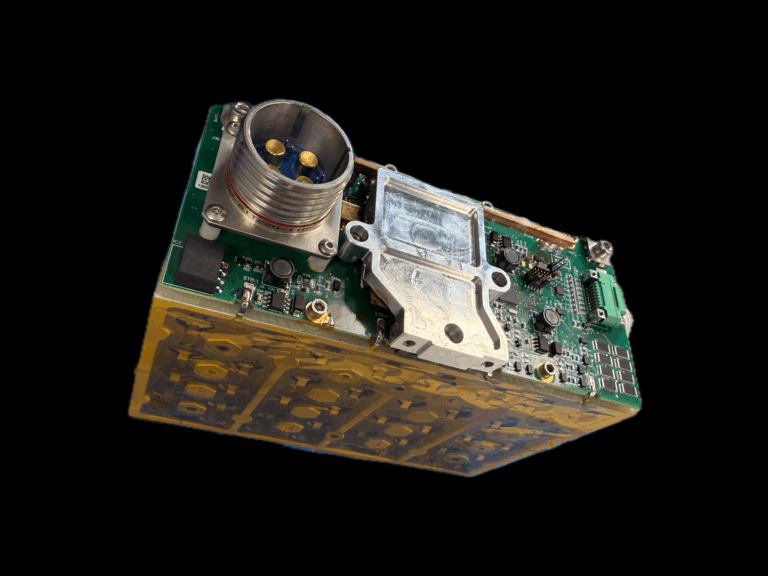
KULR Technology Group, known for its portfolio spanning high-performance energy systems to AI robotics, has launched its next-generation KULR-developed Battery Management System (kBMS), signaling a significant step forward in critical power system reliability and safety. This strategic expansion beyond its established thermal management and energy storage solutions positions KULR as a more comprehensive provider in the specialized battery intelligence sector. For investors, this development represents a potential broadening of KULR’s revenue streams and market penetration, particularly within the demanding defense, terrestrial mission-critical, and burgeoning space sectors, where the new kBMS offers unprecedented flexibility and performance benchmarks.
KULR Redefines Battery Safety and Efficiency with kBMS Innovations
The newly unveiled kBMS is engineered to address the most stringent requirements for reliability, safety, and energy efficiency across mission-critical applications. KULR offers two distinct variants: one specifically designed for defense and terrestrial uses, and another optimized for spacecraft power systems. This space-focused version introduces a crucial element of customization, allowing integrators to choose between a cost-effective system leveraging commercial chipsets within protected housings or a premium build utilizing fully radiation-tolerant components. This tiered approach directly tackles the industry’s challenge of balancing budget constraints with the absolute necessity of mission assurance in space environments, providing new strategic options for system integrators.
Technologically, the kBMS stands out with several key innovations. Its analog architecture, coupled with an operational amplifier (op-amp) programming strategy, enables the integration of radiation-tolerant processors. This is a critical breakthrough, as it circumvents the current scarcity of radiation-tolerant BMS chipsets, allowing for robust deployment in both cost-effective and premium space-rated configurations. Furthermore, the system incorporates robust firmware alongside a dual-redundancy hardware architecture, significantly minimizing single points of failure and ensuring safe operation even under extreme conditions. Energy efficiency is also enhanced through the use of lower-impedance MOSFETs, which reduce thermal losses and extend system runtime. An isolated communication interface provides an additional layer of protection for load and power electronics against damaging voltage spikes. Perhaps most uniquely, the kBMS features a recalibration capability, a stark contrast to most BMS solutions that require full replacement when calibration drift occurs, thereby lowering lifecycle costs and reducing downtime for operators.
Navigating Energy Market Volatility: A Macro View for Micro Solutions
Against the backdrop of KULR’s specialized technological advancements, the broader energy market continues its volatile dance. As of today, Brent crude trades at $90.38 per barrel, a significant 9.07% decline from its opening, with a day range between $86.08 and $98.97. WTI crude mirrors this trend, currently priced at $82.59, down 9.41% within a daily range of $78.97 to $90.34. Gasoline prices are also feeling the pressure, currently at $2.93, reflecting a 5.18% drop, ranging from $2.82 to $3.1 today. Looking at the 14-day trend, Brent crude has seen a substantial drop from $112.78 on March 30th to today’s $90.38, representing a 19.9% decrease. This persistent volatility in traditional oil and gas markets underscores the growing importance of reliability and efficiency across all energy sectors.
While KULR’s focus on advanced battery management systems operates in a different segment than crude oil, the macro environment of fluctuating energy costs inevitably influences investment capital allocation. The drive for enhanced energy efficiency and safety, as exemplified by KULR’s new kBMS, becomes even more critical when traditional energy sources face price instability. Investors may increasingly seek out companies that provide foundational technologies enhancing the performance and safety of diverse power systems, from terrestrial defense infrastructure to burgeoning space missions, offering a degree of insulation from the daily swings of commodity markets.
Forward Catalysts and Addressing Investor Concerns
The immediate future for the energy market is laden with potentially impactful events. Investors are keenly awaiting the OPEC+ Full Ministerial Meeting scheduled for April 19th. This gathering could introduce new production quotas or strategic shifts that will undoubtedly influence crude prices, potentially either stabilizing or further exacerbating the recent declines. Following this, the API Weekly Crude Inventory reports on April 21st and 28th, along with the EIA Weekly Petroleum Status Reports on April 22nd and 29th, will provide crucial insights into supply and demand dynamics in the U.S. These reports, coupled with the Baker Hughes Rig Count on April 24th and May 1st, offer regular pulse checks on the industry’s operational health and future production outlook.
Our proprietary reader intent data reveals that investors are actively grappling with questions around market predictions, particularly “what do you predict the price of oil per barrel will be by end of 2026?” and “What are OPEC+ current production quotas?”. These questions highlight a collective anxiety regarding future price stability and supply management. While predicting exact year-end crude prices remains challenging given global geopolitical and economic uncertainties, the current downward trend in Brent crude and the upcoming OPEC+ meeting are primary factors shaping short-term sentiment. KULR’s business, by contrast, focuses on a different value proposition: enhancing the safety and performance of energy storage systems, especially in high-stakes environments. This strategic niche may appeal to investors looking for growth drivers less directly tied to the geopolitical machinations affecting traditional fossil fuels, offering a different form of resilience in a volatile investment landscape.
Investment Implications and Future Outlook for KULR
The introduction of the kBMS expands KULR’s market opportunity significantly. By moving beyond thermal management and energy storage products to become a “comprehensive battery safety and intelligence provider,” KULR is tapping into a broader, high-value segment of the energy technology market. The immediate availability of the kBMS for “design-in and qualification programs” suggests an aggressive push for rapid adoption across its target sectors. This is a critical phase, as successful qualification will pave the way for integration into long-term projects and supply chains, particularly in the defense and aerospace industries known for their rigorous standards and lengthy procurement cycles.
KULR’s ability to offer space-rated BMS solutions at multiple price points, balancing budget with mission assurance, is a distinct competitive advantage in the burgeoning space economy. The demand for reliable, safe, and efficient power systems for satellites, probes, and other orbital assets is only set to grow. Furthermore, the “Bitcoin+ Treasury company” aspect, while not directly related to the kBMS technology, indicates a diversified corporate strategy that may appeal to certain investor profiles. As KULR continues to solidify its position in these mission-critical applications, its growth trajectory will be closely watched, offering a specialized play for investors seeking exposure to advanced battery technology and critical infrastructure development, distinct from the commodity-driven energy sector.