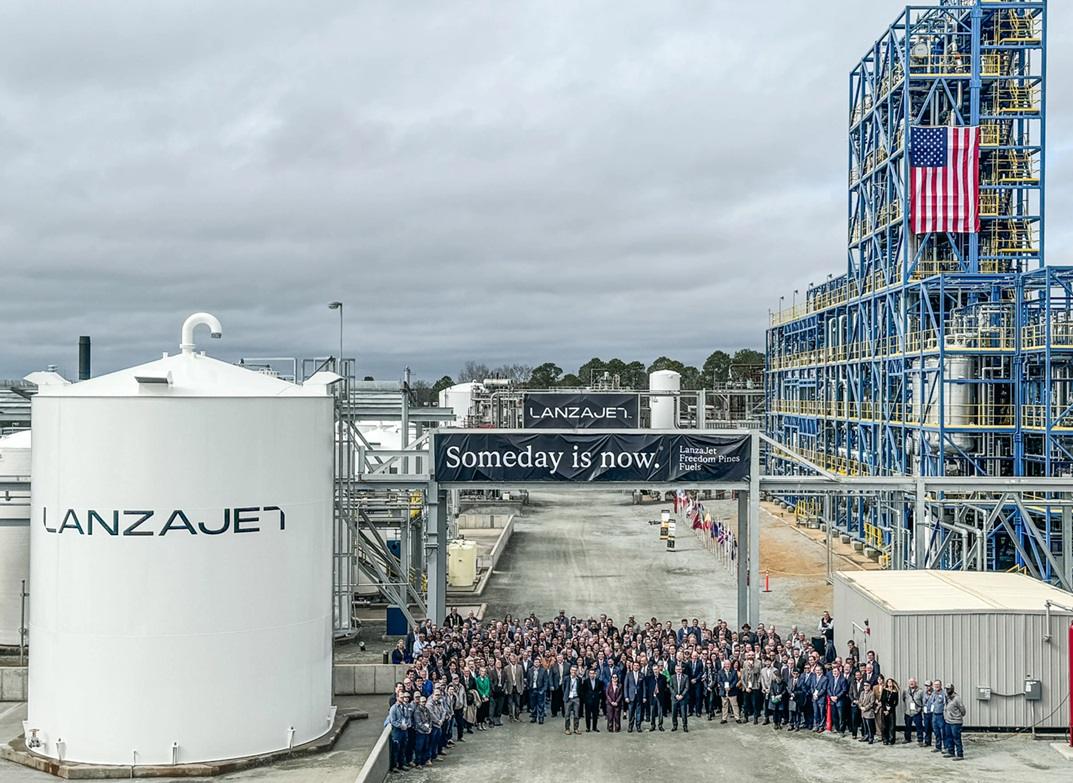
The global energy landscape is undergoing a profound transformation, and nowhere is this more evident than in the aviation sector’s accelerating pivot towards sustainable solutions. A recent collaboration between Kazakhstan’s national oil and gas giant, KazMunayGas (KMG), and sustainable aviation fuel (SAF) innovator LanzaJet, marks a significant milestone in this shift. The announcement that their joint project will proceed into the critical engineering and design (FEED) phase signals a tangible step towards decarbonizing air travel and establishing Kazakhstan as a key player in the nascent SAF market. For investors, this development represents more than just an environmental initiative; it’s a strategic move by a traditional oil producer into high-growth, future-proof energy segments, offering a compelling case for diversification and long-term value creation in an increasingly dynamic market.
Kazakhstan’s Strategic Pivot in the Global SAF Race
The KMG-LanzaJet partnership underscores Kazakhstan’s ambition to evolve its energy profile beyond conventional hydrocarbons. Moving into the FEED phase, this project will leverage LanzaJet’s patented Alcohol-to-Jet (ATJ) technology, a proven method for converting various waste-based and sustainable ethanol sources into SAF and renewable diesel. The flexibility in feedstock, which can range from low-carbon sugarcane and energy crops to forest residuals and agricultural wastes, provides a robust and adaptable supply chain, crucial for scaling production. This strategic agility is particularly important for a region like Kazakhstan, with its strong agricultural base and existing energy infrastructure. The initiative aims to meet Kazakhstan’s projected SAF demand of 70,000 tonnes per year by 2030, a clear indicator of the country’s commitment to supporting global aviation’s decarbonization goals while simultaneously bolstering its energy security and fostering economic development. For investors evaluating the long-term prospects of energy companies, KMG’s proactive embrace of such advanced technologies signals a forward-thinking management team poised to navigate the energy transition effectively.
Navigating Volatility: SAF Investment Amidst Shifting Crude Dynamics
The investment thesis for sustainable fuels often exists against the backdrop of an inherently volatile traditional oil market. As of today, Brent Crude trades at $90.38 per barrel, marking a significant 9.07% decline from yesterday’s open. WTI Crude reflects a similar trend, currently priced at $82.59, down 9.41% over the same period. This recent downturn follows a notable 14-day trend where Brent crude has fallen by $20.91, or 18.5%, from $112.78 on March 30th to $91.87 just yesterday, April 17th. Such sharp movements, coupled with gasoline prices at $2.93 per gallon (down 5.18%), highlight the persistent price instability in conventional energy markets. For investors, this volatility presents both challenges and opportunities. While lower crude prices might temporarily reduce the economic competitiveness of alternative fuels, the strategic imperative for SAF remains undiminished. Investments in projects like KMG-LanzaJet serve as a long-term hedge against eventual fossil fuel decline and increasing carbon pricing pressures. The diverse investor base behind LanzaJet, including aviation giants like Southwest Airlines and British Airways, financial institutions such as MUFG, and tech leaders like Microsoft, demonstrates a clear commitment to SAF regardless of short-term crude price fluctuations. These sophisticated players recognize that the energy transition is a secular trend, not merely a cyclical one, making SAF a critical component of future energy portfolios.
Forward Momentum: Upcoming Events and Long-Term Energy Transition
The broader energy market is poised for several key events in the coming days that will undoubtedly influence crude price trajectories and, by extension, the competitive landscape for alternative fuels. The upcoming OPEC+ Joint Ministerial Monitoring Committee (JMMC) meeting on April 18th, followed by the full Ministerial Meeting on April 19th, will be closely watched for any indications regarding production quotas. Any decisions on supply could significantly impact global crude prices, creating ripples across the entire energy complex. Furthermore, the API Weekly Crude Inventory report on April 21st and the EIA Weekly Petroleum Status Report on April 22nd will provide crucial insights into immediate supply-demand dynamics within the U.S. market. These weekly snapshots, along with the Baker Hughes Rig Count on April 24th and May 1st, offer a constant pulse on traditional oil and gas activity. While these events primarily concern conventional energy, they indirectly shape the environment for SAF. The KMG-LanzaJet project, moving forward with its FEED phase, demonstrates that long-term strategic investments in decarbonization are progressing irrespective of daily market noise. For astute investors, the continued advancement of SAF initiatives amid these traditional market machinations highlights a growing bifurcation: a resilient, long-term growth trajectory for sustainable energy solutions, even as conventional markets grapple with their inherent volatility and geopolitical influences. This forward-looking approach positions investors to capitalize on the inevitable structural shifts in energy consumption.
Addressing Investor Concerns: SAF as a Pillar of Future Energy Portfolios
Our proprietary market intelligence reveals that investors are keenly focused on future energy prices and market fundamentals. Questions like “what do you predict the price of oil per barrel will be by end of 2026?” and inquiries about OPEC+ production quotas consistently surface. These questions underscore a desire for clarity in an uncertain market. While predicting precise oil prices remains challenging due to myriad geopolitical and economic factors, the KMG-LanzaJet project offers a tangible answer to the broader question of energy portfolio resilience. Investments in SAF represent a strategic hedge against long-term fossil fuel demand erosion and regulatory risks. Companies like KMG, by investing in LanzaJet’s ATJ technology, are not just fulfilling ESG mandates; they are actively shaping their future revenue streams in a world increasingly prioritizing low-carbon solutions. The project’s alignment with Kazakhstan’s low-carbon development goals and its potential to enhance the country’s transit capabilities further strengthen its investment appeal. For investors seeking robust growth opportunities beyond the traditional oil cycle, diversifying into companies pioneering next-generation fuels, or those strategically partnering in their development, provides a critical pathway to building resilient, future-proof portfolios that can thrive regardless of short-term crude fluctuations or evolving OPEC+ strategies.


