The global energy landscape is undergoing a profound transformation, with emerging markets like India leading the charge in adopting innovative solutions for decarbonization and energy independence. The recent launch of indigenously designed containerized battery energy storage systems (BESS) by Jupiter Electric Mobility (JEM) represents a significant milestone in this shift, particularly for the commercial and industrial (C&I) sector. For oil and gas investors, this development is not just a niche story; it signals a fundamental reallocation of capital and a redefinition of energy security, necessitating a keen eye on diversified portfolios that encompass both traditional fossil fuels and the rapidly expanding new energy economy.
India’s Industrial Power Shift: The Rise of Integrated Battery Storage
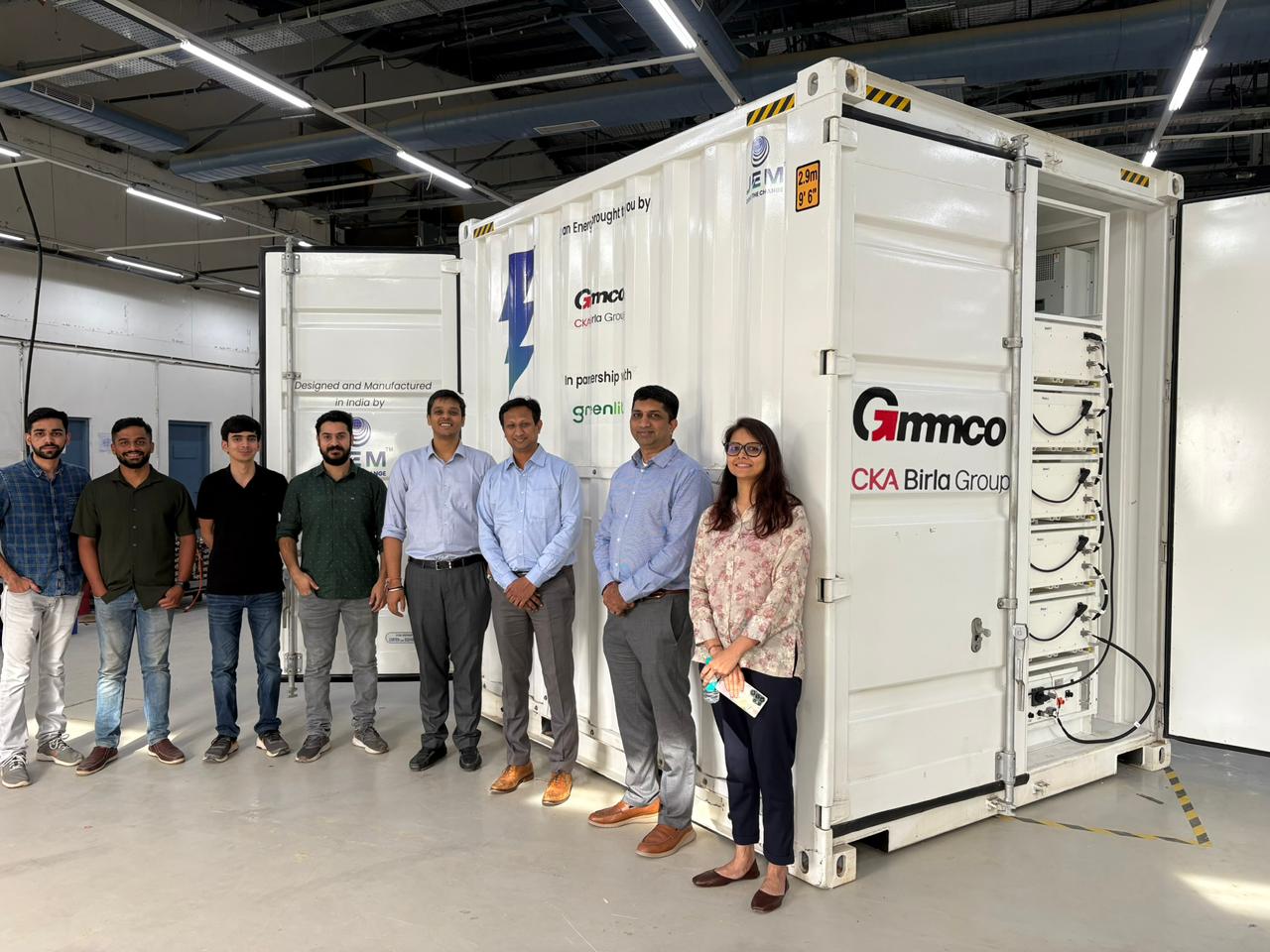
Jupiter Electric Mobility, a division of the Jupiter Group, has unveiled a groundbreaking series of containerized BESS, offering modular capacities ranging from 241 kWh to 3 MWh. These robust systems, housed in 10-foot and 20-foot containers, are designed for ease of transport and reliable performance even in harsh operating conditions across India. What sets JEM apart is its vertically integrated approach, covering everything from container fabrication to battery manufacturing and system integration—a rare feat in the Indian energy storage sector. These BESS units are poised to address critical needs in the C&I segment, serving as direct replacements for diesel generators, enhancing solar power storage, enabling energy shifting, and providing essential backup power. The initial deployment of a 10-foot BESS for Greenlit, a Mumbai-based subsidiary of Recube focused on decarbonizing the events and hospitality sectors, underscores the immediate market relevance. Furthermore, JEM’s strategic partnership with GMMCO, a CKA Birla Group company, promises a nationwide rollout. This domestic push is complemented by an ambitious international strategy, with the first 20-foot BESS unit slated for export to Africa in October, and plans for liquid-cooled BESS systems for grid-scale applications on the horizon. To meet burgeoning demand, JEM is rapidly scaling its Indore plant capacity from 1 GWh annually to 5 GWh within the next three years, signaling aggressive growth expectations in this vital sector.
Navigating Volatility: Macro Market Headwinds and Storage Solutions
While the new energy sector in India gains momentum, the broader oil and gas market continues to experience significant volatility. As of today, Brent Crude trades at $90.38, reflecting a notable 9.07% decline from its previous close. WTI Crude mirrors this trend, currently priced at $82.59, down 9.41%. Gasoline prices have also dipped to $2.93, representing a 5.18% decrease. This recent downturn is particularly sharp when viewed against the 14-day trend, which saw Brent fall from $112.78 on March 30th to $91.87 on April 17th, a substantial $20.91 (18.5%) loss. Such market swings highlight the inherent risks and unpredictable nature of traditional energy investments. In this context, the stability and localized control offered by advanced battery storage systems become increasingly attractive. For C&I operators, investing in JEM’s BESS means mitigating exposure to fluctuating fossil fuel costs and supply chain disruptions, ensuring consistent power—a critical factor for sustained industrial operations, irrespective of global crude price movements. This divergence in market drivers underscores the importance for investors to consider how emerging technologies provide a hedge against the persistent volatility in the traditional oil markets.
Investor Focus: Addressing Core Questions in a Transitioning Market
Our proprietary intent data reveals that investors are keenly asking about the future trajectory of oil prices, with many inquiring about predictions for the price of oil per barrel by the end of 2026. This focus on long-term price outlooks underscores a broader anxiety about the sustainability of current investment theses in a world rapidly embracing energy transition. The deployment of advanced BESS like JEM’s directly impacts this outlook by chipping away at demand for traditional fuels in key industrial segments. For instance, the stated goal of diesel generator replacement with clean energy applications directly reduces reliance on diesel, a significant crude derivative. Furthermore, investors are seeking clarity on OPEC+’s current production quotas. While these quotas significantly influence short-term supply and price stability, the long-term demand narrative is increasingly shaped by technological advancements in renewables and storage. Investments in vertically integrated solutions, such as JEM’s robust BESS, represent a strategic move into a sector driven by fundamental industrial demand for reliable, sustainable power, rather than being solely dictated by cartel decisions or geopolitical tensions. Smart capital is recognizing that hedging against a potentially lower oil price future involves diversifying into segments that directly benefit from decarbonization and energy independence.
Forward Catalysts: Upcoming Events and Strategic Rebalancing
The next two weeks are packed with events that will shape the immediate future of the oil market, presenting both opportunities and risks for investors. The upcoming OPEC+ Joint Ministerial Monitoring Committee (JMMC) on April 18th and the full Ministerial Meeting on April 19th are critical dates, as any adjustments to production quotas could significantly impact global supply and price stability. Following these, the API Weekly Crude Inventory reports on April 21st and 28th, alongside the EIA Weekly Petroleum Status Reports on April 22nd and 29th, will offer crucial insights into U.S. supply and demand dynamics. Additionally, the Baker Hughes Rig Count on April 24th and May 1st will indicate drilling activity and future production potential. While these events are paramount for short-term trading strategies in oil and gas, they also highlight the persistent challenges of managing supply-side risks. In contrast, the growth drivers for battery storage solutions, particularly in the C&I sector, are more insulated from these weekly and monthly fluctuations. The continued scaling of manufacturing capacity, like JEM’s 1 GWh to 5 GWh expansion, and the strategic partnerships for nationwide deployment, reflect a more predictable, long-term growth trajectory driven by industrial demand and policy support for decarbonization. For astute investors, these developments signal a strategic rebalancing where capital is increasingly channeled into sectors offering fundamental growth and reduced exposure to the inherent volatility of the traditional energy commodity markets, positioning their portfolios for the next phase of global energy evolution.