Geopolitical Pressures and Iraq’s Constrained Output
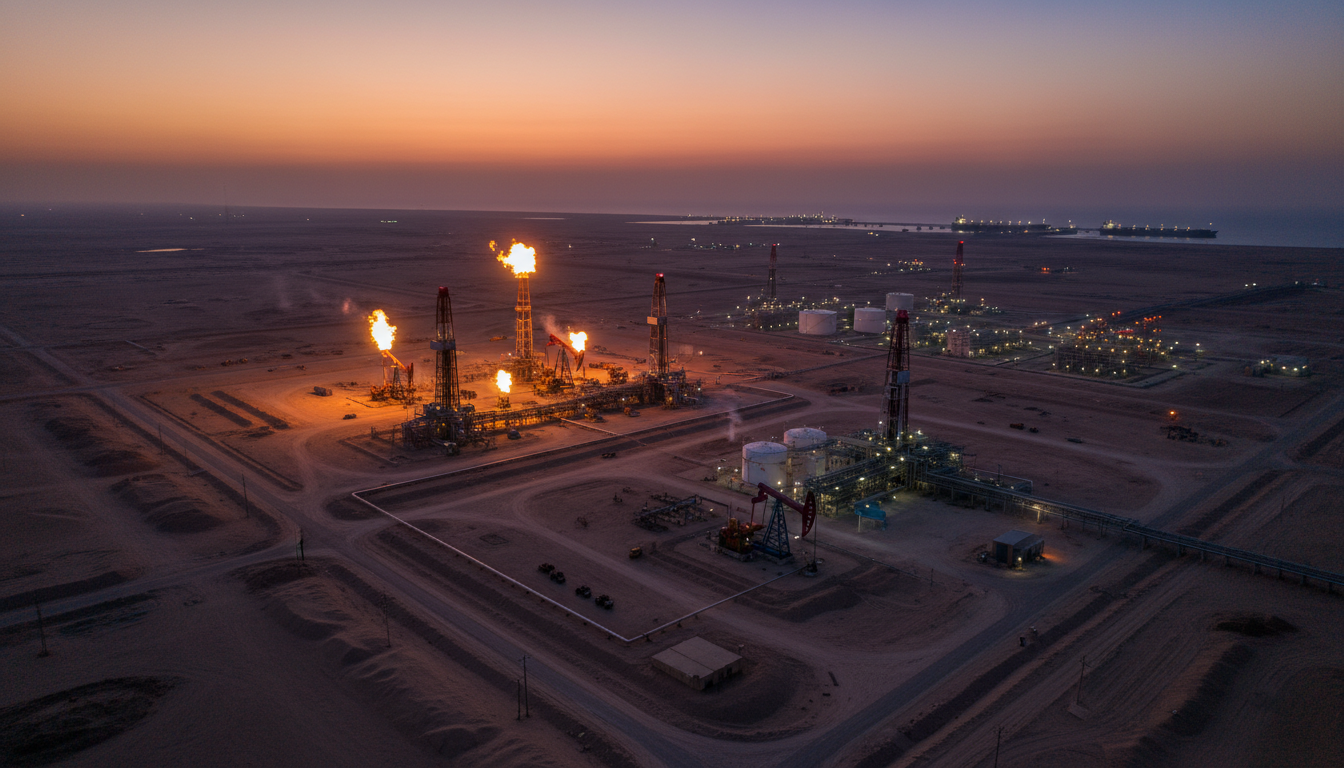
The Strait of Hormuz remains a critical chokepoint, intensifying geopolitical friction and directly impacting global energy supply chains. For Iraq, a nation almost entirely reliant on this waterway for its crude exports, the ongoing standoff has created a severe bottleneck. While Iraqi energy officials express optimism for a swift return to normal operations within a week of the strait’s full reopening, the practical reality is a significant reduction in crude movements. Verbal assurances of safe passage from the Iranian side have not translated into formal documentation, leaving Baghdad’s crude shipments in limbo. This uncertainty has tangible consequences for Iraq’s production. Output from its crucial southern oil fields recently recorded 900,000 barrels per day (bpd). While this marks a modest increase from the 800,000 bpd seen just the prior week, it starkly contrasts with Iraq’s proven capacity to sustain an export rate of 3.4 million bpd. This discrepancy highlights the severe impact of limited export routes, forcing a drastic reduction in production as land-based storage facilities rapidly approach their limits. Unlike regional peers with strategic pipeline alternatives, Iraq’s singular dependence on the Strait of Hormuz leaves it highly vulnerable to geopolitical disruptions, severely impacting its vital oil revenues.
Market Dynamics: Price Trends and Investor Uncertainty
The volatile geopolitical landscape and the uncertainty surrounding future supply have kept energy markets on edge, reflected in recent price movements. As of today, Brent Crude trades at $93.89 per barrel, showing a modest uptick of 0.7% within a daily range of $91.39 to $94.86. Similarly, WTI Crude stands at $90.31 per barrel, also up 0.71% within its daily range of $87.64 to $91.41. However, these intraday gains belie a broader trend of market apprehension. Over the past two weeks, Brent Crude has seen a notable decline, dropping from $101.16 on April 1st to $94.09 by April 21st, representing a 7% decrease, or $7.07 per barrel. This downward trajectory reflects investor unease, grappling with the dual threats of potential demand slowdowns and the looming possibility of increased supply once current bottlenecks clear.
Proprietary investor intent data reveals a clear picture of this market uncertainty. Questions such as “is WTI going up or down?” and “what do you predict the price of oil per barrel will be by end of 2026?” underscore a pervasive desire for clarity on market direction. Investors are struggling to reconcile immediate supply risks with the longer-term outlook. While geopolitical tensions in the Middle East suggest a premium for crude, the actual constrained output from Iraq, coupled with a general bearish sentiment over the last fortnight, indicates that the market is attempting to price in future de-escalation and subsequent supply increases. This creates a difficult environment for positioning, as short-term spikes driven by headlines could quickly reverse if fundamental supply constraints begin to ease.
The Looming Supply Surge: Iraq’s Capacity & Price Headwinds
Despite the current export limitations, Iraq’s significant untapped capacity represents a powerful potential supply shock that could reshape global oil prices. With the ability to export 3.4 million bpd, a level reminiscent of pre-conflict volumes, Baghdad holds a substantial volume of crude ready to hit the market once the Strait of Hormuz fully reopens. The recent uptick in production from 800,000 bpd to 900,000 bpd, even under duress, signals Iraq’s readiness and capability to quickly ramp up output as soon as logistical and geopolitical hurdles are removed. This latent supply, should it be unleashed, would add nearly 2.5 million bpd to global markets, creating considerable headwinds for crude prices.
This potential surge will intersect with several key market catalysts over the coming weeks. Investors should closely monitor upcoming data releases for signals on overall supply and demand balances. The EIA Weekly Petroleum Status Reports, scheduled for April 22nd, April 29th, and May 6th, will provide crucial updates on U.S. crude inventories, refining activity, and product demand. Concurrently, the Baker Hughes Rig Count on April 24th and May 1st will offer insights into North American production trends. Perhaps most critically for longer-term outlooks, the EIA Short-Term Energy Outlook on May 2nd will present updated forecasts for global supply, demand, and prices, incorporating scenarios that could reflect a potential Iraqi output ramp-up. Should these reports indicate weakening demand or robust non-OPEC supply, the reintroduction of significant Iraqi barrels would further exacerbate downward price pressure, directly addressing investor questions about the future direction of WTI and the price trajectory towards the end of 2026.
Investor Outlook: Navigating Volatility and Opportunity
For investors in the oil and gas sector, the current environment demands a nuanced approach, balancing immediate geopolitical risks against longer-term supply dynamics. While the Strait of Hormuz standoff and the associated production constraints in Iraq are undeniable factors pushing a risk premium into crude, the underlying capacity of 3.4 million bpd from Iraq cannot be ignored. This disconnect – between current constrained output and significant latent potential – is a key driver of market volatility and investor uncertainty.
Strategic investors are advised to monitor not only the headlines from the Middle East but also the technical and diplomatic progress towards de-escalation. Any formal documentation allowing Iraqi tankers safe passage through Hormuz would be a significant bullish signal for supply, and thus a bearish signal for prices. Furthermore, inventory builds reflected in API Weekly Crude Inventory reports on April 28th and May 5th, combined with insights from EIA data, will be crucial indicators of how the market is absorbing current supply and anticipating future flows. While the immediate geopolitical tensions could provide temporary upward impetus to Brent and WTI, the structural capacity for an Iraqi output surge points towards a medium-term scenario of increased supply. Positioning for this potential shift requires a diligent assessment of geopolitical developments, a close eye on inventory data, and an understanding that the resolution of current bottlenecks could quickly transform today’s supply concerns into tomorrow’s price headwinds.


