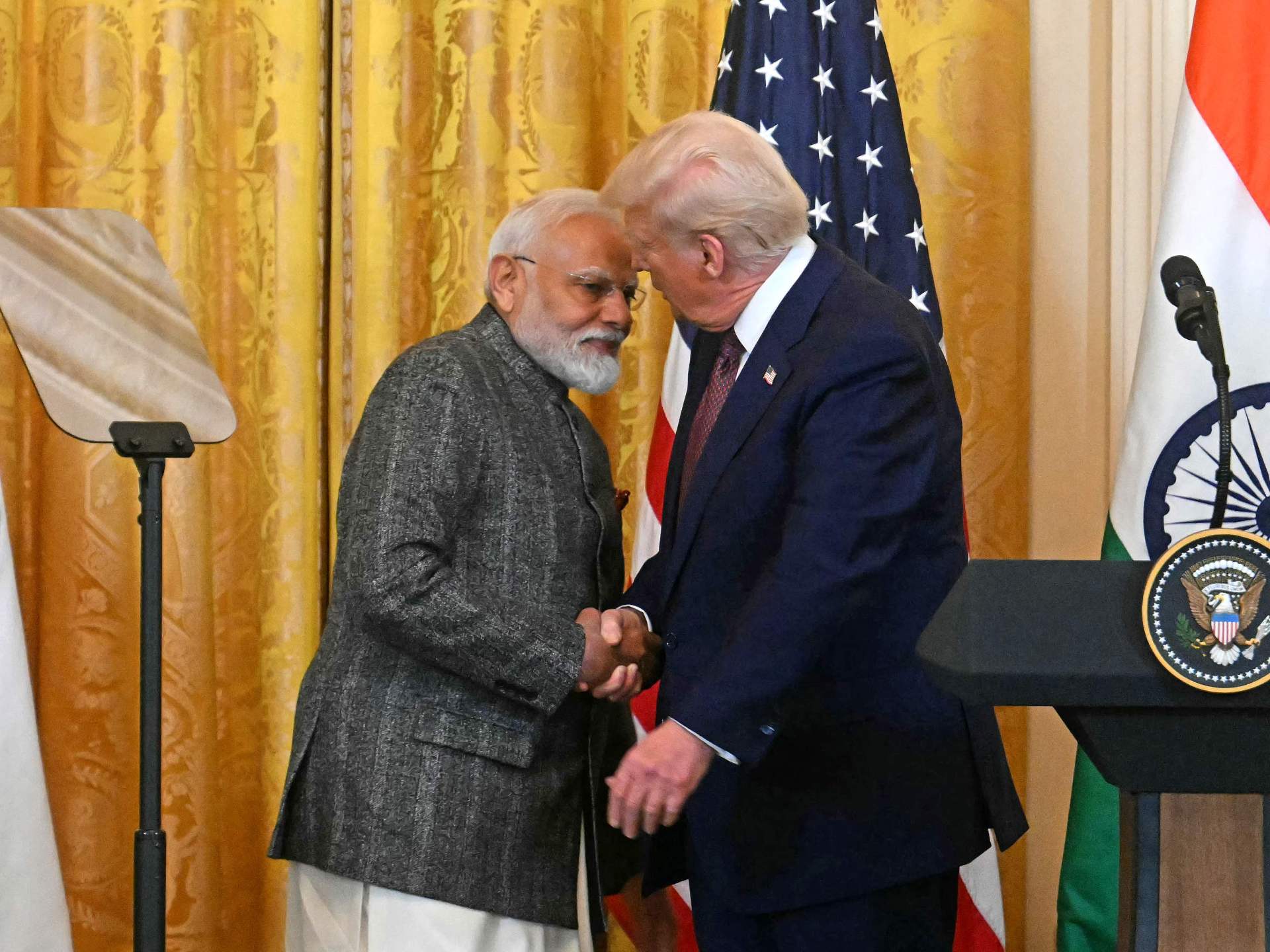
The global oil market is a complex web of supply, demand, and geopolitical machinations. Against this backdrop, recent developments in US-India trade relations present a compelling narrative for energy investors. While reports of an impending “zero tariffs” deal between the United States and India have been met with swift clarification from New Delhi, the underlying push for a comprehensive trade agreement within the current 90-day truce period signals a potential easing of tensions. This shift, if successful, could unlock significant economic activity in one of the world’s fastest-growing major economies, inevitably impacting global oil demand and offering a crucial demand-side catalyst in an otherwise volatile market.
Evolving Trade Dynamics and India’s Demand Potential
The recent pronouncements regarding a “no tariffs” agreement between the US and India, albeit quickly tempered by India’s Foreign Minister Subrahmanyam Jaishankar who stated “nothing is decided till everything is,” underscore a persistent drive for a bilateral trade deal. This initiative dates back to Prime Minister Narendra Modi’s visit to the White House in February, with a 90-day pause on reciprocal tariffs currently in effect until early July. During this period, a 10 percent base tariff continues to apply to India. The stakes are high: the US stands as India’s largest trading partner, with bilateral trade reaching approximately $129 billion in 2024. India’s significant trade surplus of $45.7 billion with the US last year, primarily in pharmaceuticals, electrical machinery, and jewellery, highlights the depth of their economic ties. Past grievances from the US regarding India’s higher average tariff rate of 17 percent, compared to the US’s 3.3 percent, have driven Washington’s push for concessions. India has already made overtures, lowering duties on US bourbon whiskey from 150 percent to 100 percent and Harley-Davidson motorcycles from 50 percent to 40 percent. A successful and expansive trade agreement, moving beyond these preliminary steps, would undoubtedly fuel India’s already robust economic engine, translating directly into increased industrial activity, transportation needs, and ultimately, a surge in demand for crude oil and refined products.
Navigating Market Headwinds with Indian Demand as a Stabilizer
For energy investors, the potential for a significant demand uplift from India arrives at a critical juncture for crude markets. As of today, April 18, 2026, Brent Crude trades at $90.38, marking a considerable decline of 9.07 percent within a daily range of $86.08 to $98.97. Similarly, WTI Crude has fallen to $82.59, down 9.41 percent, fluctuating between $78.97 and $90.34. Gasoline prices have also seen pressure, settling at $2.93, a 5.18 percent decrease from earlier today. This recent bearish sentiment is amplified by the broader trend: Brent Crude has dropped sharply by $20.91, or 18.5 percent, from $112.78 on March 30 to $91.87 just yesterday, April 17. This significant two-week sell-off highlights the market’s sensitivity to global economic signals and supply-demand imbalances. In this environment, a tangible increase in India’s oil consumption, spurred by more favorable trade conditions and accelerated economic growth, could serve as a vital demand floor. India’s burgeoning middle class and expanding infrastructure projects represent a structural demand driver that could help absorb global crude supplies and counteract some of the prevailing downward price pressures, offering a much-needed counterbalance to market volatility.
Investor Focus: Forward Catalysts and Strategic Positioning
Our proprietary investor intent data reveals a keen focus on the future trajectory of oil prices, with common queries including “what do you predict the price of oil per barrel will be by end of 2026?” and “What are OPEC+ current production quotas?”. These questions underscore the market’s search for clarity amidst uncertainty. The evolving US-India trade relationship presents a direct answer to some of this forward-looking analysis. A finalized trade agreement, particularly one that significantly reduces tariffs, would be a clear bullish signal for oil demand, potentially pushing price forecasts higher for the latter half of 2026. Investors should closely monitor key upcoming events that could influence this outlook. The OPEC+ Joint Ministerial Monitoring Committee (JMMC) meeting today, April 18, followed by the Full Ministerial meeting tomorrow, April 19, are critical. Any decisions on production quotas will undoubtedly factor in global demand projections, and a potential surge from India could influence their calculus, perhaps easing pressure for deeper cuts or even paving the way for future supply increases. Furthermore, the weekly API and EIA crude inventory reports on April 21/22 and April 28/29 will offer granular insights into market balances. Should a trade deal accelerate India’s economic activity, we would anticipate a gradual tightening in global inventories over the coming months, reflecting increased consumption from a major importer. This confluence of trade policy, OPEC+ decisions, and inventory trends creates a dynamic environment where proactive investors can position themselves to capitalize on demand-side shifts.