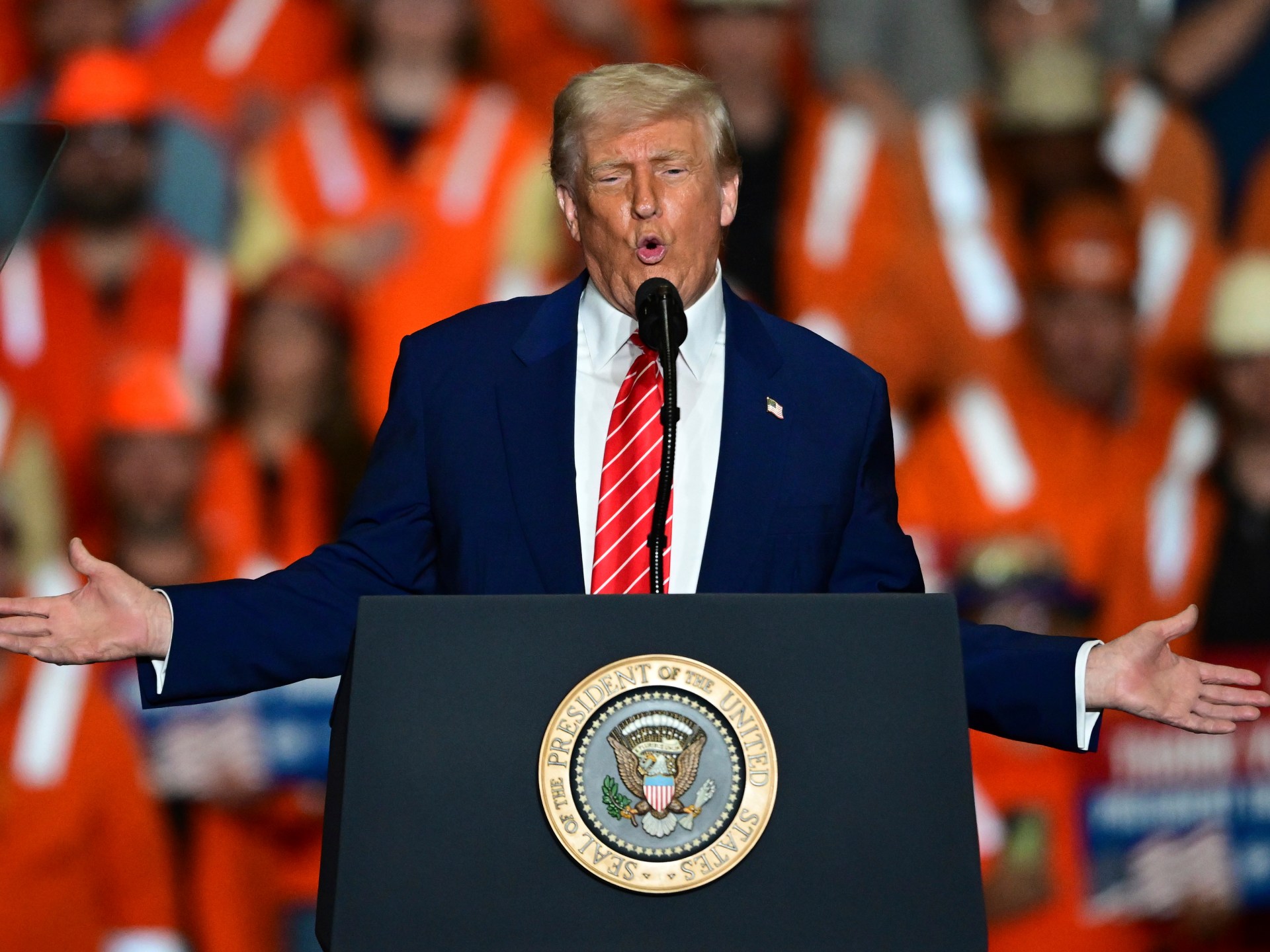
The United States energy sector is bracing for significant financial implications following President Donald Trump’s recent announcement to escalate tariffs on imported steel from an already substantial 25 percent to a staggering 50 percent. This dramatic policy shift, unveiled at a rally in Pennsylvania, is framed by the administration as a strategic move to bolster domestic manufacturing and secure the nation’s steel industry. However, for investors keenly focused on the oil and gas (O&G) landscape, this development signals a likely increase in infrastructure development costs and potential project delays.
President Trump articulated his vision for a revitalized American steel industry directly to a gathering of steelworkers and supporters, asserting, “We’re going to bring it from 25 percent to 50 percent, the tariffs on steel into the United States of America, which will even further secure the steel industry in the United States. Nobody’s going to get around that.” This bold declaration underscores a commitment to protectionist trade policies that have been a hallmark of his “America First” agenda.
Policy Shifts and Unanswered Trade Questions
The latest tariff hike builds upon previous protectionist measures. In March, the administration initially imposed 25 percent tariffs on steel and aluminum imports, which prompted retaliatory actions from key trading partners like Canada. A subsequent blanket 10 percent tariff on nearly all trade partners, along with higher country-specific import taxes, was introduced in April but largely paused due to economic shockwaves, though the 10 percent tariff did remain in place. These actions highlight a consistent, albeit sometimes erratic, strategy of using tariffs as a negotiating lever.
However, the immediate impact on existing and prospective trade agreements remains ambiguous. The specifics of how this elevated tariff rate will interact with established free-trade agreements, particularly with Canada and Mexico, or a more recent deal struck with the United Kingdom, are yet to be clarified. This uncertainty creates a complex environment for companies with intricate supply chains spanning these regions.
Amidst the tariff news, President Trump also highlighted what he termed a “blockbuster agreement” between Nippon Steel, Japan’s largest steel producer, and US Steel, a domestic counterpart. He emphasized the scale of this collaboration, stating, “There’s never been a $14bn investment in the history of the steel industry in the United States of America.” While this could be seen as a win for domestic manufacturing, the broader implications of tariffs on the competitiveness and cost structure of US industries, especially energy, warrant careful consideration.
Economic Headwinds for the Energy Sector
Economists have long cautioned that aggressive tariff policies, intended to initiate a “hard reset” of the global economy, often result in higher prices for domestic consumers. Rachel Ziemba, a senior fellow at the Center for a New American Security, noted that such sudden shifts in policy could signal “limited benefits” from negotiating trade deals with the administration, introducing an element of unpredictability that is anathema to long-term investment planning.
For the oil and gas industry, steel is an indispensable commodity. From the colossal structures of offshore drilling rigs to the intricate networks of pipelines crisscrossing continents, and the vast processing units of refineries and LNG facilities, steel forms the very backbone of energy infrastructure. A 50 percent tariff on imported steel will inevitably translate into significantly higher capital expenditures (CapEx) for new projects and increased operational costs for maintaining existing assets.
Direct Impact on Oil & Gas Infrastructure Costs
The ripple effect of a 50 percent steel tariff will be profound across all segments of the O&G value chain:
Upstream Exploration & Production: Drilling operations rely heavily on steel for drill pipes, casing, tubing, and wellhead equipment. Offshore platforms and subsea infrastructure are massive consumers of specialized steel. Higher steel costs will directly inflate the expense of bringing new wells online and developing complex offshore fields, potentially impacting final investment decisions (FIDs) and project economics.
Midstream Transportation & Storage: This sector, responsible for moving oil, gas, and refined products, is perhaps the most vulnerable. New pipeline projects, crucial for transporting increased production from shale plays, will face substantial cost increases. Storage tanks, compression stations, and pump facilities also require vast quantities of steel, driving up construction and expansion costs.
Downstream Refining & Petrochemicals: Refineries and petrochemical plants are characterized by their intricate steel piping, pressure vessels, and structural components. Any expansion or new build in this segment will see a direct escalation in material costs, impacting project viability and potentially delaying much-needed capacity additions.
LNG Export Facilities: The rapidly expanding liquefied natural gas (LNG) export capacity in the U.S. relies on massive steel structures for liquefaction trains, storage tanks, and marine loading facilities. These multi-billion-dollar projects, already capital-intensive, will incur even higher costs, which could affect the competitiveness of U.S. LNG on the global market.
Investor Outlook and Strategic Considerations
For O&G investors, these tariffs introduce a new layer of complexity. Companies with significant domestic infrastructure development plans or those reliant on international steel supply chains will need to reassess their financial models. The immediate implications include:
Increased Project Costs: Expect higher bids for engineering, procurement, and construction (EPC) contracts, leading to budget overruns or a scaling back of project scope.
Delayed Investment Decisions: Some projects on the cusp of FID might be deferred as companies evaluate the impact of elevated material costs on their internal rates of return (IRR).
Supply Chain Re-evaluation: Companies may be forced to seek out domestic steel suppliers, potentially facing higher prices and longer lead times for specific grades of steel, or explore alternative materials where feasible.
Competitive Disadvantage: U.S. energy projects, particularly those competing on a global scale (like LNG exports), could see their cost advantage erode, making them less attractive compared to projects in regions with lower material costs.
Investors should scrutinize company balance sheets, particularly those of midstream operators and large integrated energy firms with significant infrastructure development pipelines. Companies with robust hedging strategies, diverse supply chains, or a higher proportion of existing, rather than new, infrastructure might be better positioned to navigate these headwinds. Conversely, domestic steel manufacturers could experience a surge in demand, though the overall economic impact on steel-consuming industries needs to be weighed.
The President’s continued emphasis on protectionist policies, as signaled by this latest tariff increase, indicates a sustained commitment to reshaping global trade dynamics. While intended to fortify the domestic manufacturing base, the profound financial implications for the capital-intensive U.S. oil and gas sector are undeniable. Investors must closely monitor these developments, as they will undoubtedly influence project economics, strategic planning, and the long-term outlook for energy infrastructure investment in the United States.