Nagaland’s Coffee Boom: An Unlikely Signal for Energy Investors
In the quiet corners of India’s remote northeastern state of Nagaland, a transformation is brewing, quite literally. While the aroma of freshly roasted Arabica and Robusta beans might seem far removed from the strategic calculations of the global oil and gas industry, the burgeoning coffee sector in this historically volatile region offers a compelling new narrative for energy investors. For decades, Nagaland has been synonymous with armed conflict and economic isolation. Today, a vibrant agricultural shift, championed by local entrepreneurs and government initiatives, suggests a potential stabilization that could fundamentally alter the risk-reward profile for upstream energy exploration and infrastructure development.
Consider the scene at Juro Coffee House, an establishment in Dimapur that rivals the chic ambiance of any European cafe. Here, off National Highway-2, a state-of-the-art live roastery unit, established by the Nagaland state government in January, processes green coffee beans sourced from 12 districts. This farm-to-cup model, serving approximately one hundred customers daily, is more than just a local business; it represents a significant economic pivot. This shift from conflict to cultivation holds profound, albeit indirect, implications for energy sector stakeholders eyeing frontier markets.
From Insurgency to Investment Potential: A Shifting Geopolitical Landscape
For much of India’s post-independence history, Nagaland was gripped by an armed rebellion, a struggle for secession that resulted in thousands of casualties. The legacy of this unrest has cast a long shadow, deterring external investment and confining the state’s economy largely to traditional agriculture, focusing on crops like paddy, bananas, oranges, and mustard leaves. India’s steadfast refusal to acknowledge a 1951 plebiscite supporting separation further entrenched the region’s complex political landscape.
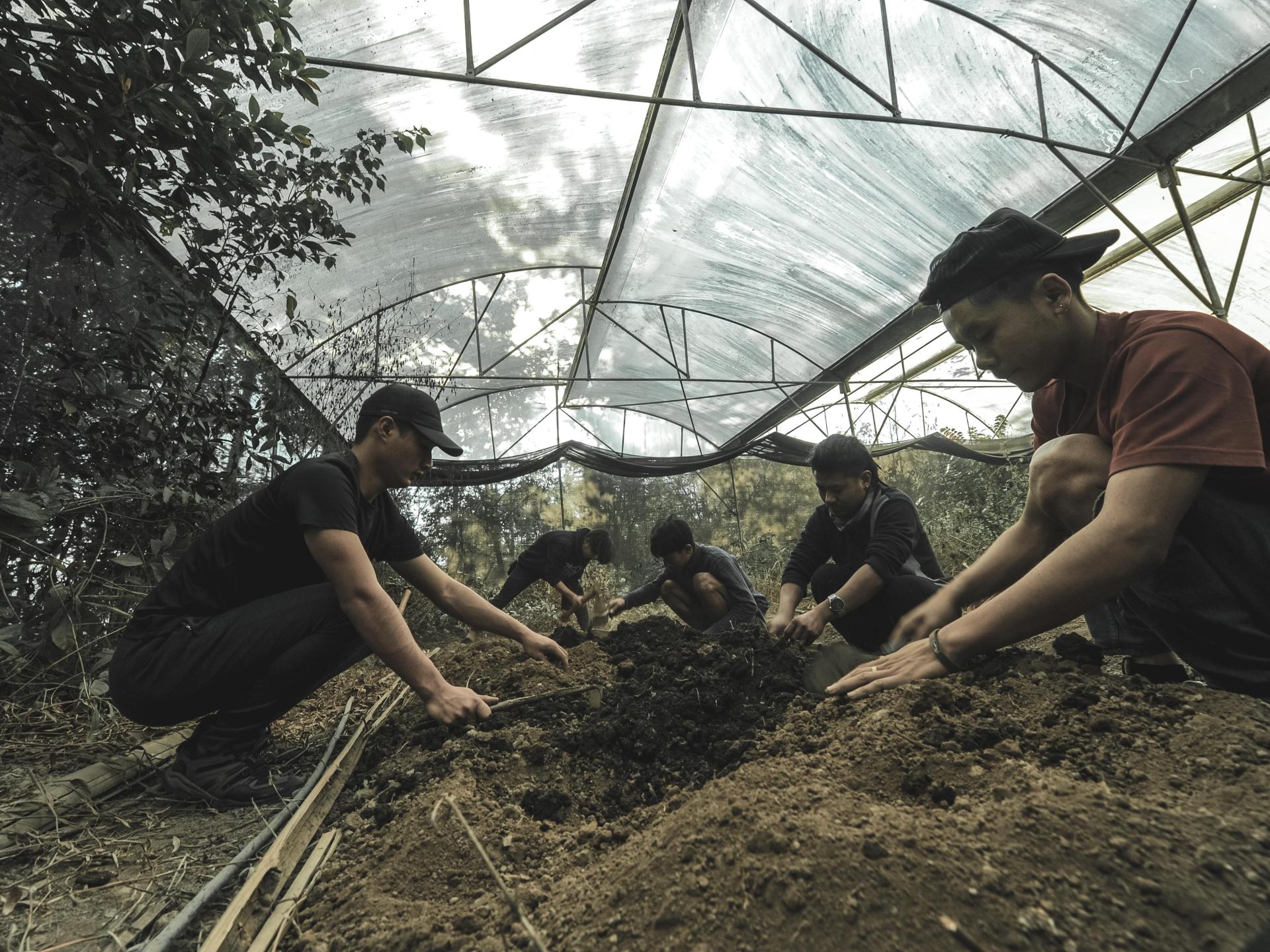
However, the narrative is evolving. Coffee, initially introduced in 1981 by the Coffee Board of India, remained a minor crop until a significant surge post-2014. This accelerated growth is largely attributable to progressive government policies and the dynamism of a younger generation of entrepreneurs. The numbers speak volumes: Nagaland now boasts nearly 250 coffee farms, spanning an impressive 10,700 hectares (approximately 26,400 acres) across 11 districts. Over 9,500 farmers are actively involved in coffee cultivation, a remarkable expansion that has also seen the establishment of eight roastery units and a proliferation of homegrown cafes in urban centers like Dimapur and Kohima, as well as interior districts such as Mokokchung and Mon.
This economic diversification signals more than just agricultural progress; it suggests a gradual but tangible shift towards greater peace and stability. A region where economic activity can flourish, where local youth are finding opportunities at home—as exemplified by Searon Yanthan, founder of Juro Coffee House, who noted the pandemic-driven return of skilled Naga youth as a “blessing in disguise”—becomes inherently more attractive to long-term capital investments, including those in the energy sector.
The Coffee Catalyst: Paving the Way for Upstream Opportunities
The implications of Nagaland’s coffee boom for oil and gas investors are multi-faceted and compelling. Firstly, enhanced economic stability directly translates to a reduced risk premium for operational activities. Capital-intensive upstream projects, which inherently involve significant geopolitical and social risks, benefit immensely from a peaceful and predictable operating environment. A decline in armed conflict and an increase in stable economic livelihoods reduce the likelihood of disruptions, sabotage, and community resistance, all critical factors in project viability and investor confidence.
Secondly, agricultural growth often necessitates and drives infrastructure development. The expansion of coffee cultivation and processing requires improved roads for transportation, reliable power supply for roasteries, and enhanced logistics networks to move products to market. These very same infrastructure improvements—roads, power grids, and supply chain efficiencies—are directly beneficial to oil and gas exploration and production operations, reducing development costs and improving operational uptime. Energy companies can leverage existing or planned infrastructure, rather than bearing the full cost of developing it from scratch in remote areas.
Furthermore, a thriving local economy fosters a more skilled and engaged workforce. As coffee farms and processing units create jobs and develop local expertise in areas like agriculture, logistics, and management, the pool of available local talent for broader industrial development expands. This is crucial for energy companies aiming to meet local content requirements, foster positive community relations, and reduce reliance on expatriate labor, ultimately improving project economics and sustainability. Yanthan’s vision of “exporting our products and ideas, not the people” perfectly encapsulates this paradigm shift, signaling a new era of self-reliance and value creation within the state.
Nagaland’s Hydrocarbon Potential and the Investment Climate
While the coffee story itself doesn’t directly address hydrocarbon reserves, Nagaland is known to possess some potential for oil and gas. India, as a major energy importer, is continuously seeking to enhance its domestic energy security. The broader northeast region of India holds significant, albeit often underexplored, hydrocarbon potential. A stable, developing Nagaland changes the equation for energy majors and exploration companies. What was once perceived as a high-risk, politically complex frontier market could gradually evolve into an attractive prospect for long-term strategic investment.
The improvement in the general investment climate, driven by economic diversification and stability, spills over into all sectors. Investors are more likely to commit capital to regions demonstrating economic resilience, governmental support for enterprise, and a shift away from civil unrest. The success of the coffee industry provides a tangible example of positive change, offering a compelling case study that can help re-rate Nagaland’s overall investment profile from a financial perspective.
Conclusion: A New Brew for Energy Futures
The coffee renaissance in Nagaland is more than just an agricultural success story; it is a powerful indicator of a changing socioeconomic and political landscape. For astute investors in the oil and gas sector, this transformation signals a potential opening in a region historically deemed too challenging. The stability, infrastructure development, and workforce enhancement driven by this agricultural boom create a more favorable environment for energy exploration and production. As Nagaland continues to cultivate its coffee future, energy market participants should closely monitor this evolving narrative. The aroma of opportunity might just be carried on the breeze from these once-troubled hills, signaling a new chapter for upstream investment in India’s dynamic northeast.