Appeals Court Reinstates Tariffs, Injecting Volatility into Energy Markets
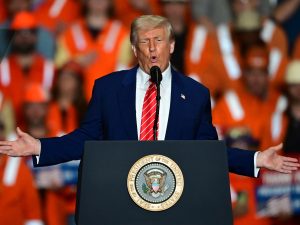
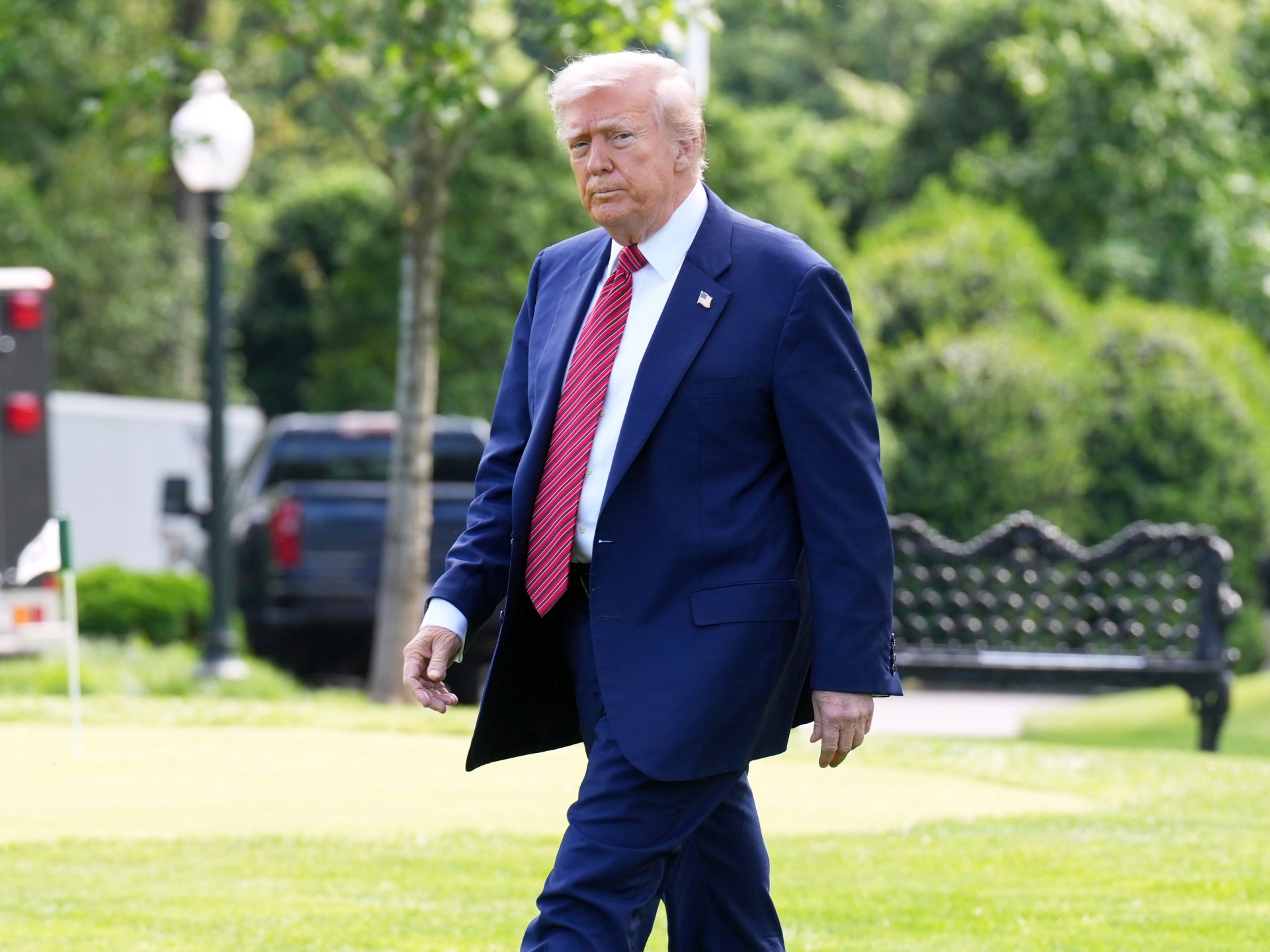
In a swift and unexpected turn, a federal appeals court has temporarily reversed a lower trade court’s decision, reinstating President Donald Trump’s controversial tariffs. This legal seesaw, unfolding within days, sends fresh ripples of uncertainty across global trade corridors, a critical concern for investors monitoring the inherently global oil and gas sector. The U.S. Court of Appeals for the Federal Circuit in Washington issued an emergency stay on Thursday, effectively blocking the prior ruling, though without immediately providing a rationale. Plaintiffs now have until June 5th to present their response, setting the stage for further legal contention.
The Trump administration had lodged an emergency motion with the appeals court, asserting that a halt to the tariffs was “critical for the country’s national security.” The White House has since publicly endorsed the appeals court’s action. Presidential trade adviser Peter Navarro underscored the administration’s resolve, stating that even if tariff challenges fail, “we will find another way,” signaling an unwavering commitment to the administration’s trade posture.
The Legal Labyrinth: IEEPA and Tariff Authority
Wednesday’s initial ruling by the U.S. Court of International Trade had threatened to derail or delay the administration’s extensive “Liberation Day” tariffs, which encompass duties on imports from most U.S. trading partners. Additionally, the ruling impacted levies on goods from Canada, Mexico, and China, justified by accusations that these nations facilitate the flow of fentanyl into the United States. The lower court’s primary contention was that tariffs imposed under the International Emergency Economic Powers Act (IEEPA) constituted an overreach of presidential authority. Typically, IEEPA is reserved for genuine national emergencies, not for addressing issues like the national debt, as the administration had implicitly argued.
Legal scholars and former government officials have consistently highlighted the narrow scope of the 1977 IEEPA. This legislation was designed to address specific, dire circumstances, such as targeting designated “terrorist organizations,” specific countries, or documented gang activities. For instance, the U.S. leveraged IEEPA to freeze Iranian government assets during the 1979 hostage crisis and to seize properties belonging to Colombian drug traffickers in 1995. These precedents underscore the act’s historical application to direct threats, not broad trade policy.
Bruce Fain, a former U.S. associate deputy attorney general during the Reagan administration, pointed out the critical omission in the IEEPA: “The 1977 International Emergency Economic Powers Act doesn’t say anything at all about tariffs.” He further elaborated on the Trade Expansion Act of 1962, a separate statute that does permit tariffs in a national emergency. However, this act mandates a comprehensive study by the Commerce Secretary and restricts such duties to a “product-by-product” basis, a far cry from the sweeping tariffs imposed by the current administration.
Economic Ripple Effects and Energy Sector Implications
Despite the appeals court’s temporary reprieve, the initial ruling by the trade court represented a significant setback for the administration’s broader economic agenda. This agenda has already coincided with a notable decline in consumer confidence and the regrettable downgrade of the U.S. credit rating. For the oil and gas sector, these macroeconomic headwinds translate into palpable risks. Eroding consumer confidence can dampen demand for fuels, while a weaker credit rating can increase borrowing costs for capital-intensive energy projects, impacting exploration, production, and infrastructure development.
The reinstatement of tariffs, particularly on key trading partners like Canada and Mexico, directly affects the intricate supply chains within North America’s energy market. Tariffs on steel and other industrial components can escalate the cost of pipelines, drilling equipment, and refinery upgrades. Furthermore, any trade friction impacting China, a colossal energy consumer, inevitably influences global crude demand forecasts and, consequently, international oil prices.
The broader policy instability generated by these legal battles creates an unfavorable investment climate. Energy companies thrive on predictability and stable trade relations to make long-term capital allocation decisions. When the legal framework underpinning trade policy is in flux, it introduces an additional layer of risk premium that investors must factor into their valuations of energy assets.
The Road Ahead: Expert Outlook and Potential Refunds
Despite the appeals court’s temporary intervention, many experts remain skeptical about the long-term viability of these tariffs. The consensus among legal and trade analysts is that, ultimately, these particular tariffs may not endure. Peter Harrell, a fellow at the Carnegie Endowment for International Peace, highlighted on social media that should the trade court’s original decision eventually be upheld, importers who have paid tariffs under IEEPA “should eventually be able to get a refund.” However, he cautioned that the government would likely seek to defer such refunds until all avenues of appeal are fully exhausted, potentially prolonging financial uncertainty for businesses.
The fundamental issue at play is the separation of powers. The authority to establish tariff levels is constitutionally vested in Congress, not the executive branch, particularly through an act like IEEPA, which, as noted, makes no mention of tariff-raising powers. This ongoing legal challenge underscores a pivotal debate about the limits of presidential authority in shaping trade policy, a debate with profound implications for the global economy and, by extension, the energy markets that power it.
For investors in oil and gas, the persistent uncertainty surrounding these tariffs demands careful monitoring. The potential for policy reversals, coupled with the underlying economic ramifications, mandates a cautious approach to market positions and an acute awareness of evolving trade dynamics. The legal saga continues, and its resolution will undoubtedly leave a lasting imprint on international trade and the energy sector’s operating environment.