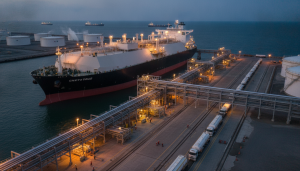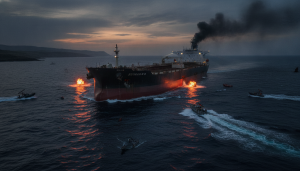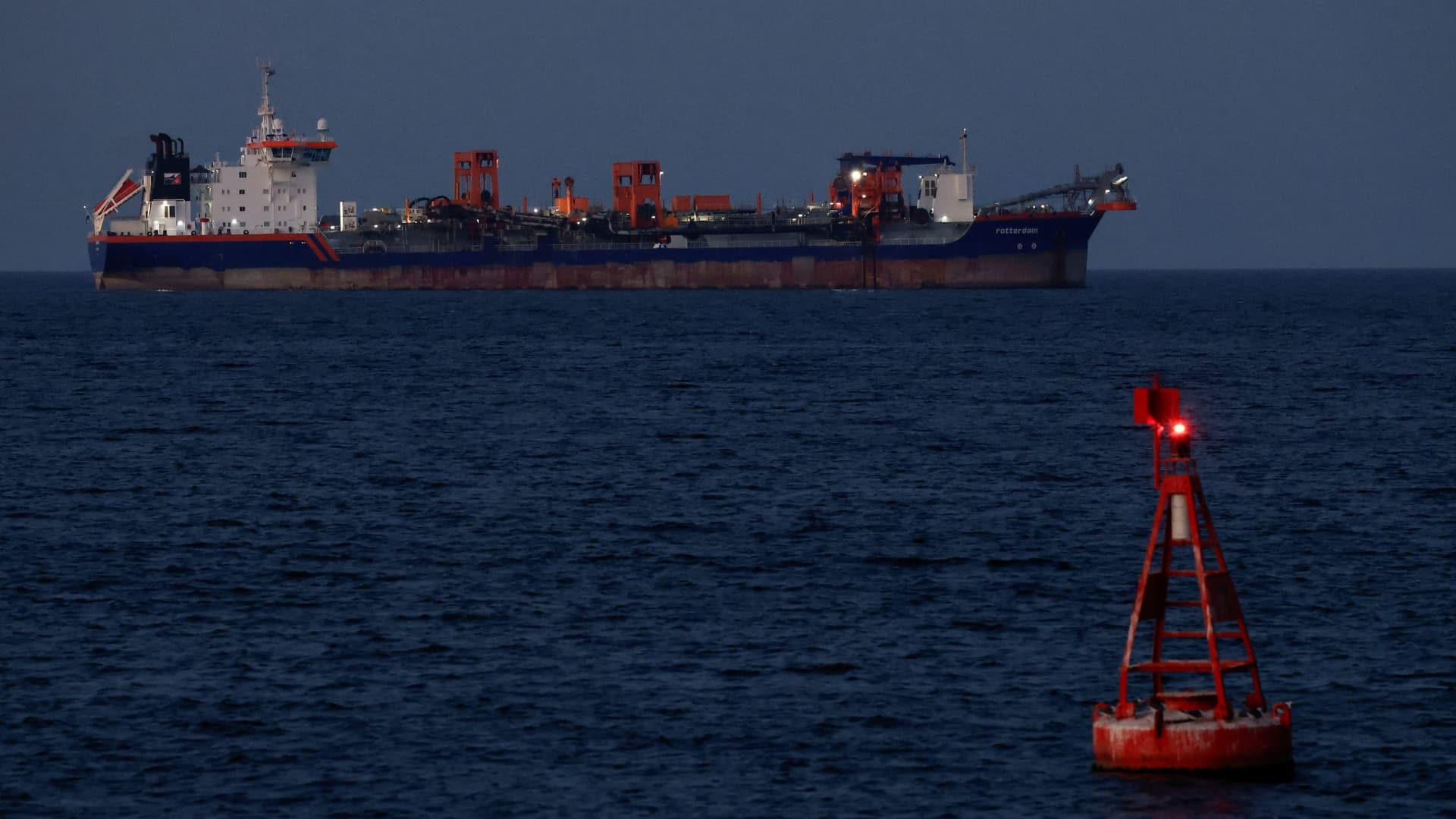
The Strait of Hormuz, a critical choke point for global oil transit, is once again asserting its prominence on the geopolitical stage, driving significant concerns among oil and gas investors. Escalating tensions, fueled by the U.S.-Israeli conflict with Iran, have not only raised the specter of supply disruptions but are also directly impacting the economics of oil shipping. The immediate consequence is a dramatic surge in insurance costs for vessels navigating these waters, alongside a looming, unaddressed risk of environmental catastrophe that could paralyze commerce in a region increasingly reliant on tourism and high-rise development. For investors, understanding the nuances of this risk, from soaring operational costs to the potential for uninsurable liabilities, is paramount to navigating the volatile energy market ahead.
The Escalating Cost of Transit: Beyond Hull Insurance
The immediate financial ripple from heightened tensions in the Persian Gulf is a sharp increase in marine insurance premiums. Industry reports indicate that coverage for ships’ hulls, machinery, and cargo has surged by an alarming 4-6 times compared to previous weeks. While availability of this essential coverage has largely persisted, the astronomical cost directly translates into higher operational expenditures for shipping companies and, ultimately, increased prices for transported crude. However, the more insidious and potentially catastrophic risk remains largely unaddressed: environmental pollution. The region, despite its immense wealth and rapid development into a tourism hub, lacks the sophisticated oil clean-up infrastructure and technology readily available in other parts of the world. This gap creates a massive, expensive pollution risk that the global insurance market is currently ill-equipped to calculate or cover, particularly for business disruption claims should a major spill contaminate destination beaches. This “unknowable” risk is causing significant apprehension, drawing parallels to the U.S. market’s struggle with terrorism risk post-9/11 before government intervention provided a critical backstop.
Market Volatility and Investor Sentiment Amidst Geopolitical Jitters
Despite the palpable increase in geopolitical risk in the Strait of Hormuz, the broader crude oil market has shown a degree of resilience, albeit with underlying volatility. As of today, Brent Crude trades at $92.89, registering a modest daily decline of 0.38%, with its intraday range spanning $92.57 to $94.21. Similarly, WTI Crude stands at $89.51, down 0.18%, moving between $88.76 and $90.71. Gasoline prices are also slightly lower at $3.11, down 0.64%. This current snapshot reflects a market grappling with multiple forces. While Hormuz risks introduce a supply premium, broader demand concerns or other supply factors may be tempering aggressive price increases. In fact, our proprietary data indicates that Brent Crude has trended downwards over the past two weeks, falling from $101.16 on April 1st to $94.09 on April 21st, a decline of $7.07 or approximately 7%. This recent downtrend suggests that while the market acknowledges the Hormuz risk, it may not yet be fully pricing in a catastrophic supply disruption, or perhaps other fundamental factors are currently outweighing the geopolitical premium. Investors are keenly observing whether the current insurance challenges and unaddressed pollution risks will eventually translate into more significant upward pressure on crude prices or if alternative supply assurances will continue to buffer the market.
Addressing the Uninsurable: The Call for Government Backstops
The core of the current dilemma lies in the nature of environmental pollution risk in the Persian Gulf – it is largely considered “unknowable” or “uninsurable” by conventional markets. Insurers lack the historical data and models to accurately quantify the financial impact of a massive oil spill contaminating an entire region of high-value coastal assets and disrupting commerce for an extended period. While the Development Finance Corporation (DFC) has committed a $20 billion reinsurance facility, it is, for now, explicitly intended as a backstop for hull, machinery, and cargo coverage. Crucially, it makes no mention of essential pollution coverage. Without a dedicated mechanism to manage these catastrophic environmental liabilities, a significant “quagmire will continue to clog commerce.” This situation strongly echoes the post-9/11 environment where the U.S. government intervened with the Terrorism Risk Insurance Act (TRIA) in 2002 to help insurance carriers manage catastrophic terrorism risk. A similar government-backed solution for environmental risk in the Persian Gulf could be essential to restore market confidence, ensure the free flow of oil, and prevent a potential economic and ecological disaster from becoming an insurmountable financial burden for the shipping industry and the region itself.
Forward-Looking Outlook: Navigating Upcoming Data and Geopolitical Tensions
For investors, the coming weeks will present a critical juncture to assess the interplay between market fundamentals and escalating geopolitical risks. Several key energy events are on the horizon that will provide vital data points. The EIA Weekly Petroleum Status Reports, scheduled for April 22nd, April 29th, and May 6th, will offer crucial insights into U.S. crude inventories, refining activity, and petroleum product demand. Any significant drawdowns in inventories could amplify the perceived supply risk from the Strait of Hormuz, potentially pushing prices higher. Conversely, builds could offer a temporary cushion. The Baker Hughes Rig Count on April 24th and May 1st will shed light on North American drilling activity, hinting at future supply trends. Furthermore, the EIA Short-Term Energy Outlook on May 2nd will provide updated forecasts for supply, demand, and prices, offering a broader perspective on the market’s trajectory through mid-2026. Investors must meticulously track these fundamental reports alongside ongoing geopolitical developments. A sudden escalation in Hormuz, coupled with tightening inventories or stronger-than-expected demand, could trigger a sharp upward price correction, while a de-escalation or robust supply figures might temper gains despite the underlying risk premiums.
Investor Concerns and Strategic Positioning
Our proprietary reader intent data reveals that investors are actively seeking clarity on the future direction of oil prices, with common inquiries ranging from “is WTI going up or down?” to “what do you predict the price of oil per barrel will be by end of 2026?” and even specific company performance questions like “How well do you think Repsol will end in April 2026?” These questions underscore the prevailing uncertainty. In this environment, strategic positioning is critical. Investors should consider the potential for continued volatility and the dual impact of market fundamentals and geopolitical “black swans.” Companies with diversified shipping routes, lower reliance on Hormuz transit, or robust risk management frameworks may offer greater stability. Monitoring policy developments regarding government-backed insurance for environmental risks will also be crucial, as such a measure could significantly de-risk the region and potentially stabilize shipping costs. While predicting the exact price of oil by year-end remains challenging given the multitude of variables, the ongoing Hormuz situation undeniably adds a significant, persistent risk premium. Vigilance, diversification, and a deep understanding of both macro fundamentals and specific geopolitical flashpoints will be key to navigating the oil and gas investment landscape in the coming months.