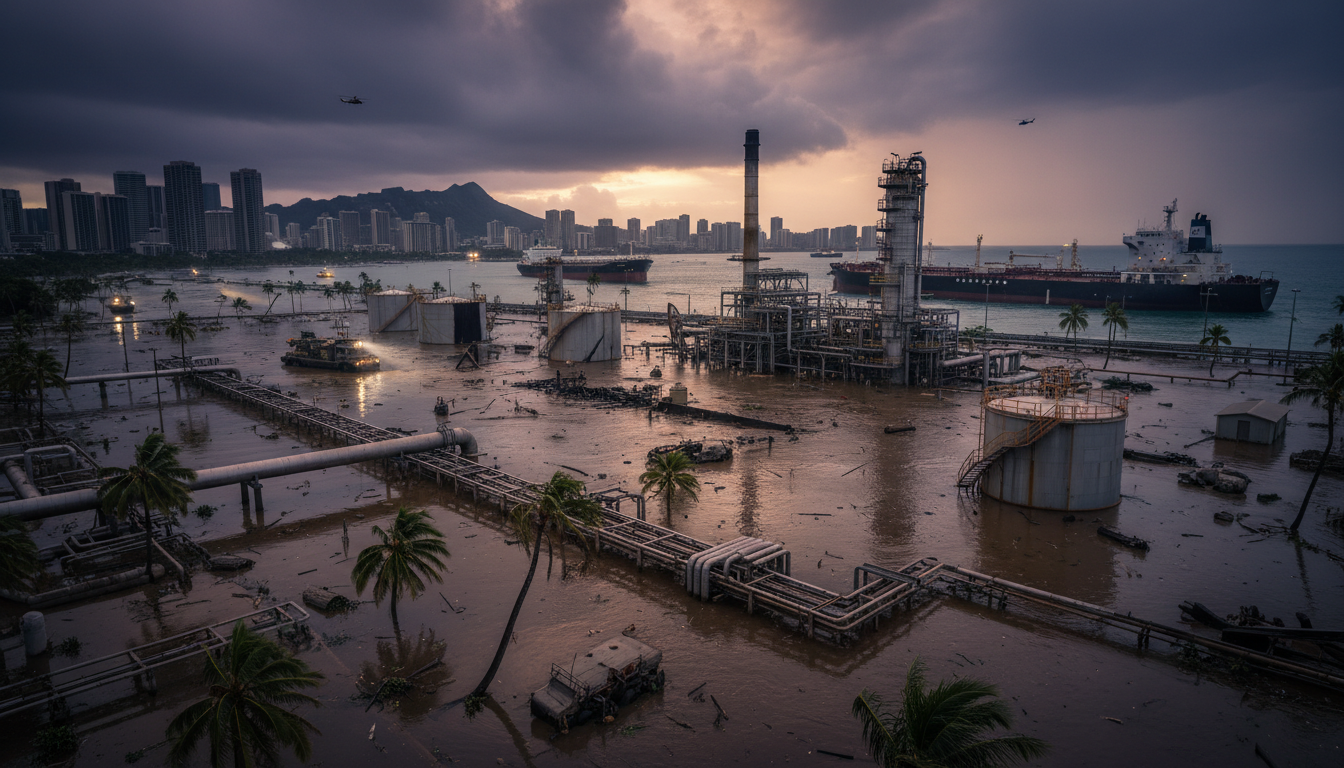
The recent catastrophic flooding on Oʻahu’s North Shore serves as a potent, real-world stress test for the critical infrastructure underpinning regional economies, particularly those reliant on complex energy supply chains. For oil and gas investors, this event is far more than a local natural disaster; it’s a stark case study in operational risk, infrastructure vulnerability, and the cascading effects of unforeseen disruptions. The confluence of inaccurate forecasts, critical equipment failures, and communication breakdowns that characterized the O’ahu response offers invaluable lessons for evaluating the resilience of energy assets globally. Understanding these vulnerabilities is paramount for safeguarding portfolios against similar, increasingly frequent climate-related challenges that can destabilize regional fuel supplies, impact logistics, and erode long-term asset value.
Infrastructure Fragility and Regional Fuel Supply Risk
The Oʻahu flood laid bare the fragility of essential monitoring infrastructure, directly impacting decision-making during the crisis. The inoperability of a crucial Doppler radar on Molokaʻi since March 12, due to persistent motor issues, severely hampered officials’ ability to accurately forecast rainfall intensity and location. This isn’t merely a weather-related issue; it’s a critical breakdown in the early warning systems that protect all forms of infrastructure, including those vital for energy distribution. For an island economy like Hawaii, which imports virtually all of its fuel, disruptions to supply chains or local storage facilities due to such events can have immediate and severe consequences, leading to price spikes and shortages.
As of today, Brent crude trades at $92.86, down 0.41% on the day, while WTI crude is at $89.13, down 0.6%. Gasoline prices currently stand at $3.11, a 0.64% decrease. While these global benchmarks reflect broader market dynamics, the 14-day trend for Brent, which saw a decline from $101.16 on April 1st to $94.09 on April 21st, underscores the market’s sensitivity to various inputs. Localized events like the Oʻahu flood, while not immediately moving global prices significantly, highlight how critical regional fuel supply can become. A sustained disruption to a major refining hub or import terminal, exacerbated by infrastructure failures, could quickly translate into regional price premiums and increased volatility, impacting downstream energy companies and the consumers they serve. Investors must assess the physical resilience of energy assets and their surrounding infrastructure, especially those in geographically vulnerable locations.
Navigating Forecasting Blind Spots and Investor Uncertainty
The Oʻahu flood underscored a critical challenge for emergency management and, by extension, for energy investors: the limitations of forecasting. Initial National Weather Service forecasts for March 19 predicted only minor rainfall, evolving later to 2-3 inches, yet actual rainfall far exceeded these estimates. This “atypically high uncertainty” directly contributed to “vagueness of information” for decision-makers like Randal Collins, who directed the emergency response. Such forecasting blind spots, particularly when critical monitoring equipment like the Molokaʻi radar is offline, introduce a significant element of unpredictability into operational risk assessment.
This unpredictability directly resonates with concerns we see from our readers. Many investors are currently asking, “is WTI going up or down?” or “what do you predict the price of oil per barrel will be by end of 2026?” While macro supply-demand fundamentals are key, events like the Oʻahu flood demonstrate how localized, infrastructure-related failures can inject unforeseen volatility and complicate even short-term price movements. For energy investors, understanding the systemic risks associated with outdated or poorly maintained monitoring infrastructure is crucial. It means recognizing that even with robust personnel in place, inadequate information flow can severely compromise an organization’s ability to protect assets and ensure supply chain integrity. Relying solely on historical data or generalized forecasts without accounting for these specific infrastructure vulnerabilities introduces a significant, often overlooked, risk factor into investment theses.
Proactive Resilience and Upcoming Market Signals
For savvy oil and gas investors, the Oʻahu flood is a powerful argument for prioritizing proactive risk assessment and investing in climate-resilient infrastructure. The fact that the Molokaʻi radar had been down since March 12, with service logs showing issues since late November, indicates a pattern of deferred maintenance and a lack of urgency in addressing critical vulnerabilities. This operational oversight is a red flag for evaluating any energy company with assets in vulnerable regions.
As we look ahead, key energy market signals will continue to shape investor sentiment. The EIA Weekly Petroleum Status Reports on April 22nd, April 29th, and May 6th, along with the Baker Hughes Rig Counts on April 24th and May 1st, will provide crucial insights into supply, demand, and drilling activity. Furthermore, the EIA Short-Term Energy Outlook on May 2nd will offer a macro perspective on future market trends. However, smart investors will be looking beyond the headline figures from these reports. They will be integrating the lessons from Oʻahu, asking how well energy companies are assessing and mitigating infrastructure risks, how robust their monitoring systems are, and what contingency plans are in place for climate-related disruptions. While these reports provide a broad market picture, the micro-level vulnerabilities exposed in Hawaii underscore the importance of due diligence into the specific operational resilience of assets, particularly in an era of escalating extreme weather events.
The Investment Imperative for Robust Systems
The Oʻahu flood serves as a stark reminder that even well-staffed emergency operations, such as Honolulu’s, can be crippled by inadequate actionable intelligence and obscured visibility. Director Randal Collins’ acceptance of accountability highlights that leadership alone cannot overcome systemic infrastructure failures and information deficits. For energy investors, this translates into an imperative to scrutinize not just the financial health and production capacity of companies, but also their investment in resilient infrastructure, advanced monitoring technologies, and robust risk management protocols.
The long-term viability of energy assets, especially those involved in refining, storage, or transport in coastal or climate-vulnerable areas, is increasingly tied to their ability to withstand and recover from severe weather events. Companies that proactively invest in upgrading infrastructure, implementing redundant monitoring systems, and fostering clear communication channels will not only mitigate operational risks but also build long-term value and enhance investor confidence. In an increasingly unpredictable world, the Oʻahu flood underscores that infrastructure resilience is no longer a luxury, but a fundamental pillar of sound energy investment strategy.


