The energy sector continues its rapid evolution, presenting both formidable challenges and compelling opportunities for investors. Amidst ongoing market volatility, the push for decarbonization is reshaping operational strategies across industries. A recent development at Hamburg Port, where Hamburger Hafen und Logistik AG (HHLA) successfully deployed a hydrogen fuel cell-powered straddle carrier, offers a tangible glimpse into the future of heavy-duty logistics and its implications for traditional oil and gas demand. This initiative, part of the broader Clean Port & Logistics (CPL) cluster, isn’t merely a technological showcase; it’s a critical test case for hydrogen’s viability in an economy still heavily reliant on fossil fuels, demanding a keen eye from investors navigating the energy transition.
Hydrogen’s Real-World Performance Amidst Market Volatility
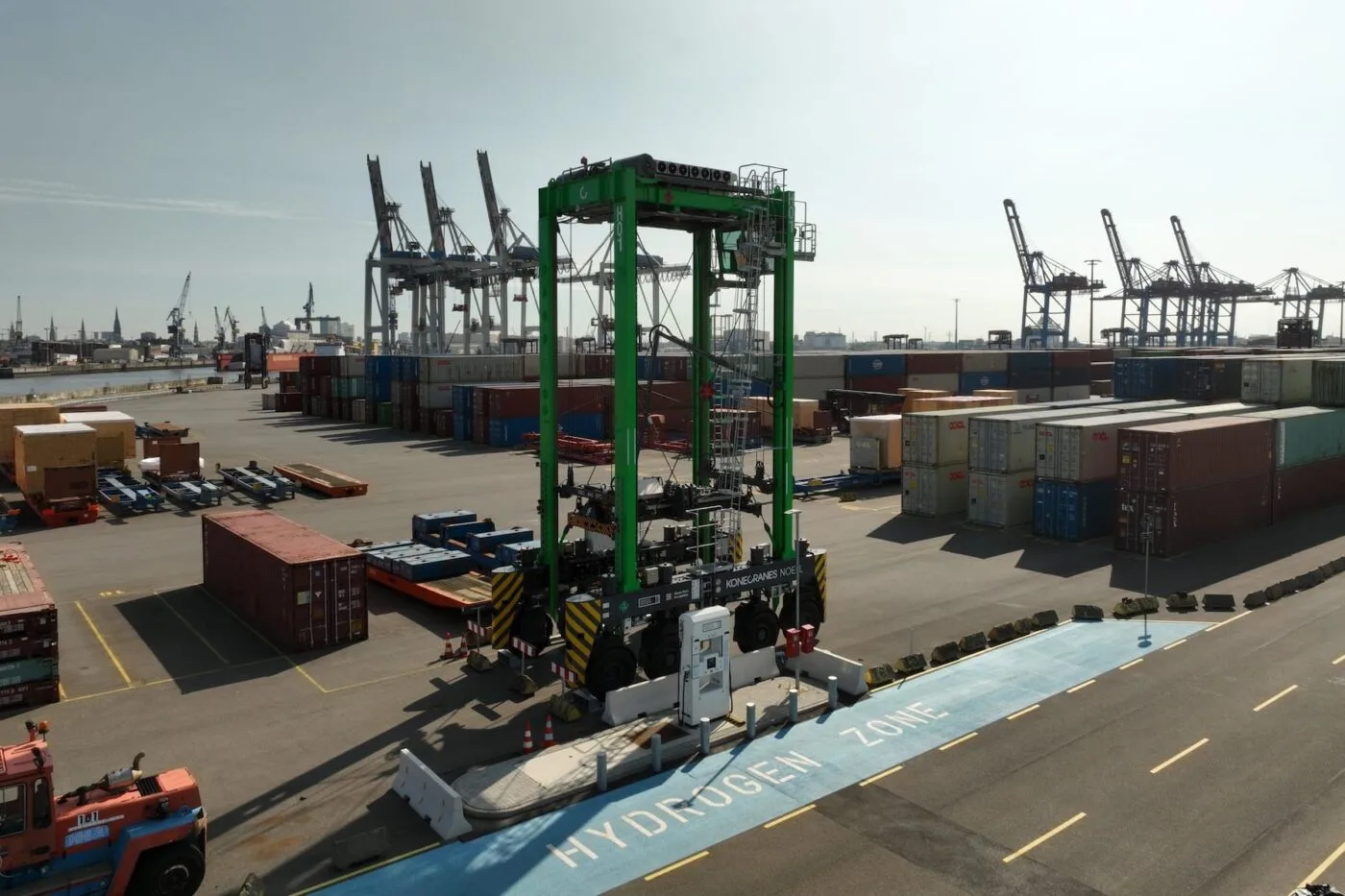
The successful deployment of Konecranes’ hydrogen fuel cell straddle carrier at Container Terminal Tollerort (CTT) provides concrete evidence that hydrogen-powered heavy-load operations can match the performance of conventional and hybrid systems, all while achieving zero emissions. HHLA’s Dr. Volker Windeck highlighted the technology’s rapid response and equivalent handling capabilities during initial practical tests. This operational validation is a significant milestone, proving hydrogen is not just a theoretical alternative but a practical solution for decarbonizing critical infrastructure like ports.
This development unfolds against a backdrop of significant turbulence in the crude oil markets. As of today, Brent Crude trades at $90.38 per barrel, marking a substantial -9.07% decline within a day range of $86.08-$98.97. Similarly, WTI Crude has fallen to $82.59, down -9.41% from its daily range of $78.97-$90.34. Our proprietary data shows Brent has plummeted by $-22.4, or -19.9%, over the past 14 days, from $112.78 to its current price. This steep downturn, mirrored by a -5.18% drop in gasoline prices to $2.93, underscores the persistent volatility and pricing pressures faced by traditional oil and gas. For investors, this creates a complex dynamic: while lower crude prices might temporarily reduce the economic incentive for alternative fuels, the long-term strategic value of zero-emission solutions like hydrogen remains undiminished, driven by regulatory mandates and environmental commitments that transcend short-term commodity cycles.
The Investment Calculus: Hydrogen vs. Hydrocarbons in Heavy Logistics
The shift towards alternative fuels in heavy logistics, as demonstrated by the Hamburg Port project, is not solely about environmental compliance; it’s increasingly about long-term operational resilience and cost stability. While current crude prices might fluctuate wildly, the strategic value of an energy source that promises carbon freedom and, potentially, more stable long-term pricing, becomes apparent. The €3 million funding from the German Federal Ministry of Transport (BMV) for the Clean Port & Logistics cluster and its hydrogen filling station, through the National Innovation Program for Hydrogen and Fuel Cell Technology, signals robust governmental support. This public investment de-risks early-stage adoption and accelerates infrastructure development, a critical factor for scaling hydrogen technologies.
Investors are keenly observing how these dynamics will shape the future energy landscape. A question frequently posed by OilMarketCap readers, “what do you predict the price of oil per barrel will be by end of 2026?”, highlights the deep uncertainty surrounding future hydrocarbon valuations. Projects like Hamburg’s hydrogen initiative directly contribute to the erosion of long-term oil demand projections, even if the impact is incremental today. The collaboration within the CPL cluster, involving HHLA and over 40 global partners, emphasizes the collective industry effort to bring hydrogen-powered heavy-duty vehicles to market. This collaborative model spreads development costs and accelerates learning, making the transition more efficient and attractive for private sector investment. Companies actively participating in such initiatives, or those providing critical components and services to the hydrogen economy, are positioning themselves for significant growth as the energy transition gains momentum.
Navigating the Future: Regulatory Push and Upcoming Market Catalysts
The German government’s financial backing for the hydrogen test field at Hamburg Port is emblematic of a broader global regulatory push towards decarbonization. Such policy support is a critical catalyst for the adoption of alternative fuels, creating a favorable environment for investment in hydrogen infrastructure and technology. For oil and gas investors, understanding these policy signals is paramount, as they directly influence the pace and direction of energy transition. This regulatory momentum provides a structural tailwind for hydrogen, even as the traditional oil market grapples with its own immediate challenges.
Looking ahead, the next 14 days hold several pivotal events that will undoubtedly shape the near-term outlook for crude prices and, by extension, the economic calculus for alternative fuels. The upcoming OPEC+ Ministerial Meeting on April 19th is a critical juncture. Investors are eager to understand “What are OPEC+ current production quotas?” and how these might be adjusted in response to recent price declines. Any decision on production levels will directly impact supply and price stability, influencing the competitive landscape for hydrogen. Furthermore, the API Weekly Crude Inventory reports on April 21st and 28th, along with the EIA Weekly Petroleum Status Reports on April 22nd and 29th, will provide fresh insights into demand and supply fundamentals. These reports, alongside the Baker Hughes Rig Count on April 24th and May 1st, will offer a clearer picture of market health and future production trajectories. While these events primarily focus on hydrocarbons, their outcomes will indirectly inform the urgency and funding directed towards hydrogen solutions, as sustained high oil prices would accelerate the economic case for alternatives, while deep slumps might temper it in the short term, though never fully extinguishing the long-term decarbonization imperative.
Beyond the Port: Broader Implications for Energy Sector Investors
The successful trial of a hydrogen fuel cell straddle carrier extends beyond the confines of Hamburg Port, signaling a broader paradigm shift for heavy-duty transport and logistics globally. This sector, notoriously difficult to decarbonize due to its demanding power requirements, represents a significant portion of global emissions and a substantial segment of traditional fuel consumption. Proving hydrogen’s viability here opens doors for its application in other heavy industries, from mining equipment to long-haul trucking and rail. Companies like Konecranes, which are at the forefront of developing such innovative machinery, are prime examples of how traditional industrial players are adapting and creating new revenue streams within the evolving energy landscape.
For diversified energy investors, the question isn’t whether hydrogen will replace hydrocarbons entirely, but rather how rapidly and significantly it will carve out market share in specific, hard-to-abate sectors. The increasing investor interest in how individual companies, such as Repsol (as indicated by reader queries about its performance), are positioning themselves for the energy transition underscores the need for a granular understanding of corporate strategies. Companies that are actively investing in, and partnering on, projects like HHLA’s hydrogen initiative are building future-proof assets and competencies. This trend suggests a strategic reallocation of capital towards infrastructure, technology, and services that support the emerging hydrogen economy, creating a new set of investment opportunities within the broader energy sector.