The Megawatt Shift: Germany’s EV Charger and the Long-Term Outlook for Oil Demand
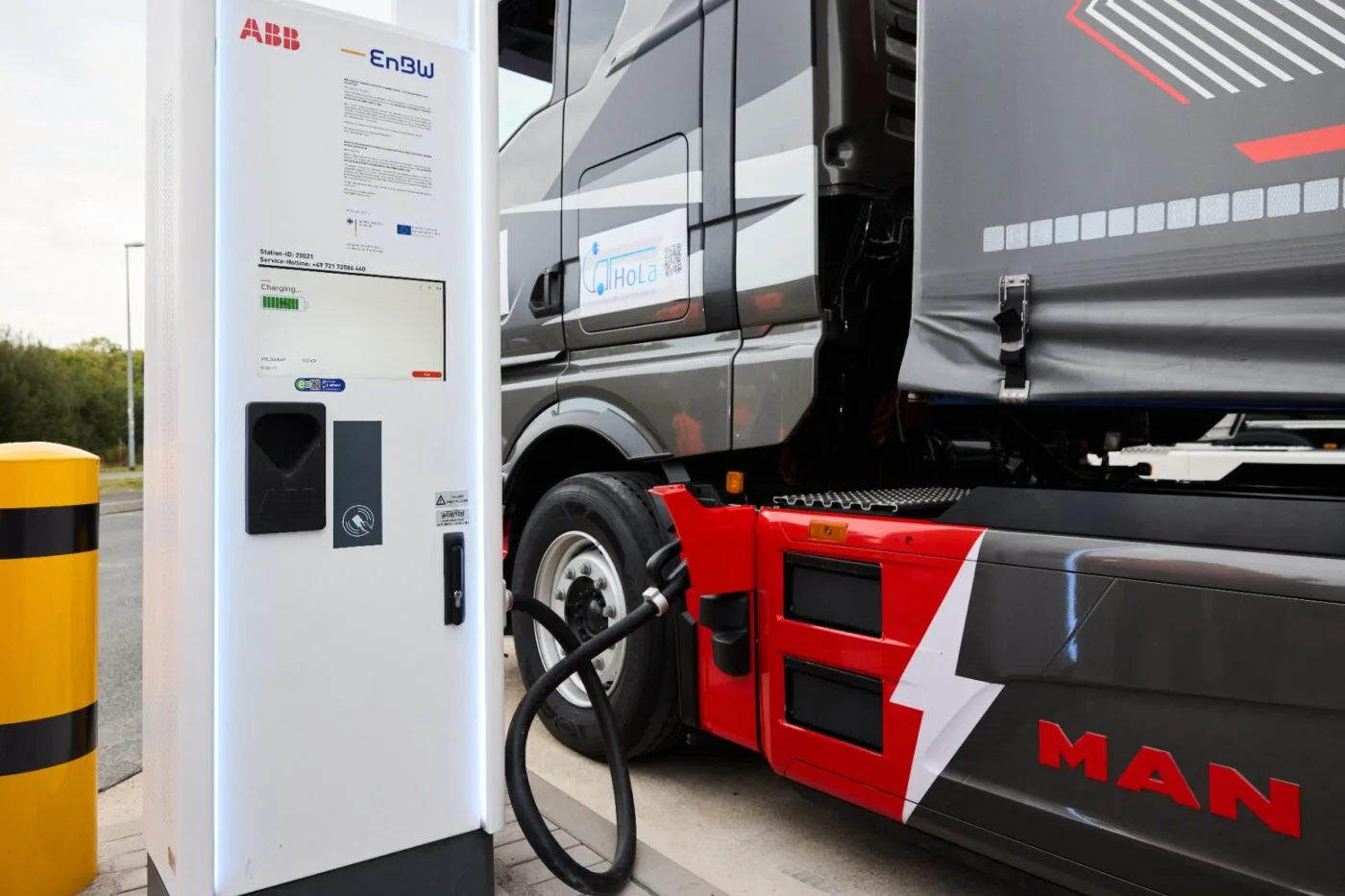
Germany’s recent commissioning of its first public megawatt charging point (MCS) for heavy-duty electric trucks at the Lipperland Süd rest stop on the A2 motorway marks a pivotal moment in the energy transition. Spearheaded by the “HoLa – High-Power Charging for Long-Distance Truck Transport” project, this 1.2-megawatt station, capable of delivering hundreds of kilometers of range in just 30 to 45 minutes, is far more than a technical achievement. For savvy oil and gas investors, it represents a tangible, accelerating trend towards the electrification of a critical segment of fuel demand: long-haul logistics. While the immediate impact on crude consumption is negligible, this development underscores the inexorable long-term pressures on fossil fuel demand, demanding a nuanced understanding of both short-term market volatility and strategic portfolio adjustments.
Electrifying the Freight Corridor: A Blueprint for Diesel Displacement
The HoLa project, coordinated by Fraunhofer ISI and the P3 Group since 2021, is not merely about a single charging station. It’s a strategic initiative to build a network of fast-charging hubs along the A2 motorway between Berlin and the Ruhr area, with five locations planned, featuring both CCS and MCS chargers. The inaugural MCS charger at Lipperland Süd, operated by EnBW mobility+ and manufactured by ABB, showcases a charging power three times higher than standard 400 kW CCS chargers, with the theoretical potential of the MCS standard reaching up to 3.75 megawatts. This infrastructure is being developed in close collaboration with major truck manufacturers including Daimler Truck, MAN, Scania, and Volvo, ensuring vehicle compatibility and rapid adoption once the network scales. As Prof. Patrick Plötz from Fraunhofer ISI noted, megawatt charging is the “prerequisite for an economically viable electrification of long-haul trucking.” This isn’t a speculative venture; it’s a demonstration of a viable pathway to decarbonize heavy-duty transport, a sector historically reliant on diesel and often considered one of the hardest to electrify.
Navigating Current Market Volatility Amidst Emerging Demand Pressures
Against the backdrop of these long-term shifts, the crude oil market continues to exhibit significant volatility. As of today, Brent crude trades at $90.38, marking a notable 9.07% decline from yesterday’s close, with an intraday range spanning $86.08 to $98.97. Similarly, WTI crude has fallen to $82.59, down 9.41%, trading between $78.97 and $90.34. This sharp dip extends a broader trend, with Brent having shed nearly 19.9% from its $112.78 high just two weeks ago. Gasoline prices have also softened, currently at $2.93, a 5.18% drop. While today’s price action is driven by a complex interplay of macroeconomic concerns, geopolitical developments, and supply expectations, developments like Germany’s new megawatt charger highlight a persistent, albeit gradual, erosion of future demand. For oil and gas investors, understanding this duality is critical: short-term market swings are influenced by immediate supply/demand imbalances, but the underlying trajectory of demand, particularly for refined products like diesel, faces structural headwinds from accelerating electrification efforts.
Investor Focus: Long-Term Price Trajectories and Portfolio Resilience
Our proprietary intent data reveals that investors are keenly focused on the future of oil prices, with questions like “what do you predict the price of oil per barrel will be by end of 2026?” frequently appearing. The commissioning of Germany’s first megawatt charger provides a tangible piece of the puzzle for these long-term projections. While the scale of global heavy-duty trucking is immense, and the transition will take decades, each successfully deployed high-power charging station removes a potential future barrel of diesel demand. This systematic infrastructure build-out, supported by major automotive and energy players, fundamentally alters the demand ceiling for crude in the long run. Companies deeply invested in refining and distributing middle distillates must strategically adapt. The focus shifts towards diversified energy portfolios, investments in carbon capture, or a pivot towards petrochemicals and other higher-value products less susceptible to electrification. Even for individual energy stocks, like Repsol (a frequent query in our reader data), their long-term valuation will increasingly hinge on their forward-looking strategies in a decarbonizing world, rather than solely on traditional upstream or downstream performance.
Balancing Immediate Catalysts with Enduring Energy Transition Trends
While the electrification of heavy-duty transport signals a clear long-term direction, savvy investors must simultaneously navigate the powerful short-term catalysts that continue to dictate market movements. The upcoming OPEC+ Ministerial Meeting on April 19th, for instance, stands as a critical event. Decisions from this full ministerial gathering regarding production quotas could swiftly inject millions of barrels into or withdraw them from the market, creating immediate price volatility that far outweighs the nascent demand impact of a few megawatt chargers. Beyond OPEC+, weekly data points such as the API Crude Inventory on April 21st and 28th, and the EIA Weekly Petroleum Status Reports on April 22nd and 29th, will provide crucial insights into current supply and demand health. Furthermore, the Baker Hughes Rig Count on April 24th and May 1st will offer a glimpse into future production capacity. For the astute investor, success lies in understanding this dynamic tension: leveraging market intelligence around these immediate, supply-side events for tactical positioning, while simultaneously recognizing and strategically planning for the profound, irreversible shifts in demand driven by developments like Germany’s pioneering megawatt EV charger.


