A recent policy shift concerning offshore wind development in New York, coupled with hints of progress on natural gas infrastructure, signals evolving dynamics in the U.S. energy landscape. The Trump administration’s decision to lift a stop-work order on Equinor’s Empire Wind 1 project, a reversal that comes after significant investor concern, has broader implications for project development, regulatory certainty, and capital deployment across both renewable and traditional fossil fuel sectors. This move, alongside discussions of increased natural gas capacity for the Northeast, creates a complex and intriguing investment environment, one that demands a nuanced understanding of policy interplay with market fundamentals and investor sentiment.
Policy Volatility and the Price of Regulatory Uncertainty
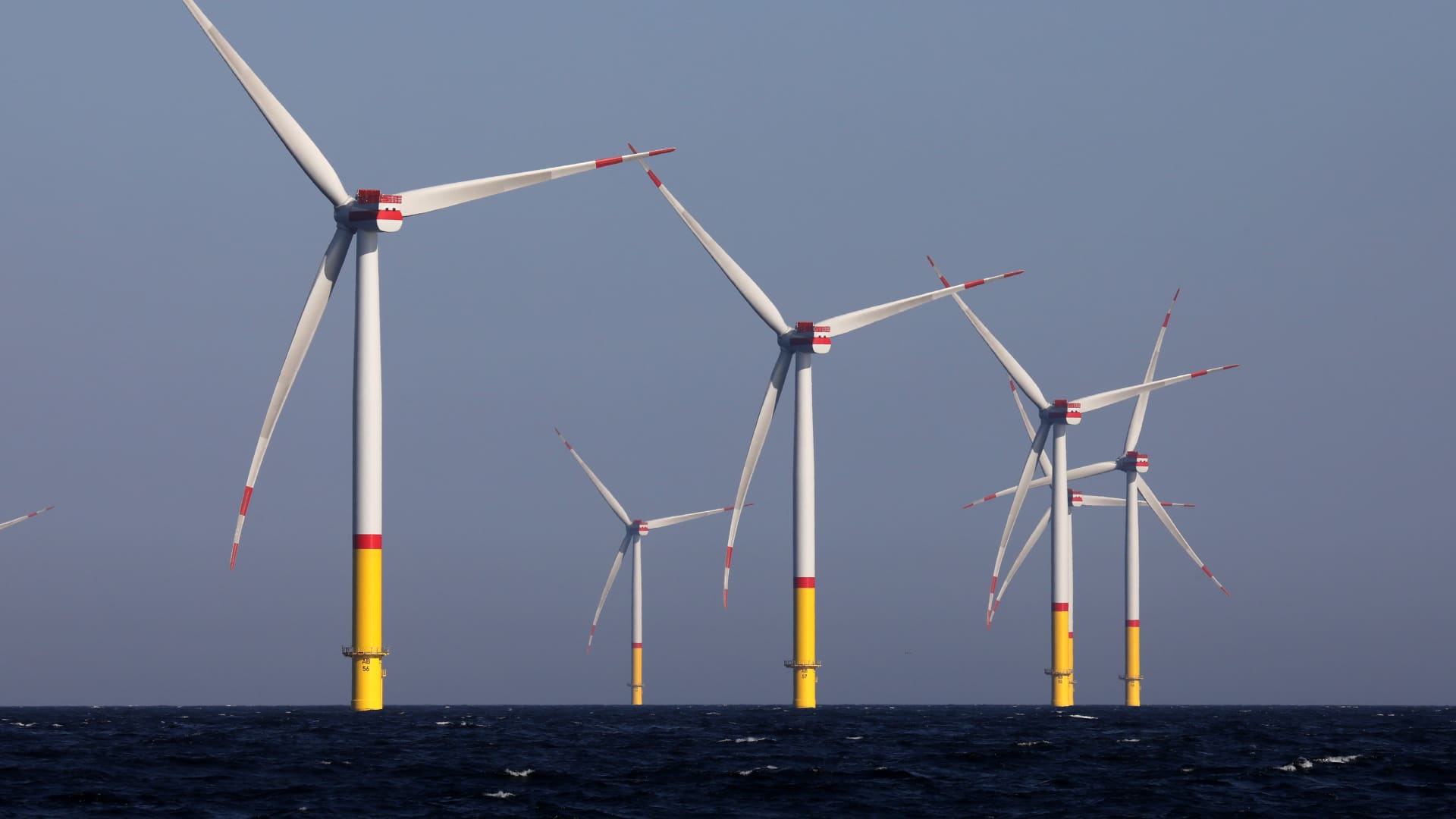
The Trump administration’s initial halt on Equinor’s Empire Wind 1 project, just weeks after construction began and with over 30% completion, sent ripples of concern through the energy investment community. Equinor has already committed $2.5 billion to this ambitious venture, slated to deliver 810 megawatts of electricity to New York City by 2027. Such substantial capital outlays make large-scale energy projects highly sensitive to regulatory stability. The stop-work order had fueled fears that other permitted offshore wind projects might face similar political headwinds, jeopardizing billions in planned investments and the creation of thousands of union jobs, such as the 1,500 supported by Empire Wind. While the lifting of the order provides immediate relief and allows Equinor to resume its planned installation activities this year, the episode underscores the inherent risks of policy unpredictability. For investors, this adds a layer of complexity to assessing project viability, particularly in sectors subject to frequent political shifts. The ability of an administration to unilaterally pause or reverse approvals for projects already underway highlights that regulatory risk remains a primary consideration in long-term energy infrastructure development.
The Emerging Gas-Renewables Symbiosis in the Northeast
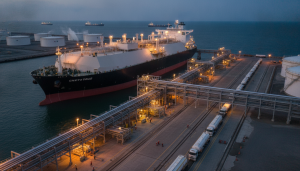
Beyond the offshore wind development, a potentially more significant signal for traditional energy investors emerged from the discussions surrounding the Empire Wind project: an apparent natural gas compromise. Interior Secretary Doug Burgum explicitly cited New York Governor Kathy Hochul’s “willingness to move forward on critical pipeline capacity” as a key factor in the decision to lift the wind project’s halt. This is a notable development for a state with a history of staunch opposition to new natural gas pipelines. Burgum articulated the economic benefits, including lower utility costs and increased access to reliable American natural gas, for residents across New York and New England. While Governor Hochul’s public statement did not explicitly mention natural gas, her reaffirmation of New York’s commitment to “work with the Administration and private entities on new energy projects that meet the legal requirements” strongly suggests a pragmatic shift. For the oil and gas sector, particularly those involved in midstream infrastructure, this could signal a thawing of political resistance to projects deemed essential for energy security and grid reliability. It implies a recognition that even as renewable energy capacity expands, a robust and reliable natural gas infrastructure remains crucial for balancing the grid and ensuring affordable energy supply, creating a potential symbiotic relationship between gas and renewables rather than a purely adversarial one.
Navigating Market Volatility Amidst Policy Shifts
The recent policy developments in New York occur against a backdrop of significant volatility in the global crude oil markets. As of today, Brent crude trades at $90.38 per barrel, marking a substantial daily decline of 9.07%, having seen an intraday range of $86.08 to $98.97. Similarly, WTI crude has fallen to $82.59, down 9.41% within a daily range of $78.97 to $90.34. This sharp daily correction follows a broader trend over the past two weeks, where Brent crude has shed $20.91, dropping from $112.78 on March 30th to $91.87 yesterday, representing an 18.5% decrease. Gasoline prices have also followed suit, trading at $2.93, a 5.18% drop today. Such pronounced market swings underscore the unpredictable nature of the global energy landscape, influenced by geopolitical events, supply concerns, and evolving demand outlooks. For investors evaluating long-term energy projects, whether in offshore wind or natural gas pipelines, this commodity price volatility adds another layer of financial risk. The interplay between fluctuating input costs, project economics, and regulatory certainty becomes paramount. A stable policy environment, even for renewable projects, can help mitigate some of the market-driven financial uncertainties, allowing for more predictable capital allocation and return generation.
Upcoming Catalysts and Investor Outlook for 2026
Our proprietary reader intent data reveals a strong focus among investors on future price trajectory and supply dynamics, with common queries including “what do you predict the price of oil per barrel will be by end of 2026?” and “What are OPEC+ current production quotas?” These questions highlight the market’s intense focus on factors that will shape the coming months. The upcoming OPEC+ Joint Ministerial Monitoring Committee (JMMC) meeting on April 18th and the subsequent Full Ministerial Meeting on April 19th are critical dates on the energy calendar. Any statements or decisions from these gatherings regarding production quotas could significantly impact global crude supply and, by extension, crude prices, directly influencing the profitability and investment appetite for upstream oil and gas projects. Beyond OPEC+, weekly data releases will continue to provide vital granular insights into the U.S. market. The API Weekly Crude Inventory (April 21st, 28th) and the EIA Weekly Petroleum Status Reports (April 22nd, 29th) offer a near real-time pulse on U.S. supply, demand, and storage levels. Complementing this, the Baker Hughes Rig Count on April 24th and May 1st will indicate drilling activity trends, signaling future production capacity. These data points, combined with the U.S. policy signals emanating from developments like the New York wind and gas compromise, form the complex mosaic that investors must interpret to position their portfolios effectively for the remainder of 2026 and beyond. The balancing act between fostering renewable growth and ensuring energy security through traditional resources will likely remain a dominant theme.