The global oil markets experienced a significant downturn on Friday, as initial reports suggested a major breakthrough in the fraught geopolitical standoff surrounding the Strait of Hormuz. Following declarations from Tehran asserting the critical maritime artery was open for commercial navigation, crude oil futures plummeted. West Texas Intermediate (WTI) crude, the U.S. benchmark, concluded the trading day down a substantial 12%, settling at $83.85 per barrel. Simultaneously, Brent crude futures, the international benchmark, saw a 9% decline by market close. This sharp sell-off indicated a broad market belief that a significant easing of global energy supply disruptions was imminent, based on what appeared to be a diplomatic victory.
However, an investor’s keen eye quickly detected a deepening layer of confusion and conflicting signals emerging from both Iranian officials and U.S. leadership. This ambiguity has since dampened any initial optimism, revealing that the pathway for oil tankers through the Strait of Hormuz remains anything but clear or secure, fundamentally challenging the market’s initial bullish interpretation of events.
Navigating Contradictory Signals in the Strait
The initial declaration by Iran’s Foreign Minister Seyed Abbas Araghchi, stating the strait was “completely open” for the duration of a ceasefire with the U.S. and Israel, provided the immediate catalyst for the market’s reaction. Yet, almost concurrently, Iranian state media outlets, particularly those aligned with the Revolutionary Guard, began circulating a set of conditions for safe passage that starkly contradicted the notion of unfettered access. These conditions mirrored the restrictive protocols Tehran has enforced for weeks, requiring commercial vessels to adhere to a specific route and coordinate extensively with the Iranian military. Crucially, any ships or their cargo deemed linked to “hostile nations” would be denied passage.
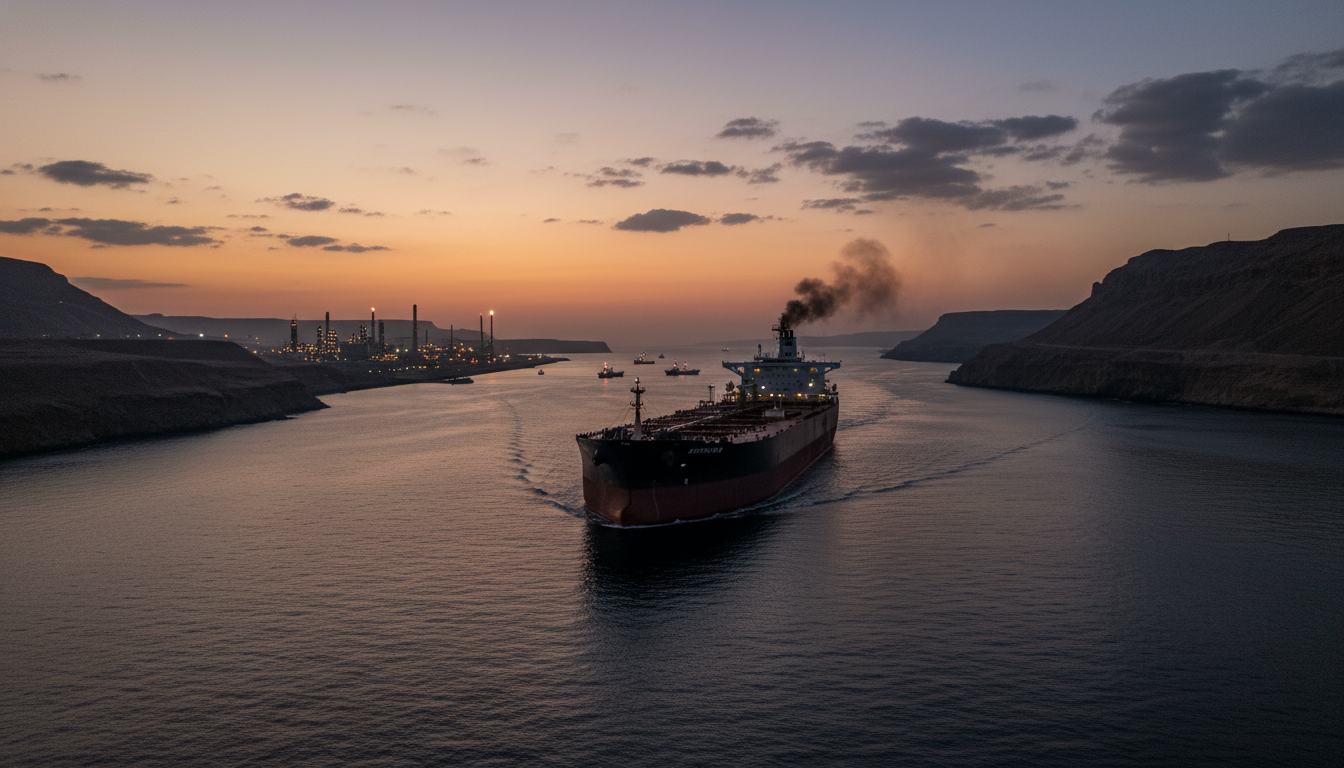
On the ground, these conflicting narratives played out in real-time. According to Matt Smith, director of commodity research at Kpler, several tankers and cargo ships reportedly attempted to navigate the strait on Friday, utilizing a route around Larak Island, as designated by Iran. Astonishingly, these vessels suddenly reversed course, unable to proceed. Smith observed, “They’ve clearly not been given approval to pass through.” This practical blockage highlighted the severe disconnect between rhetorical declarations and operational reality, raising red flags for global energy supply chain stability.
Tomer Ranaan, a maritime risk analyst with Lloyd’s List Intelligence, echoed this sentiment, noting the persistent ambiguity. He stated it was “unclear whether there’s a dramatic change here,” emphasizing that “Iran still wants ships to transit through its territorial waters.” This requirement implies a level of control and potential vulnerability for shipping companies that fundamentally undermines the concept of an “open” international waterway. Compounding this, U.S. President Donald Trump affirmed that the American naval blockade of Iran remained firmly in place, directly clashing with Iran’s earlier threats to close the strait if the blockade were not lifted. For freight analyst Matthew Wright of Kpler, the inescapable conclusion was clear: the strait remains “functionally closed,” branding the initial market excitement as “a false dawn.”
Operational Hazards and Lingering Security Concerns
Beyond the political and regulatory complexities, the physical safety of transit remains a paramount concern for the shipping industry and, by extension, the energy market. BIMCO, the world’s largest shipping association, issued an urgent advisory on Friday, urging all vessels to actively avoid the Strait of Hormuz due to the persistent threat of naval mines. Jakob Larsen, BIMCO’s chief security officer, unequivocally stated that the area is “not declared safe for transit at this point.” This official guidance from a leading maritime authority provides a stark warning to tanker operators and insurers, who prioritize the safety of their crews and valuable cargo above all else.
For energy investors, this situation underscores a critical distinction: diplomatic overtures, while capable of temporarily calming the oil futures market through perceived de-escalation, cannot magically resolve the tangible, physical disruption to global energy supplies. As long as these profound security risks and operational uncertainties persist, the actual movement of crude oil and refined products through the strait remains severely hampered. The longer this crucial chokepoint remains effectively closed or highly risky, the more pronounced and severe the global energy supply crisis will become, impacting prices and availability across the board.
The Looming Supply Crunch: Asia Bears the Brunt
The ramifications of the extended closure are now beginning to cascade across the global energy landscape. The final shipments of crude oil and refined products that departed the Persian Gulf prior to the strait’s initial closure have now largely completed their weeks-long voyages to destinations in Asia, Europe, and North America. This marks a critical juncture, as the flow of new supplies has effectively ceased for a prolonged period. A prime example highlighted by Kpler freight analyst Wright is an Iraqi crude tanker scheduled to arrive in Long Beach, California, next week, representing one of these final pre-closure deliveries.
With these last consignments now delivered, the “dominoes will now start to fall,” warned Matt Smith. Refineries across Asia, particularly those heavily reliant on Middle Eastern crude oil for their feedstock, are already facing immense pressure and will inevitably be forced to curtail their output. This reduction in refinery activity carries significant downstream consequences for various product markets. Countries that import vital refined products, such as jet fuel, from these Asian refineries will potentially face critical supply shortfalls, impacting aviation, logistics, and industrial sectors globally.
Wright emphasized that “the supply crunch in Asia is bigger than anywhere else,” underscoring the region’s acute vulnerability. Many Asian nations have already “significantly drawn down on their onshore inventories,” leaving them with limited buffer capacity to weather the ongoing disruption. Investors must recognize that this is not a short-term blip but a foundational shift in regional energy security.
Looking ahead, a swift return to normalcy appears highly improbable. Wright projects that it will take months for traffic through the Strait of Hormuz to normalize. Large shipping companies, inherently risk-averse, are unlikely to rush back into potentially hazardous waters. Instead, they will undoubtedly adopt a cautious approach, observing the initial “first movers” and assessing the enduring safety and reliability of the route before committing their own fleets. This protracted period of uncertainty will continue to exert upward pressure on shipping costs, insurance premiums, and ultimately, crude oil and product prices, demanding vigilance from energy investors.