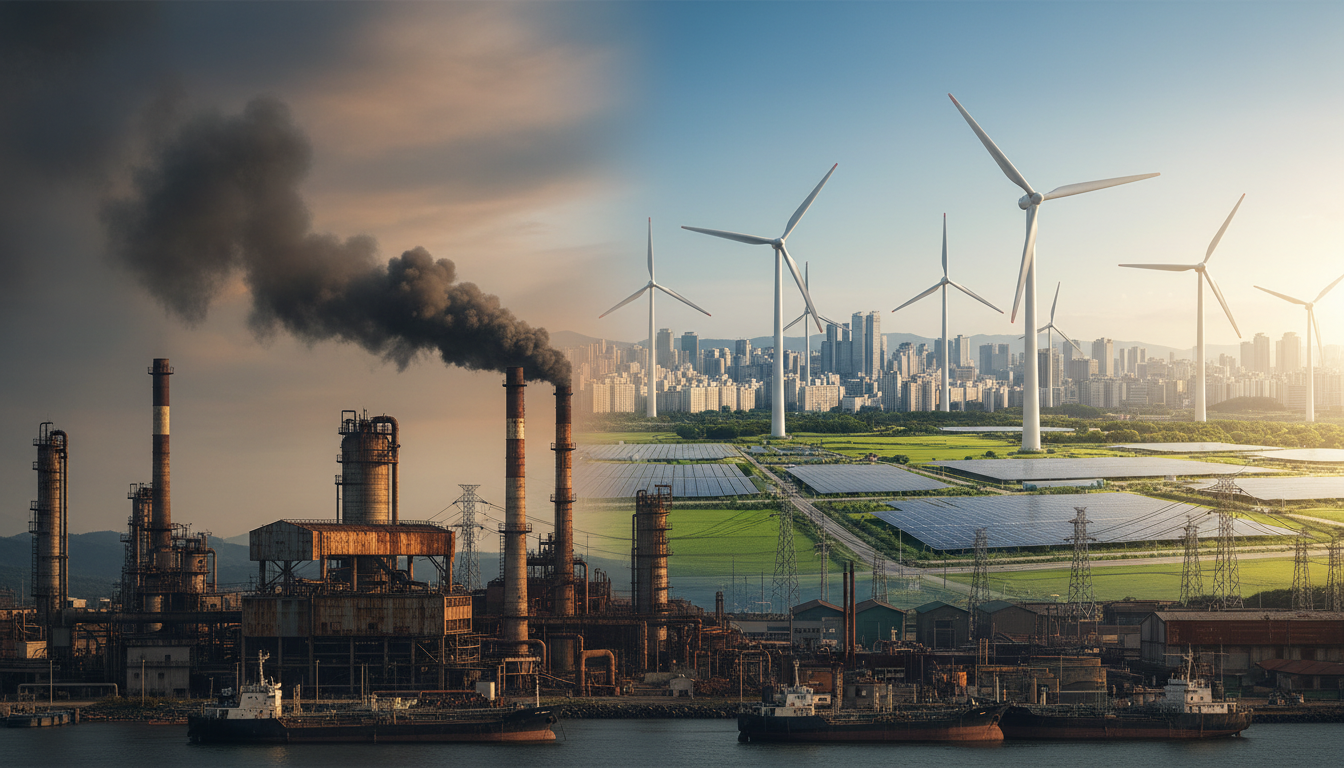
The geopolitical landscape is fundamentally reshaping energy policies across Asia, with South Korea emerging as a prime example of a nation accelerating its pivot towards renewable sources. Against a backdrop of Middle East tensions, Seoul’s energy minister has unequivocally declared this period a “significant turning point,” signaling a decisive push away from traditional oil dependence and towards a robust green energy future. This strategic redirection presents both challenges and substantial investment opportunities within the global energy sector.
Minister of Climate, Energy and Environment Kim Sung-hwan recently articulated a growing national consensus for a fundamental energy transformation. This sentiment is not merely aspirational; it translates into concrete, ambitious targets. South Korea has committed to achieving an impressive 100 gigawatts (GW) of renewable energy capacity by the close of 2030. For investors tracking energy transitions, this represents a massive expansion from the nation’s current renewable capacity of 37 GW, as reported by the Renewable Energy Institute.
Seoul’s Green Horizon: Solar and Wind Drive Capacity Expansion
South Korea’s strategy for achieving its ambitious 100 GW target centers primarily on wind and solar power. While wind energy development is acknowledged for its substantial lead times from conceptualization to actual generation, solar power is earmarked as the most effective short-term solution to rapidly boost capacity. This immediate focus on solar capitalizes on a critical domestic advantage.
Despite its industrial density, South Korea possesses ample solar resources. Seoul, for instance, records an average of 2,148 hours of sunshine annually. Crucially, provinces like South Jeolla and Jeju Island enjoy an additional 100 hours per year, putting South Korea in a demonstrably stronger position than European nations such as Germany, which has successfully deployed extensive solar infrastructure despite less favorable conditions. For investors eyeing the solar market, this fundamental resource availability underpins the nation’s confidence in its solar future.
In 2025, renewables supplied approximately 9% of South Korea’s total power needs, with solar power making the most significant contribution, according to IEA data. The aggressive increase to 100 GW by 2030 underscores an expected exponential growth in this segment, creating fertile ground for technology providers, project developers, and infrastructure investors.
Navigating Supply Chain Dynamics in Solar Manufacturing
The global solar industry is heavily influenced by the manufacturing prowess of China, and South Korea is not immune to this market reality. Minister Kim candidly acknowledged the considerable shrinkage of South Korea’s domestic solar industries due to China’s commanding market share in solar components. Data reinforces this challenge: Chinese solar cells constituted 95% of South Korea’s market in 2024, a dramatic increase from 38% in 2019. Conversely, South Korea’s domestic share plummeted from 50% to a mere 4% over the same period.
Globally, China’s dominance is even starker, having produced 93.2% of the world’s polysilicon, 96.6% of wafers, 92.3% of photovoltaic (PV) cells, and 86.4% of PV modules in 2024, according to the China Photovoltaic Industry Association. Despite this formidable competitive landscape, Seoul remains resolute. Minister Kim emphasized South Korea’s “substantial technological prowess” in the field and committed to directing subsidies towards fostering and protecting the domestic solar industry. The strategic objective is clear: by ensuring solar power profits benefit South Korean citizens and companies, the nation aims to transform this competitive challenge into an economic advantage.
Immediate Headwinds: Geopolitical Spillovers and Fossil Fuel Resilience
While the long-term trajectory is firmly set on renewables, South Korea must navigate the immediate energy fallout from regional conflicts. The ongoing situation has prompted near-term adjustments to its energy strategy. To mitigate potential natural gas shortages and rising prices, Seoul announced a delay of approximately six months in the planned closure of two coal-fired power plants, originally slated for June. Concurrently, the nation will restart one of its nuclear power plants, strategically reducing reliance on natural gas and, by extension, electricity production costs.
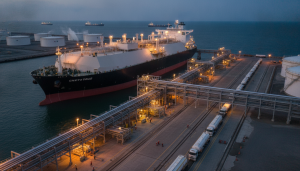
As Asia’s fourth-largest economy, South Korea’s energy import dependency is profound, importing 94% of its energy needs as of a 2024 report from the Korea Energy Statistics Information Systems. A significant 72% of its crude oil originates from the Middle East, making the nation particularly vulnerable to geopolitical instability in the region. To bolster energy security, South Korea has committed 22 million barrels of oil to the International Energy Agency’s strategic release effort. However, with no direct or significant impact on immediate supply and demand observed yet, there are currently no plans for an immediate release of these reserves.
Economic Buffer and Price Stability Measures
The government has moved swiftly to cushion households and industries from the burden of escalating energy prices. In late March, Seoul approved a supplementary budget totaling 26.2 trillion won ($17.6 billion), alongside implementing a price cap on fuel products. Further measures to curb energy demand include a rotating parking system for public car parks and a ban on public sector workers’ vehicles every other day, based on license plate numbers.
Regarding electricity rates, Minister Kim noted that price hikes typically materialize three to six months after increases in oil and gas prices. While the impact has not yet necessitated an immediate electricity price increase, the situation remains fluid. Seoul’s leadership is closely monitoring developments in the coming months, particularly June and July, to devise mechanisms that proactively prevent future electricity price hikes. This proactive stance is critical for maintaining economic stability and public confidence amidst a volatile global energy market.
Investment Implications in a Shifting Energy Paradigm
South Korea’s energy transformation presents a compelling narrative for global investors. The nation’s aggressive renewable targets create significant demand for solar and wind development, alongside associated grid infrastructure and energy storage solutions. Investment in domestic solar manufacturing, supported by government subsidies, also signals opportunities for technology partnerships and industrial growth. However, investors must also acknowledge the immediate geopolitical risks that underscore the persistent, albeit temporary, reliance on traditional fossil fuels. The strategic balance between long-term green transition and short-term energy security will define South Korea’s energy landscape for the foreseeable future, offering a nuanced yet potentially rewarding environment for astute energy market participants.