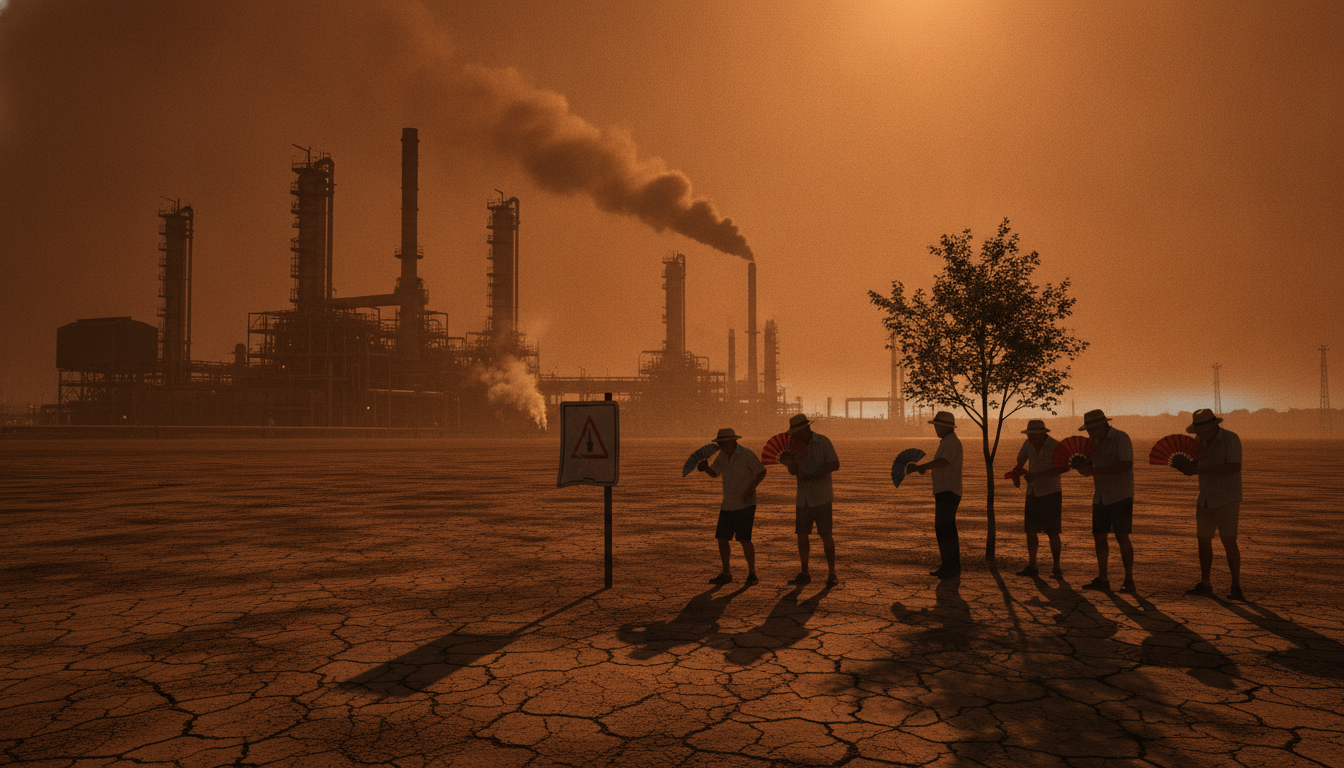
Europe’s Blistering Summer: A Dire Signal for Oil & Gas Investors
Europe stands at a critical juncture, gripped by an unprecedented wave of extreme weather that extends far beyond mere meteorological records. The continent is currently experiencing a summer of devastating heatwaves and rampant wildfires, events that carry a significant human cost and, crucially for our readership, profound implications for energy markets and long-term investment strategies within the oil and gas sector. Investors must now scrutinize the escalating climate emergency unfolding across Europe, understanding how these events could reshape policy, demand dynamics, and operational risks for traditional energy assets.
France Reports Alarming Mortality Spike Amidst Extreme Heat
The human toll of Europe’s intensifying heat is starkly evident in France, where national health authorities revealed a staggering 5,764 excess deaths between June 17 and July 2. This represents an excess mortality rate of 36% during this two-week period. More than half of this “unprecedented” total occurred between June 25 and June 27 alone, underscoring the severe impact of peak temperatures. Individuals aged 75 and older bore the brunt, accounting for approximately two-thirds of these additional fatalities. While authorities note these were “all causes” deaths not yet directly attributed to heat, the correlation with the intense thermal conditions is undeniable. For perspective, the entire summer period last year recorded a slightly lower 5,722 excess deaths. Such a rapid and concentrated spike in mortality places immense strain on public health infrastructure, and by extension, can influence localized energy demand for cooling and emergency services, highlighting a direct feedback loop into immediate energy consumption patterns.
Spain Battles Record-Breaking Wildfires, Igniting Policy Debate
Concurrently, Spain has been contending with some of its largest wildfires in recent memory, a stark reminder of the escalating physical risks associated with climate change. Firefighters in the Guadalajara region, north of Madrid, battled an inferno that scorched approximately 32,000 hectares (79,000 acres). This colossal blaze necessitated the evacuation of 1,200 residents from 34 villages and issued confinement orders for 14 others in the sparsely populated area. While authorities reported stabilization and allowed residents of five villages to return, the broader picture painted by Prime Minister Pedro Sánchez during a visit to the region is deeply concerning for energy investors tracking policy trajectory. Spain has already endured 22 major wildfires this year, four times the number reported over the same period last year. Alarmingly, over 100,000 hectares have burned across the country, matching the total average for an entire year over the past decade. Sánchez’s firm declaration, “We must raise public awareness and we not trivialise the climate emergency,” signals a hardening political stance that could accelerate legislative action impacting fossil fuel investments. The national weather agency, Aemet, continues to warn of “very high or extreme” wildfire danger, with temperatures soaring to 42-44C, fueled by dry westerly winds, underlining the persistent threat to regional infrastructure and economic activity.
A Continent Ablaze: Widespread Impacts Across Southern Europe
The crisis extends well beyond France and Spain, painting a grim picture across southern Europe. Just weeks prior to the Guadalajara blaze, a deadly fire in southern Spain claimed 13 lives, including several expatriates, marking one of the nation’s most catastrophic wildfires on record. Spain’s ecological transition minister, Sara Aagesen, characterized the Guadalajara incident as “one of the largest in the recent history of our country,” surpassed only by a 37,000-hectare fire in northwest Spain last year. Meanwhile, France grappled with additional fires, including a blaze that consumed 2,500 hectares in the southeastern Var department, forcing 400 evacuations and requiring 1,100 firefighters to combat it overnight. Tragedy also struck in Gironde, southwestern France, where two firefighters perished. Authorities across France are urging public caution, noting that nine out of ten fires originate from human activity, prompting calls to avoid barbecues during heatwaves. Further east, Greece anticipates temperatures exceeding 41C, leading authorities to ban outdoor work during peak midday sun—a direct economic impact on productivity. Italy, too, faces multiple blazes across Sicily, prompting scattered evacuations as high winds and temperatures above 40C exacerbate the situation. Even North Macedonia witnessed extreme weather, with a severe storm in Skopje hospitalizing 11 individuals, three with serious injuries. This pervasive pattern of extreme weather across the continent underscores the systemic challenges facing energy security and infrastructure.
Navigating the Investor Landscape: Short-Term Energy Demand Shifts
For oil and gas investors, these unfolding events create immediate, albeit localized, energy demand shifts. The intense heatwaves inevitably drive a surge in electricity consumption for air conditioning and cooling systems. This spike often translates into increased demand for natural gas as a primary fuel for power generation, especially in countries with a significant gas-fired generation capacity. While short-term, such demand fluctuations can impact spot prices and regional supply dynamics. However, the persistent threat of wildfires and severe storms introduces significant operational risks. Energy infrastructure, including power lines, pipelines, and transportation routes for refined products, becomes vulnerable to disruption, potentially leading to localized supply outages and increased maintenance costs. Investors must factor in these immediate vulnerabilities when assessing regional energy asset performance and supply chain resilience.
Long-Term Outlook: Accelerating Energy Transition and Policy Pressure
Looking beyond the immediate consequences, the sustained intensity and frequency of these extreme weather events solidify the long-term investment narrative around the energy transition. Scientists unequivocally link human-driven climate change to these phenomena, identifying Europe as the world’s fastest-warming continent. This scientific consensus, coupled with the visible and costly impacts on human life and economies, will undoubtedly intensify pressure on policymakers to accelerate decarbonization efforts. For oil and gas companies, this translates into an evolving regulatory landscape, potentially including more stringent emissions targets, accelerated phase-outs of fossil fuel subsidies, and increased investment incentives for renewable energy. The rhetoric from leaders like Spain’s Prime Minister Sánchez serves as a bellwether for future policy directions. Investors holding positions in traditional fossil fuel assets must critically evaluate their portfolios for climate risk, considering factors such as carbon taxes, stranded asset potential, and the growing importance of ESG (Environmental, Social, and Governance) performance in attracting capital. The recurring spectacle of a continent struggling with intense heat, deadly fires, and destructive storms reinforces the imperative for the oil and gas sector to adapt and pivot, or risk diminished returns and increased investor scrutiny in an increasingly climate-conscious global market.


