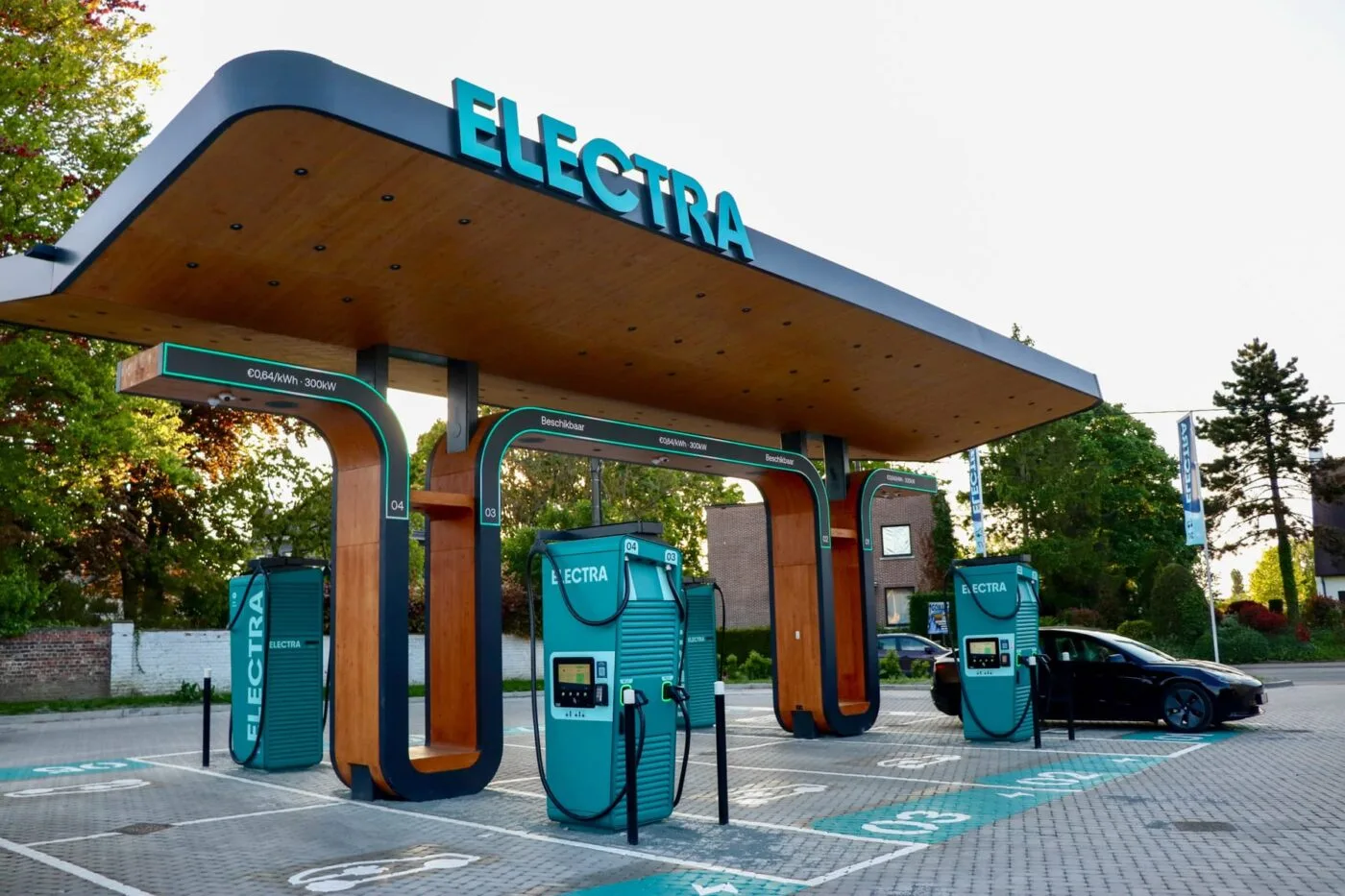
The European Union’s unwavering commitment to a zero-emission future for new vehicles by 2035 is sending clear signals throughout the global energy market. A recent study, involving key players in the charging infrastructure industry, suggests that the role of hybrid electric vehicles (HEVs), including plug-in hybrids (PHEVs) and range extenders, will be effectively nullified by this deadline. For oil and gas investors, this isn’t merely an environmental mandate; it’s a direct threat to long-term gasoline and diesel demand, compelling a strategic reassessment of portfolios amidst evolving market dynamics. The implications are profound, especially when viewed against a backdrop of significant market volatility.
The Accelerated EV Shift and its Immediate Market Echoes
The study posits that the EU’s 2035 target for zero CO2 emissions from new cars will render hybrid technologies obsolete, pushing directly towards battery electric vehicles (BEVs). This isn’t just a theoretical projection; it’s rooted in current consumer sentiment and technological advancements. Surveys show that 13% of EU participants already drive an electric car, with a substantial 46% planning to make the switch with their next vehicle purchase. This accelerating transition has direct consequences for refined product demand, particularly gasoline, which is already under pressure. As of today, Brent Crude trades at $90.38, reflecting a significant 9.07% decline, while WTI Crude has fallen 9.41% to $82.59. Gasoline prices are also feeling the squeeze, currently at $2.93, down 5.18%. This daily snapshot, combined with the 14-day Brent trend seeing prices plummet from $112.78 to $91.87 – an 18.5% drop – underscores the market’s heightened sensitivity to demand signals and geopolitical shifts. The European pivot away from internal combustion engines, including hybrids, contributes a formidable long-term bearish factor to this already volatile landscape, challenging the demand foundation for crude and its derivatives.
Debunking EV Hurdles: A Faster Transition Than Anticipated
A key finding from the collaborative study is the rapid disappearance of perceived barriers to mass BEV adoption, which were once significant investor concerns regarding the pace of the energy transition. Three primary obstacles cited by prospective buyers—charging time, range anxiety, and residual value—are reportedly being overcome at an accelerating rate. The “next wave of BEV customers” expects charging times of 30 minutes; many current models, especially higher-end vehicles, already achieve 20 minutes or less, with even volume models often reaching 80% charge in under half an hour. Similarly, the average desired range of 460 kilometers is now surpassed by 2024 BEV models, which boast an average WLTP range of 544 kilometers. While real-world range varies, it’s quickly approaching and will soon exceed the 460-kilometer expectation. Furthermore, the study highlights a significant decline in residual value for internal combustion engine vehicles, projected to be just 45% of their original price after five years by 2025. This erosion of value for traditional cars implicitly underscores the shifting market preference and the potential for BEVs to hold stronger relative value as demand for ICE vehicles wanes. These swift technological and market shifts suggest a far more rapid displacement of fossil fuel vehicles than many models currently predict.
Investor Focus: Navigating Future Oil Prices and OPEC+ Strategy
Our proprietary reader intent data reveals a strong investor focus on the trajectory of crude oil prices, particularly “what you predict the price of oil per barrel will be by end of 2026,” and “What are OPEC+ current production quotas?” The accelerating European EV transition provides a critical lens through which to analyze these questions. The study’s findings on the demise of hybrids and the rapid overcome of BEV adoption hurdles signal a structural decline in European gasoline demand, adding a persistent bearish pressure on global crude markets. This complicates the strategic decisions for OPEC+, whose Joint Ministerial Monitoring Committee (JMMC) meets on April 18th, followed by the Full Ministerial meeting on April 19th. These meetings will be crucial. With Brent crude already down 18.5% in the last two weeks, the cartel faces the challenge of balancing global supply with potentially weakening demand signals from key economic blocs like the EU. Any decisions on production quotas will need to factor in this intensifying shift, alongside the weekly inventory data from API (April 21st, April 28th) and EIA (April 22nd, April 29th), which will provide immediate snapshots of market balance. Investors should closely monitor OPEC+’s rhetoric and actions for any indication of how they plan to manage supply in a world increasingly moving beyond fossil fuels, especially as Europe solidifies its zero-emission mandate.
Strategic Implications for Oil & Gas Investment Portfolios
The European automotive sector’s decisive shift towards zero-emission vehicles, reinforced by policy and technological momentum, carries profound implications for oil and gas investment strategies. The study’s assertion that hybrids will be obsolete by 2035, coupled with the rapid resolution of BEV adoption challenges, means that the demand destruction for gasoline and diesel in Europe is not a distant threat but an accelerating reality. For upstream companies, this translates to a long-term downward revision of demand growth forecasts, necessitating stringent capital allocation and a focus on low-cost, high-return assets. Midstream operators must accelerate diversification into non-oil commodities, carbon capture, or renewable energy infrastructure to future-proof their assets. Downstream refiners, particularly those with significant exposure to the European market, will face increasing pressure to rationalize capacity or pivot towards biofuels and petrochemicals. Investors should critically evaluate companies’ decarbonization strategies, their geographic exposure to accelerating EV markets, and their proactive measures to adapt to a future where traditional fuel demand in developed economies is on a structural decline. The era of robust, unconstrained demand growth is waning, and only those oil and gas companies that strategically evolve will thrive in this new energy landscape.


