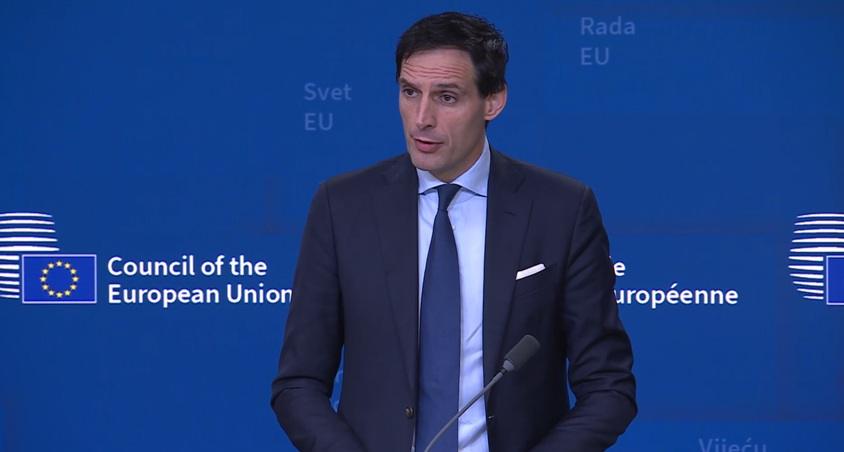
The European Union has reached a pivotal agreement on its ambitious climate targets, setting a new goal to reduce greenhouse gas emissions by 90% by 2040 compared to 1990 levels. This landmark deal, forged after extensive negotiations, signals a clear long-term trajectory for decarbonization within one of the world’s largest economic blocs. While the agreement faced significant pushback from several member states concerned about economic impact, compromises were made, notably a larger role for international carbon credits and a delay in the implementation of the expanded Emissions Trading System (ETS2). For oil and gas investors, this development is a critical signal, underscoring both the accelerating energy transition and the evolving mechanisms designed to achieve it, creating nuanced risks and opportunities across the energy complex.
EU Climate Deal Meets Current Market Realities
While the EU’s long-term climate targets underscore a structural shift away from fossil fuels, immediate market dynamics continue to dictate crude price movements. As of today, Brent crude trades at $94.44, reflecting a 1.09% decline within a day range of $93.87 to $95.69. Similarly, WTI crude is priced at $86.21, down 1.38% from its daily high of $86.78. This current softness in crude prices is part of a broader trend; Brent has experienced a significant correction, shedding nearly 20% from $118.35 on March 31st to $94.86 just yesterday. Gasoline prices mirror this sentiment, currently at $3.02, down 0.33%.
The EU agreement, while impactful over the long haul, presents a mixed bag for the near-term oil and gas market. The delay of ETS2 implementation until 2028, pushing back its expansion to road transport and building heating fuels by a year, might offer a temporary reprieve for demand in these sectors. This delay effectively prolongs the period without a direct carbon price on these specific fuel usages, potentially sustaining a baseline level of consumption slightly longer than previously anticipated. However, the overarching 90% reduction target by 2040 firmly cements the long-term decline in fossil fuel demand within the EU, a fundamental driver that investors cannot ignore, even amid short-term market fluctuations influenced by factors like global economic growth, geopolitical tensions, and ongoing supply adjustments from producers.
Forward-Looking Opportunities in a Shifting Regulatory Landscape
The recent EU agreement is not just about targets; it’s about the mechanisms for achieving them, and here, investors should note two key elements. Firstly, the implementation of the expanded Emissions Trading System (ETS2) has been pushed back a year, from 2027 to 2028. This delay, while offering temporary relief to industries and consumers, does not negate the eventual impact of carbon pricing on sectors like road transport and building heating. Energy companies with significant exposure to these areas now have an additional year to prepare for the increased compliance costs, accelerating investments in electrification, alternative fuels, and energy efficiency solutions.
Secondly, and perhaps more significantly for new investment avenues, the deal substantially increases the potential role of international carbon credits. Member states have agreed to allow international carbon credits to contribute up to 5% of the 90% reduction target, with an option for an additional 5% under future emergency circumstances. This explicit endorsement, particularly for credits under Article 6 of the Paris Agreement starting from 2036, provides significant regulatory certainty and a strong demand signal for the global carbon credit market. Companies involved in developing high-quality carbon offset projects, especially those with international scope, are now positioned for substantial growth. Investors should be actively evaluating opportunities in nature-based solutions, renewable energy projects in developing economies, and advanced carbon capture technologies that can generate verifiable credits.
Upcoming energy events, such as the EIA Weekly Petroleum Status Reports and the EIA Short-Term Energy Outlook, while focused on traditional supply and demand, will continue to provide crucial context. These reports will help investors gauge the trajectory of energy consumption and production, informing the pace at which climate policies might accelerate or be adjusted. For example, consistent reports of robust global oil demand, despite climate initiatives, might further highlight the necessity and value of carbon offset markets as a complementary strategy to direct emissions reductions.
Addressing Investor Concerns: Oil Prices and Transition Strategies
Our proprietary data indicates that investors are keenly focused on the near-term direction of crude prices, with questions frequently arising about whether WTI is “going up or down” and predictions for “the price of oil per barrel by end of 2026.” The EU’s climate deal, while a long-term policy, introduces nuanced factors into this complex equation. On one hand, the delayed ETS2 implementation could be interpreted as a slight near-term bullish signal for European oil demand. On the other, the aggressive 2040 target, alongside an interim goal to reduce emissions by 66.25% to 72.5% by 2035 (from 2019 levels), fundamentally reinforces the long-term bearish outlook for fossil fuel consumption in the region.
For integrated energy companies like Repsol, which some readers are specifically inquiring about, navigating this landscape requires a dual strategy. While managing existing upstream and downstream assets for profitability, these companies must also aggressively pivot towards lower-carbon solutions. Their performance will increasingly be tied to their success in diversifying into renewables, sustainable fuels, and potentially even carbon capture and storage (CCS) or carbon credit generation. Investors holding positions in such companies should scrutinize their capital allocation strategies, looking for clear commitments and tangible progress in energy transition investments rather than solely relying on traditional hydrocarbon metrics. The volatility we’ve seen in crude prices, with Brent down almost 20% in the last 14 days, underscores the need for resilience and adaptability in investment portfolios exposed to the energy sector.
Unlocking Value in the Carbon Economy
The EU’s climate agreement solidifies the trajectory towards a decarbonized economy, but crucially, it also refines the pathways to get there. The substantial increase in the allowable contribution from international carbon credits is a game-changer for the voluntary and compliance carbon markets. This isn’t merely an administrative adjustment; it’s a powerful market signal that will likely drive significant capital into projects that generate verifiable emissions reductions globally. For investors, this opens up a new frontier beyond traditional oil and gas, with opportunities in:
- **Carbon Project Development:** Investing in companies that originate, develop, and manage projects in afforestation, reforestation, renewable energy (especially in developing countries), and enhanced land management practices.
- **Carbon Trading and Brokering Platforms:** As the market scales and becomes more sophisticated, the infrastructure for trading carbon credits will become increasingly valuable.
- **Verification and Assurance Services:** The integrity of carbon credits is paramount. Companies specializing in robust measurement, reporting, and verification (MRV) technologies and services will be essential.
- **Carbon Capture, Utilization, and Storage (CCUS):** While primarily a domestic reduction strategy, advances in CCUS could also play a role in generating credits, especially for hard-to-abate industrial emissions.
The EU’s 2035 target, forming its Nationally Determined Contribution (NDC) under the Paris Agreement, further emphasizes the aggressive pace of this transition. Investors must recognize that regulatory frameworks are not static; they are evolving to create demand for new forms of energy and emissions management. This deal clarifies that while the EU remains committed to ambitious climate action, it is also pragmatic in leveraging global solutions to achieve its goals, creating a robust and expanding market for carbon assets.