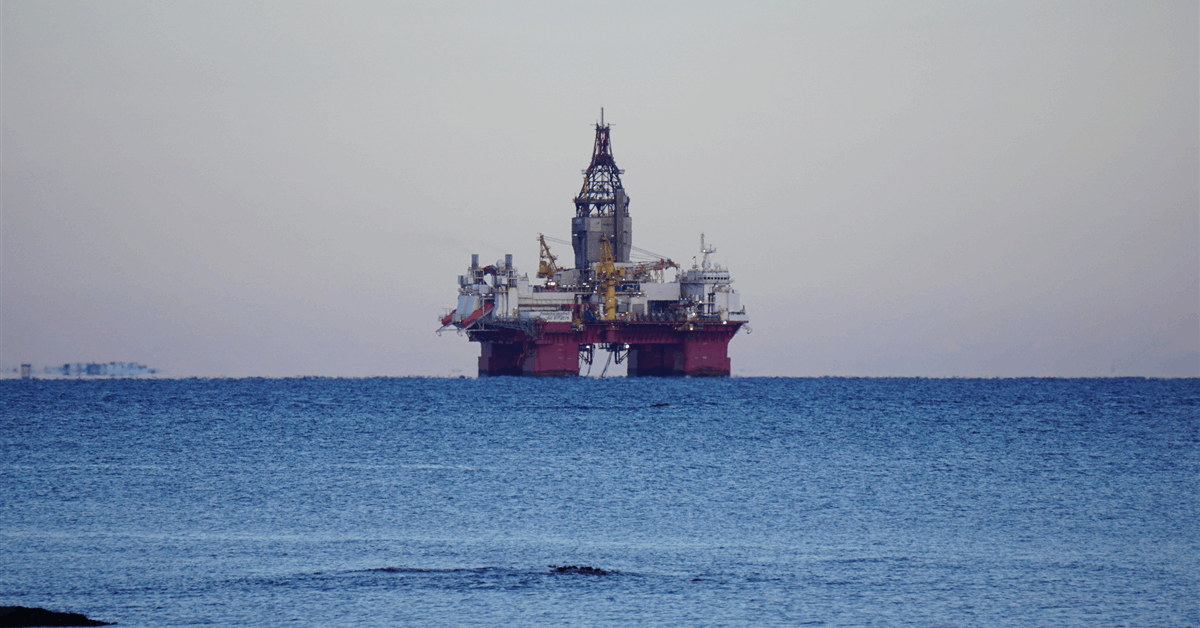
Equinor ASA and its partners have announced a natural gas discovery in the Skred prospect, located on Norway’s side of the Barents Sea. With preliminary estimates ranging from 1.9 to 3.1 million barrels of oil equivalent (boe), this find, while modest in scale, carries significant strategic implications for the operator, its partners Var Energi ASA and Petoro AS, and the broader European energy landscape. Positioned just 23 kilometers north of the recently ramped-up Johan Castberg field, this discovery holds considerable potential for a cost-effective tie-in, a factor that profoundly influences its economic viability and speed to market. For investors, this represents a tangible addition to Equinor’s Barents Sea portfolio, underscoring the region’s continued importance for hydrocarbon production amidst evolving global energy dynamics.
The Strategic Value of the Skred Discovery and Tie-back Potential
The Skred discovery, made via well 7220/5-4, is the 15th well drilled in production license 532, which was awarded in 2009. It encountered a 14-meter gas column in 70 meters of good quality sandstone within the primary Sto Formation, along with a 3-meter gas zone in the Nordmela Formation. Additionally, a minor oil accumulation was found in a 1-2-meter zone within a 14-meter sandstone layer in the Cretaceous. The focus remains primarily on the gas component due to its higher quality and volume. What elevates this discovery beyond its immediate volume is its strategic location: a mere 23 kilometers from the Johan Castberg field and 210 kilometers northwest of Hammerfest. This proximity makes a potential tie-in to existing infrastructure a highly attractive and capital-efficient development option, significantly de-risking the project and accelerating potential first gas. Equinor Energy AS operates PL532 with a 46.3 percent stake, alongside Var Energi ASA holding 30 percent and state-owned Petoro AS with 23.7 percent. The prospect of integrating Skred into the Johan Castberg infrastructure could mean lower upfront capital expenditure, reduced operational costs, and a faster pathway to generating cash flow, a critical consideration for upstream investors looking for predictable returns in a capital-intensive industry.
Barents Sea: A Maturing Province with Renewed Vigor
The Skred discovery reinforces the Barents Sea’s status as a vital hydrocarbon province for Norway. The region recently saw a significant boost with the full ramp-up of the Johan Castberg field to its capacity of 220,000 barrels of oil per day, a development that Equinor noted increased energy deliveries from the Barents Sea by an impressive 150 percent. Johan Castberg itself has proven to be a substantial asset, with initial recoverable volumes estimated at 450-650 million barrels, and Equinor has since identified an additional 250-550 million new recoverable barrels. This suggests a broader, connected system, and discoveries like Skred further expand this resource base. The Barents Sea is home to Norway’s third, and now growing, cluster of developments, following Snohvit (production started 2007) and Goliat (2016). At year-end 2024, Norway’s estimated resource volumes on the continental shelf rose by 36 million standard cubic meters of oil equivalent (scmoe) to a total of 15.61 billion scmoe. This figure includes 472 million scmoe of contingent resources in discoveries, a category to which Skred now contributes, showcasing Norway’s ongoing commitment to maximizing value from its natural resources and maintaining its role as a key energy supplier to Europe.
Navigating Volatility: Market Signals and Investor Focus
In the current macroeconomic climate, market volatility remains a dominant theme for energy investors. As of today, Brent Crude trades at $94.93, a notable shift from its peak of $102.22 just three weeks prior on March 25th, representing an 8.8% decline over that period. This short-term price fluctuation highlights the importance of long-term, stable supply additions for mitigating market shocks. Many investors are currently asking for a base-case Brent price forecast for the next quarter and the consensus 2026 Brent forecast, reflecting a desire for clarity amidst the uncertainty. While immediate price movements are influenced by geopolitical events and demand-supply balances, a discovery like Skred, primarily gas with tie-back potential, offers a valuable counterpoint. It represents a de-risked, lower-cost path to production, offering more predictable cash flows compared to greenfield projects. Such projects contribute to the long-term supply stability that can help moderate price volatility over time. For European energy security, particularly, gas discoveries in Norway are critical, offering a reliable, pipeline-fed alternative to more volatile global LNG markets, a topic frequently discussed by investors, especially concerning Asian LNG spot prices. This Barents Sea gas offers a domestic, secure supply that aligns with strategic energy independence goals and can help stabilize future energy costs.
Forward Outlook: Upcoming Catalysts and the Path to Production
The immediate next step for the Skred discovery is the assessment by the licensees regarding a possible tie-in to the Johan Castberg field. This evaluation phase will determine the commercial viability and optimal development plan, moving the discovery closer to becoming a booked reserve. For investors monitoring the broader energy landscape, upcoming events will provide critical near-term market signals. The OPEC+ Joint Ministerial Monitoring Committee (JMMC) meeting on April 18th, followed by the Full Ministerial Meeting on April 20th, will be closely watched for any adjustments to production quotas that could impact global crude supply and prices. Additionally, regular industry data releases such as the Baker Hughes Rig Count (April 17th and April 24th), API Weekly Crude Inventory (April 21st and April 28th), and EIA Weekly Petroleum Status Reports (April 22nd and April 29th) will offer insights into operational activity and inventory levels. While these events predominantly influence crude markets, the ongoing success in gas exploration, exemplified by Skred, underpins a long-term shift in energy mix and supply reliability, providing a strong foundation for future energy investment. The strategic assessment of Skred’s integration into the Castberg infrastructure represents a future catalyst that could unlock significant value for Equinor and its partners, transitioning from a discovery to a production asset within a relatively short timeframe and further solidifying Norway’s role as a reliable energy provider.


