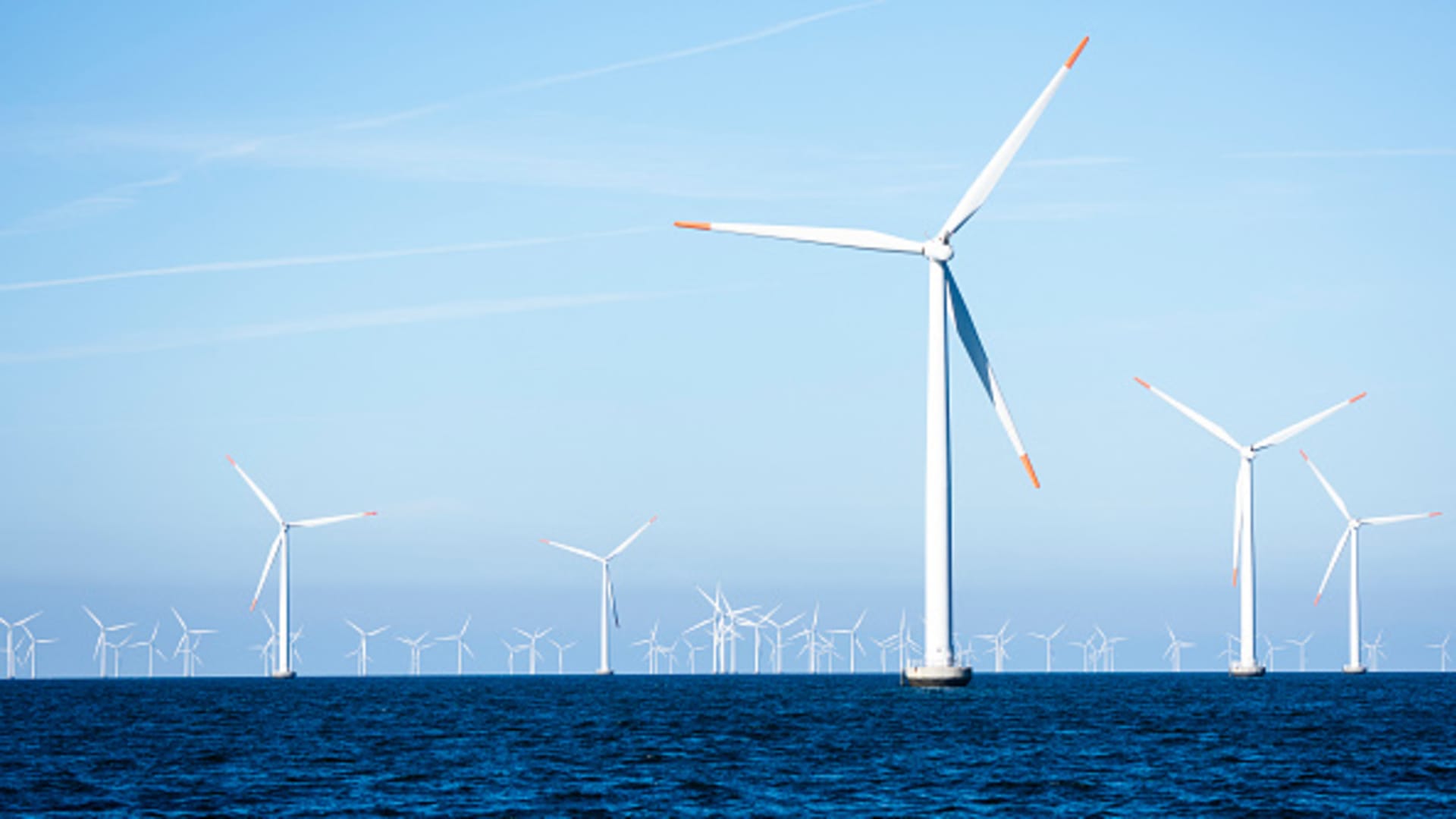
In a move signaling robust confidence in the long-term viability of renewable energy, Norwegian oil giant Equinor recently committed nearly $1 billion in fresh capital to support Denmark’s Orsted. This strategic investment arrives at a critical juncture for the offshore wind sector, which has faced significant political scrutiny from the Trump administration. Equinor’s decision to participate in Orsted’s planned 60 billion Danish krone ($9.4 billion) rights issue and maintain its 10% ownership underscores a deeper conviction in offshore wind’s competitive future within the evolving energy landscape, even as traditional hydrocarbon markets navigate their own complex dynamics. For investors, this dual focus by a major energy player highlights the increasing imperative for diversified energy portfolios, balancing immediate market realities with long-term transition strategies.
Equinor’s Strategic Offshore Wind Bet Amidst Volatility
Equinor’s substantial financial backing for Orsted, the world’s largest offshore wind developer, is far more than a simple capital injection; it represents a profound strategic endorsement. By signaling its intention to participate in Orsted’s significant rights issue and reaffirming its 10% stake, Equinor, as the second-largest shareholder behind the Danish government, is effectively doubling down on its belief in offshore wind. The Norwegian energy group explicitly stated its confidence in Orsted’s underlying business and the essential role offshore wind will play in the future energy mix. This commitment is further solidified by Equinor’s intention to nominate a candidate to Orsted’s board of directors, ensuring direct influence and oversight. This level of engagement suggests a long-term vision, positioning Equinor not just as an investor, but as a strategic partner in navigating the complexities and opportunities of the renewable energy transition.
Navigating Political Headwinds and Market Divergence
The timing of Equinor’s move is particularly striking, coming amidst intensified political pressure on the U.S. offshore wind industry. The Trump administration has consistently targeted the sector, with the latest blow being the cancellation of $679 million in federal funding for infrastructure projects designed to support offshore wind power nationwide. Transportation Secretary Sean Duffy’s comments, labeling these as “wasteful, wind projects” that divert resources from America’s maritime industry, underscore the challenging political climate. This uncertainty has significantly impacted Orsted’s market performance, with its stock price plummeting nearly 90% from its 2021 peak, notching a fresh record low last month. Following the news of Equinor’s support, Orsted shares initially rose 3.6% before paring gains, while Equinor’s stock saw a modest 0.2% increase.
This localized sector volatility contrasts sharply with the broader crude oil market. As of today, Brent Crude trades at $98.14, down 1.26% within a day range of $98.10 to $98.38, while WTI Crude stands at $89.72, down 1.59% in a range of $89.57 to $90.09. Gasoline prices remain stable at $3.09. Over the past two weeks, Brent crude has seen a significant swing, dropping from $108.01 on March 26th to $94.58 on April 15th, before rebounding to current levels. This demonstrates the persistent, albeit volatile, demand for traditional hydrocarbons. Equinor, a major player in both spheres, is thus diversifying its exposure, balancing the immediate cash flows and market dynamics of oil and gas with strategic, long-term investments in a renewable sector facing political headwinds but offering immense growth potential.
Investor Focus: Crude Futures vs. Renewable Horizons
Our proprietary reader intent data reveals a keen investor interest in the immediate drivers of the oil market. Questions frequently revolve around “OPEC+ current production quotas” and the “current Brent crude price,” alongside inquiries about the underlying models and data sources powering our market insights. This reflects a strong focus on short-term market fundamentals and price discovery within the traditional energy sector. However, Equinor’s substantial commitment to Orsted suggests a strategic divergence from this immediate focus, looking instead toward the horizon of energy transition. While investors are keenly awaiting critical OPEC+ decisions, with the Joint Ministerial Monitoring Committee (JMMC) meeting on April 18th and the full Ministerial meeting on April 20th, which will undoubtedly shape crude price trajectories, Equinor’s move signals a forward-looking strategy that anticipates a post-carbon future, even if that future is fraught with political hurdles in the near term. The upcoming Baker Hughes Rig Count on April 17th and 24th, along with API and EIA weekly inventory reports throughout the next two weeks, will provide further granular insights into current supply-demand dynamics, offering a direct contrast to the long-term, capital-intensive bets like offshore wind.
The Long Game: Diversification and Integrated Energy Strategies
The analysis from RBC Capital Markets suggests Equinor’s move could be a precursor to a potential merger of offshore wind portfolios, albeit with acknowledged challenges. Participating fully would effectively increase Equinor’s net exposure to two 100%-owned U.S. offshore wind projects, neither of which are likely to be farmed down soon, and both face uncertain political support. However, RBC also highlights the incremental positive of Equinor gaining board representation, “making the most of a challenging situation.” This perspective reinforces the idea that Equinor, as a state-backed energy group, is playing a long game. Its mandate extends beyond immediate profit maximization, encompassing a broader responsibility in the energy transition. The investment in Orsted, despite the current political climate and Orsted’s recent performance, is a testament to the belief that diversified energy portfolios are not just desirable but essential. For major energy companies, an integrated strategy that balances robust hydrocarbon operations with significant, strategically chosen renewable investments is becoming the standard for managing both financial risk and future energy demand.