EQNR Arctic Field Peaks: Maximize Returns
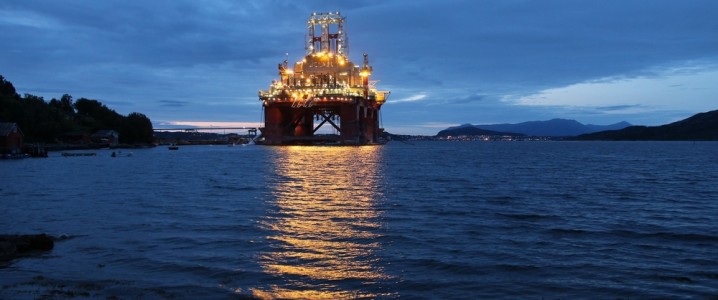
Equinor’s Johan Castberg oilfield in the Barents Sea has officially reached its full production capacity of 220,000 barrels per day (bpd), a remarkable achievement just three months after coming online. This milestone isn’t just an operational success; it represents a significant de-risking event for investors eyeing long-term value in the energy sector. As Norway’s newest major producing asset, Castberg is poised to deliver robust returns and bolster Western Europe’s energy security for decades, even as the global oil market navigates its inherent volatility. Our analysis dives into how this peak production impacts Equinor’s financial outlook, Norway’s strategic energy position, and what it means for investors balancing short-term market fluctuations with long-term growth opportunities.
Rapid ROI Amidst Market Headwinds
The swift ramp-up of Johan Castberg to 220,000 bpd, with 17 of 30 wells completed and producing as expected, underscores excellent project execution by Equinor. What makes this achievement particularly compelling for investors is the stated expectation that the $8 billion investment will be recouped in less than two years. This impressive financial projection gains even greater significance when viewed against the backdrop of the current market. As of today, Brent crude trades at $90.38, reflecting a significant decline of 9.07% within the day, and an even steeper 18.5% drop from its $112.78 perch just two weeks ago. In an environment where crude prices can swing dramatically, a project demonstrating such rapid payback periods at current price levels signals robust economics and a strong buffer against future price volatility. This operational efficiency and rapid return on capital are key metrics that differentiate high-value upstream projects and should reassure shareholders about Equinor’s capital allocation strategy.
Strategic Supply and Norway’s Enduring Role
Johan Castberg is not merely a short-term cash generator; it’s a cornerstone for Norway’s long-term energy strategy. With recoverable volumes estimated between 450 and 650 million barrels of oil, and a projected production life of 30 years, this field firmly cements Norway’s role as a reliable and long-term energy supplier to Western Europe. For investors concerned about global supply stability, Castberg represents a significant, non-OPEC contribution that adds resilience to the market. The field’s startup is a primary driver behind Norway’s expected 5.2% increase in oil liquids production in 2025 compared to 2024. This consistent, large-scale output provides a crucial counterpoint to the discussions around future supply constraints and helps to mitigate geopolitical risks often associated with other major producing regions. It positions Equinor and Norway as steadfast partners in global energy security, a factor that holds increasing weight for institutional investors.
Expanding the Arctic Footprint: Future Growth & Investor Outlook
Equinor’s vision for Johan Castberg extends far beyond its current peak production. The company is actively pursuing strategies to extend the field’s plateau production and significantly increase its recoverable reserves, targeting an additional 250-550 million barrels. This forward-looking approach is evidenced by plans for six new wells and the rapid development of the Isflak project, with an investment decision expected by the end of this year and a targeted startup in 2028. These initiatives, along with annual exploration drilling near Castberg, highlight a commitment to maximizing the value of this Arctic asset. For investors, these upcoming calendar events are crucial catalysts. The FID for Isflak by year-end 2026 will be a key signal, demonstrating continued capital deployment into proven high-value areas. This systematic approach to reserve replacement and production extension provides a clear growth trajectory for the asset, insulating investors from the typical decline curves of mature fields and offering sustained exposure to Norway’s Arctic potential.
Navigating Supply Dynamics: What Investors Are Asking
Our proprietary reader intent data reveals a consistent theme among investors: a keen interest in understanding future oil prices and the impact of global supply dynamics, particularly concerning OPEC+ actions. Many are asking “what do you predict the price of oil per barrel will be by end of 2026?” and “What are OPEC+ current production quotas?”. Johan Castberg’s stable and significant output of 220,000 bpd directly feeds into these calculations. As a non-OPEC producer, Castberg adds a predictable supply element to the global balance. This becomes especially relevant with the upcoming OPEC+ Joint Ministerial Monitoring Committee (JMMC) meeting tomorrow, April 18th, followed by the full Ministerial meeting on April 19th. Any decisions made by OPEC+ regarding production quotas will directly interact with the steady supply from fields like Castberg. While Castberg’s contribution alone won’t dictate market prices, its robust, long-term supply helps to alleviate some of the pressure on the global market, especially as analysts forecast potential supply tightening. For investors, understanding the interplay between stable, new non-OPEC supply and potential OPEC+ adjustments is critical for forming a comprehensive outlook on crude prices for the remainder of 2026 and beyond. This balance will ultimately determine the sustained profitability of projects like Castberg and the broader investment landscape.


