
Close Menu
  • Home
  • Market News
    • Crude Oil Prices
    • Brent vs WTI
    • Futures & Trading
    • OPEC Announcements
  • Company & Corporate
    • Mergers & Acquisitions
    • Earnings Reports
    • Executive Moves
    • ESG & Sustainability
  • Geopolitical & Global
    • Middle East
    • North America
    • Europe & Russia
    • Asia & China
    • Latin America
  • Supply & Disruption
    • Pipeline Disruptions
    • Refinery Outages
    • Weather Events (hurricanes, floods)
    • Labor Strikes & Protest Movements
  • Policy & Regulation
    • U.S. Energy Policy
    • EU Carbon Targets
    • Emissions Regulations
    • International Trade & Sanctions
  • Tech
    • Energy Transition
    • Hydrogen & LNG
    • Carbon Capture
    • Battery / Storage Tech
  • ESG
    • Climate Commitments
    • Greenwashing News
    • Net-Zero Tracking
    • Institutional Divestments
  • Financial
    • Interest Rates Impact on Oil
    • Inflation + Demand
    • Oil & Stock Correlation
    • Investor Sentiment

Subscribe to Updates

Subscribe to our newsletter and never miss our latest news

Subscribe my Newsletter for New Posts & tips Let's stay updated!

What's Hot

How high can oil and gas prices go due to Iran war? Here are scenarios

March 2, 2026

South Bow plan to revive parts of Keystone XL needs Trump approval, US oil pipeline links – Oil & Gas 360

March 2, 2026

Qatar shuts Ras Laffan LNG plant after Iranian drone strike

March 2, 2026
Facebook X (Twitter) Instagram Threads
Oil Market Cap – Global Oil & Energy News, Data & Analysis
  • Home
  • Market News
    • Crude Oil Prices
    • Brent vs WTI
    • Futures & Trading
    • OPEC Announcements
  • Company & Corporate
    • Mergers & Acquisitions
    • Earnings Reports
    • Executive Moves
    • ESG & Sustainability
  • Geopolitical & Global
    • Middle East
    • North America
    • Europe & Russia
    • Asia & China
    • Latin America
  • Supply & Disruption
    • Pipeline Disruptions
    • Refinery Outages
    • Weather Events (hurricanes, floods)
    • Labor Strikes & Protest Movements
  • Policy & Regulation
    • U.S. Energy Policy
    • EU Carbon Targets
    • Emissions Regulations
    • International Trade & Sanctions
  • Tech
    • Energy Transition
    • Hydrogen & LNG
    • Carbon Capture
    • Battery / Storage Tech
  • ESG
    • Climate Commitments
    • Greenwashing News
    • Net-Zero Tracking
    • Institutional Divestments
  • Financial
    • Interest Rates Impact on Oil
    • Inflation + Demand
    • Oil & Stock Correlation
    • Investor Sentiment
Oil Market Cap – Global Oil & Energy News, Data & Analysis
Home » Dramatic slowdown in melting of Arctic sea ice surprises scientists | Sea ice
Climate Commitments

Dramatic slowdown in melting of Arctic sea ice surprises scientists | Sea ice

omc_adminBy omc_adminAugust 20, 2025No Comments4 Mins Read
Share
Facebook Twitter Pinterest Threads Bluesky Copy Link


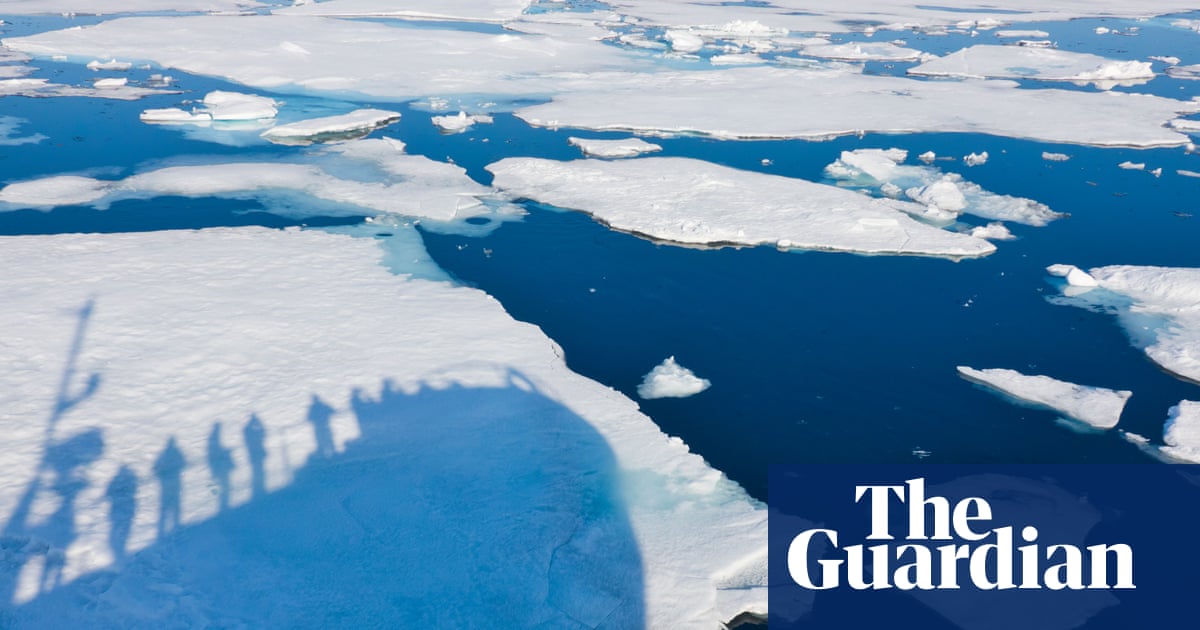
The melting of sea ice in the Arctic has slowed dramatically in the past 20 years, scientists have reported, with no statistically significant decline in its extent since 2005.

The finding is surprising, the researchers say, given that carbon emissions from fossil fuel burning have continued to rise and trap ever more heat over that time.

They said natural variations in ocean currents that limit ice melting had probably balanced out the continuing rise in global temperatures. However, they said this was only a temporary reprieve and melting was highly likely to start again at about double the long-term rate at some point in the next five to 10 years.

The findings do not mean Arctic sea ice is rebounding. Sea ice area in September, when it reaches its annual minimum, has halved since 1979, when satellite measurements began. The climate crisis remains “unequivocally real”, the scientists said, and the need for urgent action to avoid the worst impacts remains unchanged.

The natural variation causing the slowdown is probably the multi-decadal fluctuations in currents in the Atlantic and Pacific oceans, which change the amount of warmed water flowing into the Arctic. The Arctic is still expected to see ice-free conditions later in the century, harming people and wildlife in the region and boosting global heating by exposing the dark, heat-absorbing ocean.

The rate of Arctic sea ice loss has slowed in the past 20 years

Dr Mark England, who led the study while at the University of Exeter, said: “It is surprising, when there is a current debate about whether global warming is accelerating, that we’re talking about a slowdown.

“The good news is that 10 to 15 years ago when sea ice loss was accelerating, some people were talking about an ice-free Arctic before 2020. But now the [natural] variability has switched to largely cancelling out sea ice loss. It has bought us a bit more time but it is a temporary reprieve – when it ends, it isn’t good news.”

The research, published in the journal Geophysical Research Letters, used two different datasets of Arctic sea ice levels from 1979 to the present day. The scientists analysed the sea ice area for every month of the year and the slowdown was seen in all cases.

To see if such a slowdown could be a result of natural variation, they examined the results of thousands of climate model runs. “This is not an extremely rare event – over a century, it should happen a couple of times,” said England, now at the University of California, Irvine. Furthermore, all the simulations showed sea ice loss accelerating again after the slowdown.

Prof Julienne Stroeve, of University College London, said: “We know climate records, be it in global temperatures or sea ice, can remain the same for several years in a row as a result of internal climate variability.”

Stroeve’s analysis of the long-term trend from 1979 to 2024 shows that about 2.5 sq metres of September ice is lost for every tonne of CO2 emitted.

skip past newsletter promotion

The planet’s most important stories. Get all the week’s environment news – the good, the bad and the essential

Privacy Notice: Newsletters may contain info about charities, online ads, and content funded by outside parties. For more information see our Privacy Policy. We use Google reCaptcha to protect our website and the Google Privacy Policy and Terms of Service apply.

after newsletter promotion

Prof Andrew Shepherd, of Northumbria University, said: “We know that the Arctic sea ice pack is also thinning, and so even if the area was not reducing, the volume still is. Our data show that since 2010 the average October thickness has fallen by 0.6cm per year.”

The rate of the rise in global surface temperature has also slowed down in the past, before resuming a rapid rise. A major El Niño event in 1998 was followed by a decade or so of similar global temperatures, which was nicknamed “the pause”. However, the planet continued to accumulate heat throughout and global temperatures have since risen rapidly.

England rejected any suggestion the sea ice slowdown suggested climate change was not real. “Climate change is unequivocally real, human-driven, and continues to pose serious threats. The fundamental science and urgency for climate action remain unchanged,” he said.

“It is good to explain to people that [the slowdown] is happening, else they are going to hear it from someone who is trying to use it in bad faith as a way to undermine our very solid understanding of what’s happening with climate change.”


Source link

Share. Facebook Twitter Pinterest Bluesky Threads Tumblr Telegram Email
omc_admin
  • Website

Related Posts

UK slashes climate aid programmes for developing countries | Climate crisis

March 2, 2026

Winter getting shorter in 80% of major US cities, new data shows | US weather

February 27, 2026

Trump officials move to kill system that protects US from chemical disasters | US Environmental Protection Agency

February 27, 2026
Add A Comment
Leave A Reply Cancel Reply

Top Posts

Federal Reserve cuts key rate for first time this year

September 17, 202513 Views

Inflation or jobs: Federal Reserve officials are divided over competing concerns

August 14, 20259 Views

Oil tanker rates to stay strong into 2026 as sanctions remove ships for hire – Oil & Gas 360

December 16, 20258 Views
Don't Miss

Qatar shuts Ras Laffan LNG plant after Iranian drone strike

By omc_adminMarch 2, 2026

(Bloomberg) – Qatar shut down liquefied natural gas production at the world’s largest export facility…

Drone strike forces shutdown of Aramco’s 550,000-bpd Ras Tanura refinery

March 2, 2026

Israel halts Leviathan, Karish gas fields after Iran strikes

March 2, 2026

Gas prices soar as Iranian attacks force shutdown of Qatari production

March 2, 2026
Top Trending

UK slashes climate aid programmes for developing countries | Climate crisis

By omc_adminMarch 2, 2026

Upright Launches New ESG Due Diligence Solution for Investors

By omc_adminMarch 2, 2026

Datamaran Launches New ESG Regulation Monitoring Solution

By omc_adminMarch 2, 2026
Most Popular

The 5 Best 65-Inch TVs of 2025

July 3, 202515 Views

AI’s Next Bottleneck Isn’t Just Chips — It’s the Power Grid: Goldman

November 14, 202514 Views

The Layoffs List of 2025: Meta, Microsoft, Block, and More

May 9, 202510 Views
Our Picks

Petro-Victory spuds SJ-12 gas well at São João field, Brazil

March 2, 2026

Gas Surges as Qatar Shuts World’s Largest LNG Export Plant

March 2, 2026

War in Iran Could Hit Some of Asia’s Biggest Economies Hard

March 2, 2026

Subscribe to Updates

Subscribe to our newsletter and never miss our latest news

Subscribe my Newsletter for New Posts & tips Let's stay updated!

Facebook X (Twitter) Instagram Pinterest
  • Home
  • About Us
  • Advertise With Us
  • Contact Us
  • DMCA
  • Privacy Policy
  • Terms & Conditions
© 2026 oilmarketcap. Designed by oilmarketcap.

Type above and press Enter to search. Press Esc to cancel.