The Geopolitical Crucible: Hormuz and Asian Vulnerability
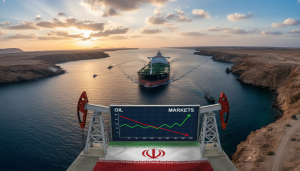
Escalating tensions in the Middle East continue to cast a long shadow over global energy markets, with the Strait of Hormuz emerging as a critical flashpoint. This narrow maritime passage, a vital artery for crude oil and liquefied natural gas (LNG) shipments, is central to the energy security of several major Asian economies. Our analysis indicates that Japan, South Korea, India, and China are particularly vulnerable, given their profound reliance on imports transiting this strategic chokepoint.
Specifically, an estimated 75% to 80% of all oil and 59% of the LNG passing through the Strait of Hormuz is destined for these four nations. Japan, which sources an astounding 87% of its fossil fuel imports from the Gulf region, and South Korea, receiving 81%, stand as the most exposed. India and China also face significant ramifications, with China alone obtaining approximately half of its oil from Iran and the broader Gulf. The explicit threats from Iran regarding the Strait’s closure, exemplified by brief military exercises last month and official statements, underscore a tangible, ever-present risk to global supply chains.
Market Realities: Price Action and Supply Chain Strain
Geopolitical tremors often send immediate shockwaves through crude markets, yet the current situation presents a more nuanced picture for investors. As of today, Brent Crude trades at $93.93 per barrel, reflecting a modest daily increase of 0.74% within a range of $93.52 to $94.21. WTI Crude mirrors this sentiment, standing at $90.35, up 0.76% for the day. While initial escalations can trigger sharp price spikes, our proprietary market data reveals that Brent crude has, in fact, experienced a significant correction over the past two weeks, retreating from $118.35 on March 31st to $94.86 by April 20th – a notable decline of nearly 20%.
This recent price behavior suggests the market is balancing immediate conflict fears with broader supply-demand fundamentals, a dynamic that directly addresses investor inquiries such as “is WTI going up or down?” Beyond the immediate price of crude, the broader economic fallout from Strait disruptions is already evident. Reports indicate over 200 oil tankers and 170 container vessels are currently idling or have dropped anchor near the Strait. Major shipping lines, including Maersk, are actively rerouting around the Cape of Good Hope, adding 10 to 15 days to transit times and significantly increasing fuel and insurance expenses, estimated at an additional $1 million per voyage. This extended journey not only burdens logistics costs but also tightens vessel availability, pushing up freight rates across the board.
The impact extends far beyond energy costs. The disruption has led to an estimated 400,000 containers, many holding critical components for chips and EV batteries, being stuck on vessels in the Gulf. Exports of essential nitrogen fertilizer to South Asia have also been severely affected. Furthermore, air freight costs for Indian exports have reportedly spiked by an alarming 400% in recent days, and the closure of airspace in the Gulf region has led to thousands of flight cancellations, disrupting a major aviation corridor between Asia and Europe. These cascading effects highlight how a regional conflict can quickly translate into global supply chain bottlenecks and inflationary pressures across diverse sectors. Analysts project that every $10 rise in oil prices could potentially elevate inflation by 0.1 to 0.9 percentage points in key Asian economies like Thailand, Vietnam, and South Korea.
Forward Outlook: Key Events Shaping the Next Fortnight
In this volatile environment, investors must closely monitor upcoming energy events that could provide crucial signals for market direction. With the critical OPEC+ Joint Ministerial Monitoring Committee (JMMC) meeting scheduled for tomorrow, April 21st, market participants will be keenly watching for any indications regarding future production policy. While the JMMC typically assesses compliance and market conditions, the current geopolitical backdrop in the Middle East could prompt discussions around supply stability and the group’s capacity to respond to potential disruptions. Any commentary on output quotas or spare capacity could significantly influence investor sentiment regarding crude prices.
Furthermore, the EIA Weekly Petroleum Status Reports, slated for April 22nd and April 29th, will offer updated insights into U.S. crude oil, gasoline, and distillate inventories. These reports are fundamental in gauging domestic supply-demand balances and can influence global market perceptions. The Baker Hughes Rig Count on April 24th and May 1st will provide a snapshot of drilling activity, indicating future supply trends. Perhaps most importantly, the EIA’s Short-Term Energy Outlook (STEO) due on May 2nd will offer a comprehensive forecast for global and U.S. energy markets, including supply, demand, and price projections. For investors seeking answers to questions like “what do you predict the price of oil per barrel will be by end of 2026?”, the STEO provides an indispensable analytical framework for informed decision-making in a market grappling with geopolitical uncertainty and evolving fundamentals.
Navigating Volatility: Investor Considerations
The confluence of geopolitical risk and evolving market fundamentals presents a complex landscape for oil and gas investors. While some analysts anticipate the current conflict to be relatively short-lived, potentially lasting one to three weeks, or at most two months, the economic ramifications of even temporary disruptions in a critical artery like the Strait of Hormuz are undeniable and far-reaching. The immediate impact on shipping, aviation, and critical component supply chains underscores the interconnectedness of the global economy.
For investors, the key lies in understanding the dual drivers of the market: the speculative premium introduced by geopolitical tensions versus the underlying supply-demand equilibrium. While crude prices have recently corrected from earlier highs, the persistent threat to the Strait of Hormuz means that significant upside risk remains should the situation escalate further. Portfolio diversification, careful risk assessment, and a vigilant eye on both geopolitical developments and scheduled market data releases will be paramount for navigating the volatility ahead. The broader economic implications, from inflationary pressures in Asia to global supply chain bottlenecks, demand a holistic view beyond just the price of a barrel of oil.