The global oil market finds itself at a perplexing crossroads, where potent geopolitical tensions, traditionally a strong tailwind for crude prices, are being systematically overridden by persistent concerns about demand erosion and a stubborn supply overhang. While the specter of supply disruptions keeps a foundational floor under prices, a series of recent data points, coupled with a shifting demand outlook, has effectively capped any sustained rally. For astute oil and gas investors, navigating this environment requires a nuanced understanding of these conflicting forces and a keen eye on key upcoming catalysts that could tip the scales.
Geopolitical Tensions Maintain a Price Floor
The geopolitical landscape continues to inject a significant “war premium” into oil prices, preventing a more pronounced downturn. The deployment of additional U.S. naval assets to the Middle East, specifically within striking distance of Iran, signals an escalating pressure campaign. This move, which President Trump himself confirmed as an effort to apply pressure, centers market attention squarely on the Strait of Hormuz. As a chokepoint responsible for approximately 20% of global oil consumption, any perceived threat to transit through this vital waterway instantly translates into a risk premium. The presence of two U.S. naval fleets in the region is a material factor in this equation, ensuring that while fundamental weaknesses may weigh on the market, the risk of a major supply disruption from this critical territory remains a potent, if latent, bullish force. This geopolitical floor provides a degree of protection against a complete price collapse, acting as a constant reminder of the fragility of global oil supply chains.
Demand Headwinds and Persistent Oversupply Cap Rally Attempts
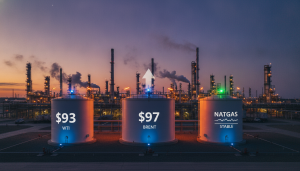
Despite the underlying geopolitical tensions, the market’s attempts to mount a sustainable rally have been consistently thwarted by bearish fundamental data. Last week, the U.S. Energy Information Administration (EIA) delivered a significant blow to bullish sentiment with its weekly inventories report, revealing an unexpected 8.5 million barrel build in U.S. crude stockpiles. This figure dramatically surpassed the forecast of a mere 793,000-barrel increase, starkly reminding traders of the persistent oversupply situation in the market. The cumulative effect of these inventory builds suggests demand is not keeping pace with supply, even amid production cuts by OPEC+ and various sanctions. The ultimate “knockout blow” to the rally, however, came from the International Energy Agency (IEA), which released a downwardly revised forecast for 2026 global oil demand growth. This demand downgrade signaled that structural demand challenges are becoming more entrenched, effectively offsetting the “war premium” and shifting the market’s focus back to fundamental weakness. As of today, Brent Crude trades at $92.24, marking a +2% gain, while WTI sits at $88.73, up +1.5%. However, this minor bounce comes after a significant retreat, with Brent having plunged nearly 20% from $118.35 on March 31st to $94.86 just yesterday, April 20th. This stark decline underscores how deeply demand concerns and supply glut anxieties have permeated the market, overriding the geopolitical ‘war premium’ that typically underpins prices.
Navigating Investor Uncertainty: What Our Readers Are Asking
OilMarketCap.com’s proprietary reader intent data reveals a palpable sense of uncertainty among investors regarding crude’s near-term trajectory and longer-term outlook. Our first-party signals indicate that a primary concern is directional clarity, with investors frequently asking, “is WTI going up or down?” This reflects the current tug-of-war between geopolitical support and fundamental demand weakness. Beyond the immediate, there’s significant interest in the long-term picture, with questions like “what do you predict the price of oil per barrel will be by end of 2026?” becoming increasingly common. This dual focus highlights the challenge for investors: while today’s market is volatile and reactive, capital allocation decisions demand a view through the end of the year and beyond. The IEA’s recent demand downgrade for 2026 growth has certainly complicated this outlook, suggesting that the underlying structural forces pushing against higher prices may persist. Investors are clearly seeking robust analysis to cut through the noise and identify sustainable trends, indicating a need for informed perspectives on how evolving supply-demand dynamics will shape future price discovery.
Key Catalysts Ahead: Upcoming Events to Shape the Narrative
Investors seeking clarity on oil’s trajectory will closely monitor several key events in the coming fortnight that have the potential to shift the current range-bound trade. A critical event is the OPEC+ Joint Ministerial Monitoring Committee (JMMC) Meeting scheduled for Tuesday, April 21st. While a full OPEC+ ministerial meeting isn’t on the immediate horizon, the JMMC’s commentary can offer crucial insights into the cartel’s collective sentiment regarding market balance and potential future supply adjustments. Following this, the market will intently watch the U.S. Energy Information Administration’s (EIA) Weekly Petroleum Status Report on Wednesday, April 22nd, and again on April 29th. These reports are pivotal for assessing crude and product inventory levels, which have recently been a significant bearish driver. Furthermore, the Baker Hughes Rig Count on Friday, April 24th, and May 1st, will provide an indication of U.S. drilling activity and potential future supply. Looking further out, the EIA’s Short-Term Energy Outlook (STEO) on Saturday, May 2nd, will offer updated official forecasts for supply, demand, and prices, providing crucial data points for investors grappling with the 2026 outlook. Any unexpected deviations from current expectations in these reports, particularly regarding inventory builds or demand revisions, could easily trigger a new directional move, either reinforcing demand concerns or, conversely, reigniting supply disruption fears if geopolitical headlines escalate.