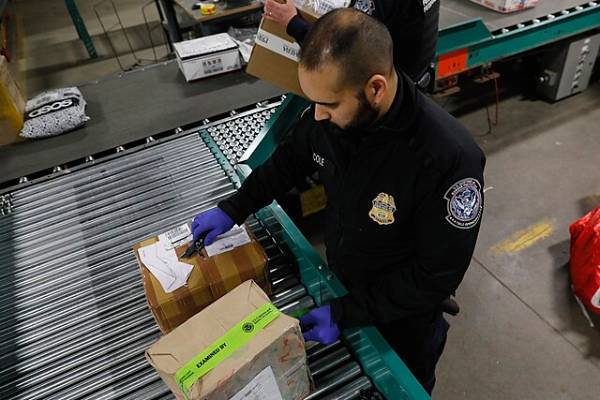
The recent federal government initiative to phase out the de minimis loophole has generated over $1 billion in new duties, a significant revenue stream that is poised to ripple through the broader economic landscape. While not directly an energy policy, this shift in trade enforcement, which began its phaseout in May 2025 for specific regions and was fully implemented worldwide by August 29, 2025, has profound implications for consumer spending, domestic manufacturing, and supply chain dynamics. For astute investors in the oil and gas sector, understanding these macroeconomic currents is crucial, as they ultimately influence energy demand and market sentiment. Our proprietary data pipelines reveal how these policy shifts intersect with live market movements and upcoming catalysts, offering a unique lens for portfolio positioning.
De Minimis Phaseout: A $1 Billion Boost with Economic Ramifications
The collection of more than $1 billion in duties from over 246 million low-value shipments previously entering the U.S. duty-free marks a substantial policy victory for U.S. Customs and Border Protection. This rapidly accumulated revenue underscores the sheer volume of goods that were escaping tariffs under the old rules. This new revenue stream, accumulated since the phaseout began, provides the government with additional fiscal flexibility. More importantly for investors, the elimination of the de minimis exemption aims to level the playing field for American businesses, forcing foreign goods to compete on more equal footing. While this is intended to bolster domestic industry, it also introduces increased costs for importers, which could translate into higher prices for consumers. Such inflationary pressures, even if marginal per item, can accumulate, potentially impacting overall consumer purchasing power and discretionary spending. A slowdown in consumer spending, particularly on non-essential goods, often precedes or accompanies broader economic deceleration, which directly translates to dampened demand for transportation fuels and industrial energy.
Current Market Dynamics: A Bearish Response to Broader Headwinds
The energy markets are currently navigating a period of notable volatility, and our live data stream indicates a persistent downward pressure. As of today, Brent Crude trades at $90.03, reflecting a -0.44% decline for the session, with a daily range between $93.87 and $95.69. Similarly, WTI Crude is at $86.32, down -1.26%, having traded between $85.50 and $87.47. This intraday dip extends a more significant trend: Brent Crude has seen a substantial correction, falling from $118.35 on March 31 to $94.86 just yesterday, representing a nearly 20% drop in less than three weeks. Gasoline prices also reflect this bearish sentiment, currently at $3.03, down -0.33%. This market softness is not isolated; it reflects broader concerns about global economic growth and demand. The de minimis phaseout, by potentially adding to import costs and consumer price pressures, contributes to this narrative of economic headwinds. For energy investors, understanding that policies like these, which increase the cost of doing business or impact consumer wallets, can exacerbate existing bearish trends is critical for anticipating future price movements.
Enhanced Oversight and Supply Chain Reshaping
Beyond revenue generation, the elimination of the de minimis exemption has significantly enhanced enforcement capabilities. Since the initial phaseout for shipments from China and Hong Kong, seizures of unsafe and non-compliant low-value goods have surged by an alarming 82%. This includes a wide array of problematic items, from counterfeit products and narcotics to faulty electronics and hazardous chemical-laden goods. For the oil and gas sector, while not directly impacting crude production or refining, this policy shift has indirect but important implications. A more secure and compliant import environment reduces the risk of supply chain disruptions caused by illegal or unsafe goods. Furthermore, the stated goal of protecting domestic manufacturers could lead to a revitalization of certain U.S. industries. A stronger domestic manufacturing base would translate to more consistent and potentially increased industrial energy demand, a factor that could provide a stabilizing force for natural gas and industrial fuel consumption in the long term, even as global trade patterns adjust to the new tariff landscape.
Navigating Future Volatility: Investor Concerns and Upcoming Catalysts
Our proprietary reader intent data highlights a clear investor focus on market direction and future price predictions, with many keenly asking about the trajectory of crude benchmarks like WTI and what the price of oil per barrel will be by the end of 2026. This uncertainty underscores the importance of integrating macroeconomic factors like the de minimis phaseout into energy market analysis. The potential for increased consumer prices and shifts in global trade due to these tariffs will undoubtedly influence demand projections. As investors look to navigate this complex environment, several key energy events on the horizon demand close attention. Tomorrow, the OPEC+ JMMC Meeting will provide critical insights into potential supply-side adjustments, while the EIA Weekly Petroleum Status Reports on Wednesday and the following Wednesday will offer granular data on U.S. crude inventories and demand. The Baker Hughes Rig Count on Friday and again next week will shed light on North American production trends. Furthermore, the EIA Short-Term Energy Outlook on May 2nd will present the agency’s updated forecasts, which will likely incorporate the broader economic impacts of trade policies like the de minimis changes. Investors should monitor how these traditional energy market catalysts are interpreted through the lens of evolving trade dynamics and their subsequent impact on inflation and global economic growth, factors increasingly driving long-term price expectations.