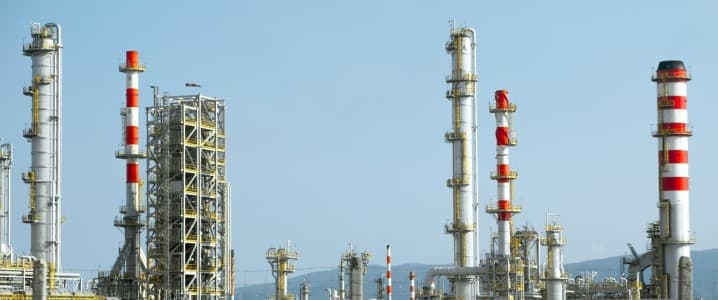
The African energy landscape is on the cusp of a significant transformation, with the Dangote Refinery at its epicenter. A recently announced $400 million agreement between Dangote Group and Chinese construction and mining equipment manufacturer XCMG signals an aggressive push to substantially expand the refinery’s processing capabilities. This strategic partnership is not merely about increasing throughput; it represents a decisive move towards continental energy independence, poised to reshape regional supply dynamics and offer compelling investment opportunities. For investors closely tracking global refining capacity and market shifts, understanding the implications of this expansion — from its impact on product flows to its interplay with fluctuating crude prices and upcoming market catalysts — is paramount.
Dangote’s Ambitious Expansion: A Game Changer for African Energy Security and Beyond
The Dangote Refinery, already Africa’s largest, has set an ambitious target to nearly triple its processing capacity from the current 650,000 barrels per day (bpd) to an impressive 1.4 million bpd. This expansion, expected to be completed within three years, underscores a strategic vision for not only meeting Nigeria’s entire refined petroleum product demand but also generating substantial surpluses for export. Since commencing operations in 2024 with diesel and naphtha production, and adding gasoline to its output in September 2024, the facility has rapidly asserted its dominance. By January 2026, it had already begun exporting fuel beyond West Africa and was processing record volumes of crude. Crucially, the refinery now supplies 62% of Nigeria’s premium motor fuel, effectively displacing significant import volumes and enhancing the nation’s energy security. Furthermore, the commitment to petrochemicals, including the exclusive partnership with Vinmar International for polypropylene export, diversifies revenue streams and positions Dangote as a multifaceted energy player on the global stage. This massive increase in refining power will fundamentally alter trade flows for refined products across Africa and potentially into European and Asian markets, creating both opportunities and competitive pressures.
Navigating Volatile Markets: The Macro Context for Dangote’s Growth
Developing a project of Dangote’s scale, with a three-year expansion horizon, requires a keen understanding of the macro energy environment. As of today, Brent crude trades at $92.45, reflecting a +2.23% increase within a day range of $89.11 to $94.68. WTI crude mirrors this upward momentum, priced at $88.85, up +1.64% within its daily range of $85.5 to $91.45. Gasoline prices also saw a bump, reaching $3.11, a +2.31% increase. However, this recent daily uptick follows a period of significant volatility. Our proprietary data indicates that Brent crude experienced a notable decline over the past two weeks, dropping from $118.35 on March 31st to $94.86 on April 20th, representing a nearly 20% contraction. This fluctuation highlights the inherent risks and opportunities in the oil and gas sector. While higher crude prices generally boost upstream profitability, they can squeeze refining margins if product prices don’t keep pace. For a massive refining complex like Dangote, the long-term price trajectory of both crude feedstocks and refined products will dictate the ultimate profitability and return on investment from this substantial expansion. The current market snapshot suggests a rebound, but the recent trend emphasizes the need for robust operational efficiency and strategic hedging to mitigate commodity price exposure over the multi-year expansion period.
Investor Focus: Addressing Key Questions on Future Oil Prices and Regional Impact
Our investor intent data reveals a consistent theme among OilMarketCap readers: a strong desire for clarity on future oil price movements and their implications. Questions such as “is WTI going up or down?” and “what do you predict the price of oil per barrel will be by end of 2026?” underscore the uncertainty and the need for forward-looking analysis. While predicting exact prices is challenging, Dangote’s expansion offers a tangible factor influencing regional market dynamics. The addition of 750,000 bpd of refining capacity, designed to produce gasoline, diesel, and petrochemicals, will significantly reduce Africa’s reliance on imported finished products. This shift will likely stabilize product prices within West Africa and potentially beyond, reducing demand for specific crude grades that typically feed European and Asian refineries supplying Africa. For investors, this implies a potential for more robust refining margins within Africa, but also increased competition for marginal barrels of light crude from the region. Companies with integrated upstream and downstream assets, or those strategically positioned to benefit from shifting trade routes and lower logistics costs, stand to gain. Furthermore, the ability to meet domestic demand completely, as Nigeria aims to do, insulates the market from global supply chain disruptions and geopolitical volatility, offering a degree of predictability that is highly valued by long-term investors.
Upcoming Catalysts and Forward Outlook
The next few weeks present several critical data points that will shape the near-term outlook for the global oil and gas market, directly influencing the economic landscape for projects like Dangote’s expansion. Today, April 21st, the OPEC+ JMMC Meeting is underway, with any announcements regarding production quotas or market sentiment having immediate implications for crude supply and pricing. Investors should closely monitor the outcome for signals on collective supply management. Following this, the EIA Weekly Petroleum Status Reports on April 22nd and April 29th, alongside API Weekly Crude Inventory data on April 28th and May 5th, will provide crucial insights into U.S. inventory levels, refining activity, and demand indicators. These reports are vital for gauging global supply-demand balances. Further down the line, the EIA Short-Term Energy Outlook on May 2nd will offer updated forecasts for crude oil, natural gas, and refined product prices through 2027, providing essential context for long-term investment decisions. For Dangote, these events will influence feedstock costs and product revenue potential over its three-year expansion timeline. A tighter global market, signaled by these reports and OPEC+ decisions, could enhance the profitability of the expanded capacity, while an oversupplied market might exert pressure. Proactive investors will integrate these upcoming catalysts into their models, recognizing their collective power to shape the environment in which Dangote’s ambitious growth will unfold.


