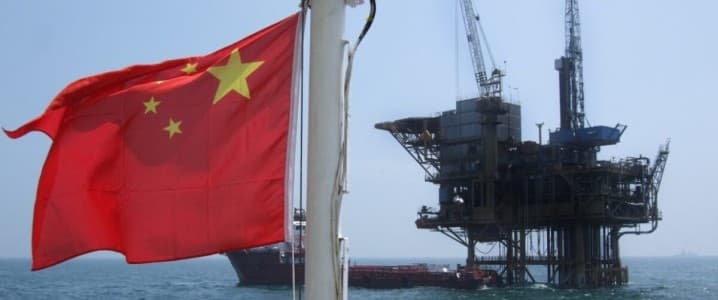
China’s energy landscape is undergoing a significant transformation, marked by a determined push for domestic resource development to fortify its energy security and reduce reliance on external supplies. The recent full launch of the second phase of China National Offshore Oil Corporation’s (CNOOC) Deep-Sea No. 1 natural gas project in the South China Sea stands as a monumental achievement in this strategy. This expansion, adding a substantial 4.5 billion cubic meters (BCM) per year to the nation’s gas output, not only underscores China’s advanced deepwater capabilities but also sends a clear signal to global energy markets about its long-term vision for self-sufficiency. For investors, understanding the strategic implications of such large-scale domestic supply additions, particularly against a backdrop of volatile global prices and critical upcoming market events, is paramount for navigating the evolving energy sector.
China’s Domestic Gas Drive: A Strategic Imperative
The Deep-Sea No. 1 project, now fully operational with its second phase since June 26, solidifies its position as China’s largest deepwater gas development. With total geological reserves exceeding 150 BCM, this ambitious undertaking is a cornerstone of Beijing’s broader energy policy to enhance energy security and temper the nation’s dependence on imported liquefied natural gas (LNG). The project’s gas is now efficiently channeled via subsea pipelines to key mainland cities, including Sanya, Zhuhai, and the bustling economic hub of Hong Kong, providing a stable energy source for southern coastal industrial bases.
The technical prowess demonstrated by CNOOC engineers in completing this second phase is noteworthy. It involved drilling high-pressure wells more than 1,500 meters beneath the seabed and over 100 kilometers offshore, pushing the boundaries of deepwater drilling and long-distance gas transport. This strategic ramp-up aligns perfectly with China’s five-year energy security plan, which prioritizes domestic gas development as a cleaner alternative to coal, supporting the nation’s long-term carbon neutrality goals. With natural gas currently constituting approximately 9% of China’s primary energy mix, increasing domestic output like that from Deep-Sea No. 1 is critical for managing seasonal demand peaks, mitigating LNG import costs, and bolstering the resilience of its energy infrastructure.
Navigating Market Volatility: The Global Energy Price Landscape
The significance of China’s domestic gas expansion is magnified when viewed through the lens of current global energy market dynamics. As of today, Brent crude trades at $90.38 per barrel, reflecting a notable daily drop of 9.07%, with its intraday range spanning from $86.08 to $98.97. Similarly, WTI crude is priced at $82.59, down 9.41% for the day, fluctuating between $78.97 and $90.34. This sharp downturn follows a challenging two weeks for the commodity markets, where Brent crude shed $20.91, or 18.5%, from $112.78 on March 30th to $91.87 yesterday. Gasoline prices have also felt the pressure, currently at $2.93, a 5.18% decline today.
This period of pronounced volatility underscores the strategic value of China’s efforts to cultivate internal supply. For the world’s largest energy consumer, increased domestic gas production from projects like Deep-Sea No. 1 provides a crucial buffer against the whims of international energy markets, insulating its economy from extreme price fluctuations and geopolitical disruptions. While Deep-Sea No. 1 focuses on natural gas, its success contributes to China’s broader energy independence narrative, indirectly impacting the global demand for other energy sources and potentially influencing the overall sentiment in the crude oil and refined products markets.
Investor Outlook: Mitigating Risk Amidst Shifting Supply Dynamics
Our proprietary data indicates that investors are keenly focused on predicting the trajectory of oil prices, with a recurring question being, “what do you predict the price of oil per barrel will be by end of 2026?” The ongoing expansion of China’s domestic natural gas supply, while not directly addressing crude oil prices, offers a critical piece of the global energy puzzle that influences long-term price stability and investment strategies. By reducing its reliance on imported LNG, China lessens demand pressure on the global gas market, which can have ripple effects across the broader energy complex.
CNOOC’s operational excellence provides a compelling case study for investors eyeing the Chinese energy sector. The company reported record-breaking net oil and gas production of approximately 720 million barrels of oil equivalent for 2024, marking its sixth consecutive year of record output. This operational prowess translated into a profit jump of 11.4% for 2024, reaching $19 billion. These robust financials, driven by a strategic focus on expanding domestic capabilities like Deep-Sea No. 1, highlight the resilience and growth potential of companies aligned with China’s national energy security agenda. For investors, this project signifies not just energy security for China, but also sustained revenue and profit for key players like CNOOC, even as global markets contend with price uncertainty.
Upcoming Catalysts: Monitoring Global Supply & Demand Signals
The coming weeks are packed with events that will shape the immediate future of global energy markets, and investors must consider how China’s long-term strategic moves, like the Deep-Sea No. 1 expansion, interact with these short-term catalysts. Our reader intent data reveals significant interest in “What are OPEC+ current production quotas?”, reflecting the market’s reliance on the cartel’s decisions. The upcoming OPEC+ Joint Ministerial Monitoring Committee (JMMC) meeting today, April 18th, followed by the Full Ministerial Meeting on April 19th, will be critical. Any shifts in production policy will directly impact global crude supply, influencing the price environment.
Beyond OPEC+, investors will closely monitor weekly inventory data from the API on April 21st and 28th, and the EIA Weekly Petroleum Status Reports on April 22nd and 29th. These reports provide vital insights into U.S. supply and demand balances, which often serve as a bellwether for global trends. Furthermore, the Baker Hughes Rig Count on April 24th and May 1st will offer a glimpse into future production capacities. While China’s Deep-Sea No. 1 project adds a consistent, long-term supply of natural gas, the immediate market sentiment, particularly for crude, remains highly sensitive to these near-term supply-demand indicators. Investors must integrate the strategic implications of China’s increasing energy self-sufficiency with these upcoming market signals to formulate robust investment strategies in a dynamic energy landscape.


