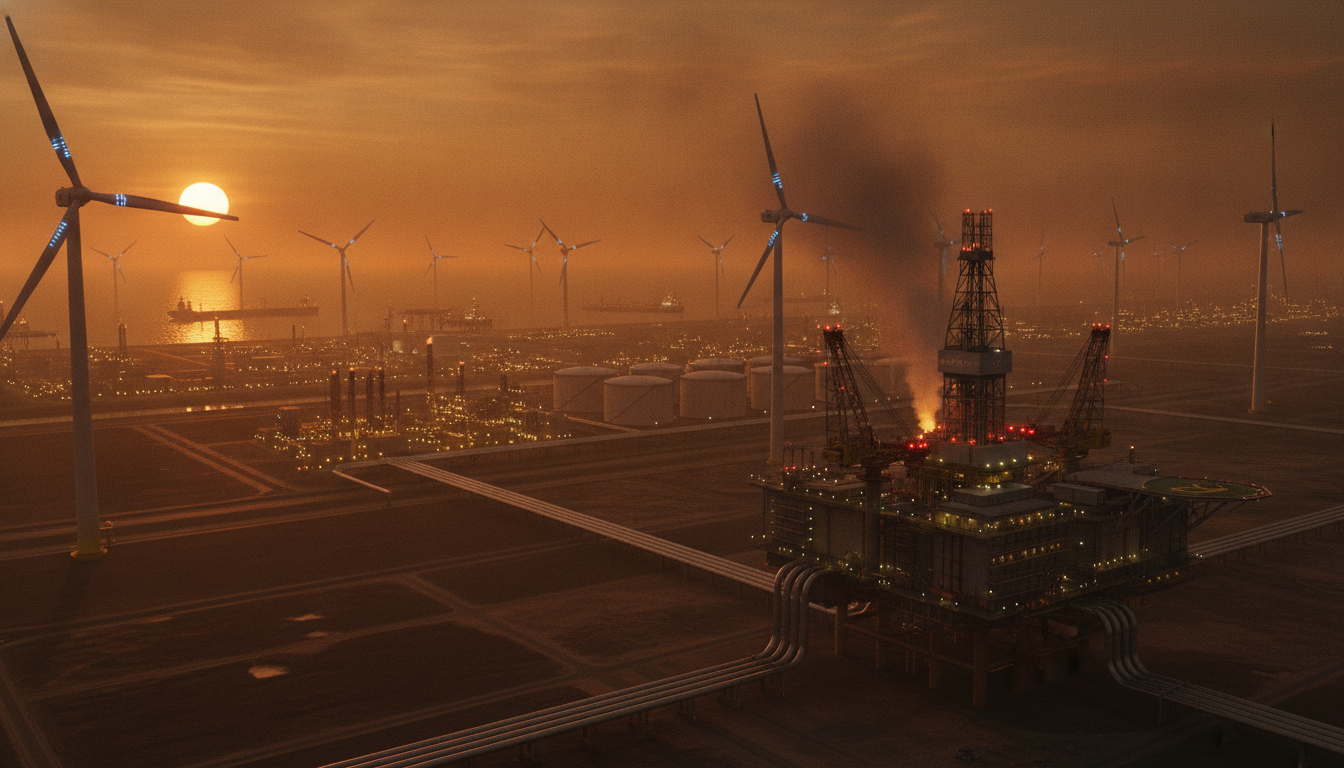
Beijing has declared a monumental shift in its energy strategy, formally establishing a binding national commitment to significantly boost wind and solar power generation. This decisive move, marking China’s first such mandate for clean electricity, sends a clear signal to global energy markets and investors: the nation is doubling down on its renewable ambitions, creating both opportunities and potential headwinds across the traditional energy landscape.
Under this landmark directive, China aims to elevate its wind and solar output by an impressive 53% between 2025 and 2030. The implications for the global energy transition are profound, as this translates into a target of 1.8 billion tonnes of coal equivalent from renewable generation by the end of the decade, a substantial increase from the projected 1.18 billion tonnes for 2025. This isn’t merely about adding capacity; it’s a holistic plan designed to integrate clean energy with critical infrastructure like advanced storage solutions, robust grid investments, expansive hydropower projects, and the nascent green hydrogen sector, all while addressing burgeoning industrial demand.
China’s Green Mandate: From Capacity to Reliability
For years, China has been an undisputed leader in rapidly deploying renewable energy capacity. However, this blistering pace has inevitably exposed vulnerabilities within its grid infrastructure, energy storage capabilities, and electricity market mechanisms. The new strategy directly confronts these challenges, signaling a strategic pivot from a singular focus on installed capacity to a greater emphasis on the *dependable* power renewables can deliver.
By 2030, a key metric for investor scrutiny will be the system value provided by renewable assets. Wind and solar projects, when coupled with storage, are now mandated to supply power equivalent to 8% of their installed capacity during periods of peak electricity demand. Furthermore, these integrated systems must collectively cover 20% of the nation’s electricity consumption during such demand spikes. This rigorous framework underscores Beijing’s intent to ensure energy security and stability, demanding more from renewable developers than just megawatts on a spreadsheet.
To achieve this, China plans to integrate over 300 gigawatts of renewable peaking capacity into its grid before the decade concludes. This dispatchable power, crucial for managing sudden surges in electricity demand, will likely drive significant investment into flexible generation technologies. For energy investors, this policy shift elevates the importance of batteries, pumped hydro storage, advanced grid services, and sophisticated digital power management systems. Project financing models will undoubtedly evolve, with dispatchability becoming an increasingly critical factor in revenue certainty and overall asset valuation, potentially reshaping the competitive landscape for traditional gas-fired peaker plants.
Beyond the Grid: Green Power for Industry and Fuels
China’s vision for green energy extends far beyond the confines of its electricity sector. The plan targets a substantial 150 million tonnes of coal equivalent from wind and solar usage in applications outside power generation. This includes widespread adoption of renewable-powered heating and cooling solutions, alongside a significant push into green hydrogen production.
Beijing has set an ambitious annual green hydrogen output target of 2 million metric tonnes by 2030. This initiative will unlock a broader market for renewable energy across pivotal industrial sectors such as chemicals, steel, transportation, and heavy manufacturing. For oil and gas companies, this represents both a challenge to traditional fossil fuel demand and a potential avenue for diversification, particularly for those involved in industrial gas supply or seeking to transition into new energy carriers.
This strategic move supports China’s overarching goal to curtail fossil fuel reliance in hard-to-abate sectors that cannot simply transition through direct electrification. Corporate buyers seeking to decarbonize their operational and supply chain emissions will find expanded options. However, the credibility of emissions accounting will hinge on meticulous electricity sourcing, prevailing grid conditions, and stringent hydrogen production standards. Domestically, this policy could further bolster demand for electrolyzers and other clean industrial technologies, reinforcing China’s already formidable manufacturing leadership in solar, batteries, and power equipment.
Hydropower and Storage: Strategic Pillars of Stability
Crucially, the plan places immense strategic weight on hydropower and energy storage solutions. China aims to reach 570 GW of hydropower capacity by 2030, a considerable increase from its earlier 2025 goal of 450 GW. Within this, pumped storage hydropower receives particular emphasis, with a target of 160 GW by 2030, a significant leap from the 66 GW anticipated for 2025.
Pumped storage systems are vital for grid stability, capable of absorbing surplus intermittent renewable power and releasing electricity during periods of high demand. Their rapid expansion will be instrumental in balancing the escalating volumes of variable wind and solar generation. Furthermore, the plan calls for greater operational flexibility across existing hydropower plants, a measure designed to enhance grid stability and potentially reduce the reliance on coal-fired generation during peak demand periods. While large-scale hydropower projects offer undeniable climate benefits, investors and developers must meticulously assess environmental and social risks, including biodiversity impacts, water resource management, land use, and community displacement, ensuring responsible project development.
Offshore Wind and Next-Gen Transmission Expand Frontiers
China’s ambitious energy transition blueprint also includes the development of large, centralized deep-sea offshore wind bases, mirroring the colossal desert wind and solar megabases established in the nation’s northern and northwestern regions. These massive projects underscore China’s commitment to scaling renewable energy production to unprecedented levels.
In a forward-thinking move, Beijing proposes integrating offshore wind generation with underwater data centers. This innovative approach seeks to directly connect rapidly expanding digital infrastructure demand with robust, clean power sources. Furthermore, the nation plans to pilot new renewable megabases designed to transmit electricity generated exclusively from clean sources.
Currently, wind and solar constitute approximately 20% of the electricity conveyed through China’s ultra-high-voltage (UHV) transmission network, a system critical for transporting power from inland energy hubs to the industrial heartlands and cities of the east. The transition towards fully renewable transmission lines will necessitate enhanced grid coordination and more flexible electricity markets. Such advancements are also expected to significantly reduce curtailment, a costly issue where renewable generators are forced to idle despite available power. For global executives and investors, China’s comprehensive plan has implications far beyond its borders, promising to drive down technology costs, reshape global commodity demand, and solidify Chinese influence across crucial clean energy supply chains. The binding nature of these targets elevates implementation expectations, with China’s ability to seamlessly integrate generation, storage, transmission, and industrial demand serving as a critical barometer for a truly resilient and low-carbon global power system.


