The global energy landscape is undergoing a significant recalibration, and Canada is poised to emerge as a new, strategic player in the liquefied natural gas (LNG) market. Following years of development and substantial investment, the nation is on the cusp of initiating its first-ever Pacific LNG exports. This pivotal moment, anchored by the massive LNG Canada project in Kitimat, British Columbia, represents more than just a new supply source; it signifies a fundamental shift in North American energy export patterns and offers critical diversification for global energy consumers, particularly in Asia. As the project completes its crucial cooldown operations, setting the stage for initial production and subsequent cargo loading, investors must consider the economic advantages, strategic implications, and broader market dynamics that underscore this long-awaited entry.
Canada’s New Pacific Gateway: A Multi-Billion Dollar Launch
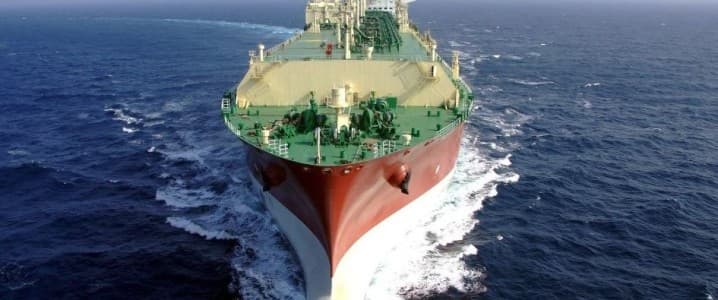
Canada’s entry into the Pacific LNG export market is materializing with the imminent operational status of the LNG Canada project. This colossal $40 billion endeavor, situated strategically in Kitimat, British Columbia, is reportedly completing cooldown operations on its first train, a critical phase scheduled between June 16 and 19. If this timeline holds, initial production is anticipated to commence at half-capacity, with the maiden cargo slated for mid-July aboard the Gaslog Glasgow. This represents a monumental achievement for Canada’s natural gas sector, establishing its first operational LNG export terminal and North America’s sole such facility on the Pacific coast.
The project’s compelling value proposition is rooted in both its economics and its geography. Shell CEO Wael Sawan has previously highlighted the stark cost advantage offered by Canada’s AECO gas benchmark, which currently hovers around $0.71 per MMBtu, a substantial discount compared to the $3.75 per MMBtu at Henry Hub. This competitive feedstock pricing, combined with the project’s advantageous proximity to key Asian markets—allowing transit times of under two weeks—positions Canadian LNG as a highly attractive supply option. Backed by a powerful consortium including Shell, Petronas, PetroChina, Mitsubishi, and Kogas, LNG Canada is designed to eventually reach a full capacity of 14 million tonnes per annum (mtpa), a volume poised to significantly re-route Canadian gas exports from their traditional destination in the United States towards a more diversified global market.
Global Energy Dynamics Amidst Market Volatility
The launch of Canada’s Pacific LNG exports arrives at a fascinating juncture for the global energy markets. While the long-term demand for secure, diversified energy sources remains robust, the shorter-term market sentiment is currently reflecting notable volatility. As of today, Brent Crude is trading at $90.38 per barrel, experiencing a significant daily downturn of 9.07% within a range of $86.08 to $98.97. Similarly, WTI Crude has fallen to $82.59, marking a 9.41% decline, with its daily range spanning $78.97 to $90.34. This daily contraction extends a broader trend, with Brent having shed over 18% in the past two weeks alone, dropping from $112.78 on March 30 to $91.87 by April 17. Gasoline prices have also seen a downturn, currently at $2.93, down 5.18% today.
This backdrop of fluctuating crude prices provides a complex environment for new energy infrastructure investments. However, the long-term fundamentals for natural gas, especially LNG, remain strong. Canada’s emergence as a new Pacific LNG player is particularly significant given the ongoing regulatory hurdles and stalled permitting for new LNG projects in the United States, alongside accelerating investment in Mexico. This creates a strategic void that Canadian supply can help fill, reinforcing North America’s role as a critical energy exporter to Asia and Europe. For investors, understanding the resilience of long-term energy infrastructure projects against short-term price swings is paramount.
Strategic Implications and Forward-Looking Investor Outlook
The strategic implications of Canada’s new Pacific LNG capacity are far-reaching. By redirecting a portion of Canadian gas exports from the U.S. to global markets, the project enhances supply diversity for Asian economies, bolstering energy security for key trading partners. This move also positions Canada as a more globally integrated energy player, reducing its almost exclusive reliance on the U.S. market for its natural gas. Investors are keenly watching how these shifts will impact the broader energy complex, with a frequent question being: “What do you predict the price of oil per barrel will be by end of 2026?” This highlights the pervasive interest in long-term commodity price stability and the factors influencing it.
Upcoming energy events could significantly shape this outlook. The OPEC+ Joint Ministerial Monitoring Committee (JMMC) meeting this Saturday, April 18, followed by the Full Ministerial meeting on Sunday, April 19, are critical for crude oil markets. Any decisions regarding production quotas could further influence global crude prices and, by extension, the sentiment around all energy investments. Additionally, weekly data releases such as the API and EIA Crude Inventory reports on April 21 and 22, respectively, and the Baker Hughes Rig Count on April 24, will provide ongoing insights into supply and demand dynamics. For LNG investors, while direct impacts may be less immediate, the overall health and direction of the broader energy market, often signaled by these events, play a crucial role in capital allocation decisions and long-term project valuations. Furthermore, investors are actively inquiring about “OPEC+ current production quotas,” indicating a strong focus on supply management strategies that could influence future pricing. The Canadian LNG project, with its fixed long-term contracts and low feedstock costs, offers a degree of insulation from some of this volatility, presenting a compelling value proposition.
The Long Game: Diversification, Resilience, and Growth
For sophisticated energy investors, the advent of Canada’s Pacific LNG exports represents a long-term play on global energy diversification and resilience. The substantial investment from a consortium of global energy majors underscores a conviction in the enduring demand for natural gas as a transition fuel and a cornerstone of energy security. While the initial output from Train 1 will be at half-capacity, the eventual ramp-up to 14 mtpa will solidify Canada’s position in the global LNG arena. This scale provides a robust foundation for future growth and potential expansion, leveraging Canada’s vast natural gas reserves and established energy infrastructure.
The project’s ability to tap into the economically advantageous AECO benchmark, combined with its strategic location, offers a competitive edge that is difficult to replicate. This intrinsic value helps cushion the project against short-term market fluctuations and ensures its relevance in a dynamic energy landscape. As North America continues to evolve its energy export strategy, Canada’s new Pacific gateway stands as a testament to strategic foresight and significant capital commitment, offering investors exposure to a reliable, cost-effective, and geographically diverse source of global LNG supply for decades to come.


