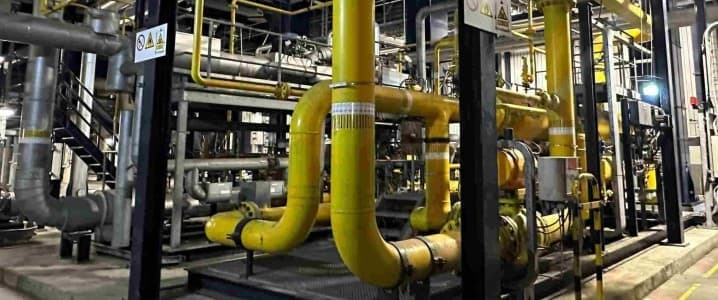
The energy landscape is undergoing a dramatic transformation, driven by an unexpected surge in electricity demand from the artificial intelligence sector. This unprecedented power requirement is challenging conventional grid planning and, crucially for investors, is significantly extending the operational life of fossil fuel-fired peaker plants. Our proprietary data at OilMarketCap.com indicates a fundamental shift in grid strategy, where reliability and immediate capacity are outweighing prior retirement schedules for critical infrastructure. This presents a compelling, albeit evolving, investment thesis in the traditional energy sector, particularly for companies involved in natural gas, oil-fired generation, and even coal, as these assets become indispensable in meeting the accelerating demands of the AI revolution.
AI’s Insatiable Appetite Reshaping Grid Dynamics
The proliferation of AI data centers across the United States is creating an electricity demand shock that few anticipated. In the vast PJM Interconnection market, which spans 13 mid-Atlantic and Midwest states and the District of Columbia, approximately 60% of fossil fuel power plants previously slated for retirement have now either deferred or outright canceled those plans. These units, often oil, natural gas, or coal-fired peakers designed to run only during periods of peak demand, are now essential to maintain grid stability and flexibility. The sheer scale of AI’s power needs means these peaker units are running more frequently and for longer durations, fundamentally altering their economic outlook and investment viability. This dynamic underscores a critical need for reliable, dispatchable power that current renewable build-outs alone cannot fully address, solidifying the role of fossil fuel assets in the near to medium term.
Market Signals Amidst Evolving Energy Demand
The extended lifespan of fossil fuel peakers is playing out against a backdrop of dynamic energy markets. As of today, Brent Crude trades at $90.18, experiencing a slight dip of -0.28% within a daily range of $93.87 to $95.69. Similarly, WTI Crude stands at $86.65, down -0.88% today, trading between $85.50 and $87.47. Gasoline prices remain stable at $3.03. While these short-term price movements reflect broader geopolitical and supply-demand pressures, the underlying structural demand for electricity, fueled by AI, provides a long-term bullish counter-narrative for natural gas and, indirectly, for crude oil that fuels some peaker units. The U.S. Energy Information Administration (EIA) has already noted an increase in U.S. coal production for 2025, driven by higher natural gas prices, delayed coal plant retirements, and robust heating demand. This illustrates how the demand for immediate power generation capacity cascades through the entire fossil fuel complex, influencing production and pricing across the board.
Addressing Investor Concerns: Navigating Price Volatility and Long-Term Value
Our proprietary reader intent data at OilMarketCap.com highlights that investors are acutely focused on market direction, with questions like “is WTI going up or down?” and “what do you predict the price of oil per barrel will be by end of 2026?” dominating discussions. While the 14-day Brent trend shows a significant pullback, dropping from $118.35 on March 31, 2026, to $94.86 on April 20, 2026 – a decline of nearly 20% – this recent volatility should be viewed in the context of the underlying structural changes in power demand. The extended longevity of fossil peakers, particularly those fueled by natural gas, offers a robust demand floor that may temper long-term bearish outlooks. Investors should recognize that while crude oil prices may fluctuate due to global supply dynamics, the domestic demand for reliable power generation capacity, increasingly from natural gas and even oil-fired peakers, creates a distinct investment opportunity in the power generation and associated fuel supply sectors. The strategic value of these assets, once considered sunset industries, is now being re-evaluated upwards due to AI’s relentless growth.
Upcoming Events to Watch for Market Clarity
For investors seeking to capitalize on these evolving dynamics, several key events in the coming weeks will offer crucial insights. The OPEC+ Joint Ministerial Monitoring Committee (JMMC) Meeting on April 21, 2026, will be closely watched for any signals on production policy, which could directly impact global crude prices. The EIA Weekly Petroleum Status Reports on April 22 and April 29 will provide vital data on U.S. crude oil and product inventories, refining activity, and demand indicators, offering a snapshot of the immediate market health. Furthermore, the Baker Hughes Rig Count on April 24 and May 1 will illustrate drilling activity trends, signaling future supply potential. Perhaps most critically, the EIA Short-Term Energy Outlook on May 2, 2026, will offer updated forecasts for supply, demand, and prices across all energy commodities, including natural gas and electricity, providing essential guidance for investor strategies. These events, against the backdrop of burgeoning AI demand, will help confirm the staying power of fossil fuel assets in the national energy mix.
The Broader Energy Mix and Investment Opportunities
While the focus on peaker plants highlights the resilience of fossil fuels, the AI-driven demand shock is also creating opportunities across the broader energy spectrum. The U.S. Department of Energy, for instance, recently extended a $1 billion loan to Constellation Energy to restart the Three Mile Island Unit 1 nuclear reactor, underscoring the critical need for baseload power to support AI advancement. This signals that nuclear energy, alongside natural gas and increasingly robust power purchase agreements for renewable energy, will be key beneficiaries of the AI boom. For investors, this environment demands a nuanced approach. Companies with diversified portfolios, including natural gas-fired generation, strategically located peaker units, and even those exploring opportunities in nuclear or advanced grid solutions, are well-positioned. The immediate future of the grid, driven by AI, is clearly signaling that dispatchable, reliable power, often from traditional sources, is not just a stop-gap measure but a fundamental requirement, securing their role in the investment landscape for years to come.


