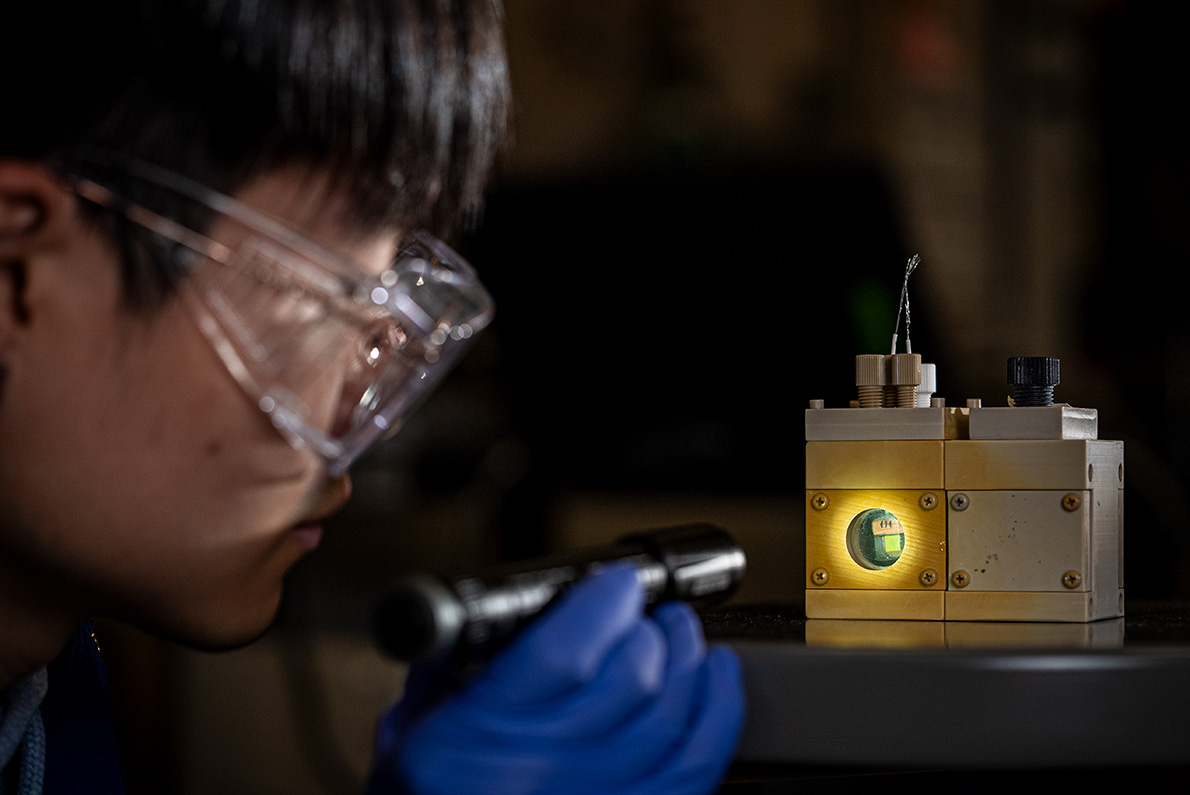
The global energy sector stands at a critical juncture, compelling oil and gas investors to meticulously reassess their portfolios for future resilience and growth. Amidst the urgent imperative for decarbonization, innovations in carbon capture and utilization (CCU) are emerging as pivotal pathways to unlock substantial value. A groundbreaking development, spearheaded by researchers at the Department of Energy’s Lawrence Berkeley National Laboratory (Berkeley Lab) in collaboration with international partners, signals a significant leap forward. This team has engineered a novel system capable of directly transforming carbon dioxide into valuable liquid fuels and other high-demand chemical feedstocks, detailed in a recent publication in Nature Catalysis.
This scientific breakthrough introduces a self-contained unit specifically designed to produce C2 (carbon-carbon) compounds. The system leverages a potent combination of catalytic copper and perovskite, a material already recognized for its efficiency in photovoltaic solar panels. This achievement is not an overnight success but the culmination of over two decades of dedicated research, pushing the boundaries of scientific understanding closer to replicating nature’s highly efficient photosynthetic processes. For energy companies, this offers a tangible and compelling avenue to diversify their existing asset base and strategically enter the burgeoning sustainable fuels market.
Revolutionizing Carbon Conversion: A Closer Look at the Technology
For investors monitoring the energy transition, understanding the specifics of this technology is crucial. The ability to convert CO2 directly into C2 compounds represents a profound shift. C2 compounds, such as ethylene and ethanol, are foundational building blocks for a vast array of industrial products, from plastics and solvents to advanced fuels. Historically, producing these chemicals has relied heavily on fossil fuel feedstocks. By utilizing captured CO2 as the raw material, this new process offers a dual benefit: mitigating greenhouse gas emissions while simultaneously creating high-value products.
The ingenuity lies in the catalytic system. Copper, a well-known catalyst, is enhanced by its pairing with perovskite. Perovskite materials are celebrated for their unique crystal structures and tunable properties, making them highly efficient in various energy applications. Their proven track record in solar energy conversion suggests robustness and scalability, critical factors for industrial adoption. The “self-contained” nature of the system implies a potentially streamlined, modular design, reducing the complexity and footprint typically associated with large-scale chemical plants. This modularity could significantly lower capital expenditure for deployment, making it an attractive proposition for O&G firms looking to integrate CCU into existing operations or develop new greenfield projects.
The long research trajectory leading to this point underscores the scientific rigor and the ambitious goal of mimicking photosynthesis. Nature’s process efficiently converts sunlight, water, and CO2 into energy-rich organic compounds. While this new system is a technological rather than a biological one, its ability to directly convert CO2 into energy-dense liquids and chemicals moves the industry significantly closer to a closed-loop carbon economy, a major objective for long-term sustainability and profitability.
Strategic Alliances Driving Sustainable Fuels Investment
Astute investors seeking long-term growth in the clean energy sector should pay particular attention to collaborative initiatives fostering such innovations. The Liquid Sunlight Alliance (LiSA) stands out as a prime example. This ambitious initiative, funded by the U.S. Department of Energy as a Fuels from Sunlight Energy Innovation Hub, exemplifies the power of collaborative research in accelerating solutions for the energy transition.
LiSA brings together a consortium of leading scientific institutions, pooling expertise and resources to overcome complex challenges in renewable fuel production. For investors, LiSA represents more than just a research consortium; it signals a robust commitment from government and academia to de-risk and advance critical energy technologies. Investments flowing into entities participating in or emerging from such hubs often carry a stamp of credibility and a higher likelihood of commercial viability due to rigorous peer review and extensive development support.
The alliance’s focus on “fuels from sunlight” directly aligns with the Berkeley Lab’s breakthrough, suggesting a synergistic environment where scientific discoveries can be rapidly translated into scalable applications. Monitoring the progress of LiSA and its constituent research groups can provide early indicators of future market trends and potential investment targets within the sustainable fuels landscape. The collective intelligence and shared infrastructure within such hubs significantly accelerate the pace of innovation, compressing timelines for commercialization and offering earlier opportunities for financial returns.
Implications for Oil & Gas Investors
For the oil and gas sector, this breakthrough technology is not merely an environmental imperative but a strategic economic opportunity. The ability to convert CO2 directly into liquid fuels and high-value chemicals provides a powerful tool for decarbonization efforts while simultaneously opening up new revenue streams. Companies can leverage their extensive expertise in large-scale chemical processing, infrastructure development, and global distribution networks to scale these technologies effectively.
Diversification into sustainable fuels and chemicals derived from captured carbon offers a hedge against increasing regulatory pressures and evolving consumer preferences. Furthermore, it positions traditional energy companies as leaders in the circular carbon economy, enhancing their environmental, social, and governance (ESG) profiles—a critical factor for attracting capital in today’s market. The potential to utilize existing CO2 emission sources, such as industrial facilities or power plants, as feedstocks for new product lines transforms what was once a liability into a valuable resource.
Investors should evaluate companies actively exploring or investing in such CCU technologies. Those demonstrating a clear strategy for integrating carbon conversion into their core operations, or establishing dedicated ventures in this space, are likely to be better positioned for long-term value creation. The journey from laboratory breakthrough to industrial scale-up is complex, but the foundational science and collaborative support now in place suggest a promising trajectory for these innovative carbon utilization solutions.
In conclusion, the latest advancements in carbon conversion technology, particularly the direct synthesis of C2 compounds using catalytic copper and perovskite, represent a pivotal moment for the oil and gas investment community. Coupled with the strategic momentum generated by initiatives like the Liquid Sunlight Alliance, these developments underscore a clear pathway for O&G companies to navigate the energy transition, diversify their portfolios, and cultivate new, sustainable profit centers. Investors who understand and act upon these trends will be best positioned to capitalize on the evolving energy landscape.