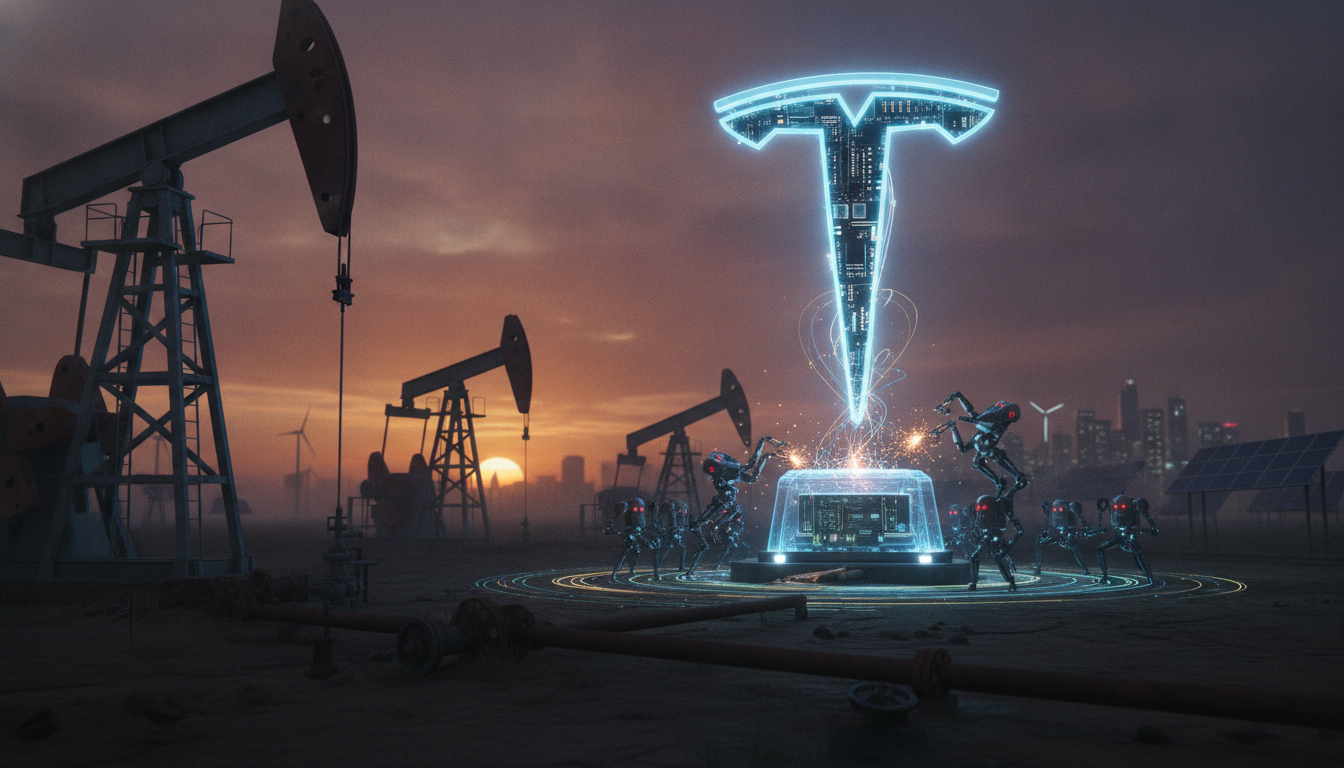
Tesla’s AI Ambition Drives Unprecedented Capital Expenditure Surge
Electric vehicle powerhouse Tesla is embarking on an aggressive capital deployment strategy, funneling billions into artificial intelligence development and next-generation manufacturing. Following a recent earnings call, CEO Elon Musk articulated a clear mandate: prioritize rapid expansion in AI capabilities, even if it means moving away from traditional notions of extreme capital efficiency. This ambitious approach is set to reshape Tesla’s financial landscape, with significant implications for investors.
In the second quarter alone, Tesla’s capital expenditure witnessed an astonishing 142% year-over-year increase, reaching $5.8 billion. This substantial surge underscores Musk’s intensified AI investment drive. The CEO explicitly directed his executives to accelerate spending, stating, “We should be spending on capex as fast as we can spend — as fast as we can without it being too wasteful. So we’re not trying to aim for some extremely high-efficiency capital spend because that would slow things down.” This philosophy signals a strategic pivot, prioritizing speed to market and technological dominance over marginal improvements in capital utilization rates.
The colossal capital infusion is primarily directed towards establishing advanced production lines and constructing new factories dedicated to Tesla’s futuristic projects, including the Cybercab robotaxi and the Optimus humanoid robot. These ventures represent a significant leap beyond automotive manufacturing, requiring vast investments in R&D, specialized infrastructure, and advanced robotics.
This aggressive spending strategy, however, has immediate financial consequences. Tesla reported a negative free cash flow of $1.1 billion in the second quarter, marking its first quarterly deficit this year. The market reacted swiftly to the earnings announcement, with the company’s shares declining in premarket trading as its profitability figures fell short of analyst expectations. Despite this short-term cash burn, the company’s leadership remains committed to the course, projecting total capital expenditure to surpass $25 billion for the full year.
Further outlining the company’s long-term financial trajectory, CFO Vaibhav Taneja confirmed plans to secure substantial debt facilities, aiming for the capacity to borrow up to $30 billion. This strategic move highlights Tesla’s anticipated need for significant external financing to fuel its growth ambitions. Taneja predicted an even more pronounced ramp-up in spending over the next two to three years. These future investments include the construction of a new solar panel factory, a significant expansion of its AI compute infrastructure, and the groundbreaking for a massive ‘Terafab’ semiconductor fabrication plant, a collaborative effort with SpaceX.
Tesla’s burgeoning capital intensity is not an isolated phenomenon but rather reflects a broader trend across the technology sector. The escalating global race for AI superiority is driving many tech giants to commit unprecedented resources. For instance, Google also reported a substantial negative free cash flow of nearly $6 billion in its second-quarter earnings. In response to the competitive landscape, Google subsequently raised its full-year capital expenditure predictions to an astounding $205 billion, underscoring the immense financial commitments required to stay competitive in the rapidly evolving AI ecosystem.
Despite the significant cash outflow and market scrutiny, Elon Musk staunchly defends Tesla’s capital allocation strategy. He characterized the company’s capital expenditure efficiency as “off-scale good,” emphasizing that Tesla is simultaneously investing in a multitude of productive assets, including factories and critical infrastructure. Musk boldly asserted that the current pace of industrial scale-up at Tesla is likely the “fastest since World War II in America.” This perspective contrasts sharply with his well-documented past criticisms regarding government spending, which he has frequently deemed prone to abuse and waste. For Tesla, however, the current spending is framed as a strategic necessity for groundbreaking innovation and market leadership.
In conclusion, Tesla’s AI-driven capital strategy marks a pivotal financial transformation, prioritizing speed, innovation, and future market dominance in nascent technologies. While promising revolutionary advancements and potentially exponential long-term growth, this aggressive approach demands diligent scrutiny from investors. The long-term implications for Tesla’s profitability, balance sheet robustness, and the ultimate realization of value from these ambitious, multi-billion-dollar projects will be closely watched by financial markets. The coming quarters will reveal whether this colossal investment gamble yields the disruptive returns Musk envisions.


