In a world increasingly shaped by technological leaps, understanding the broader currents of innovation becomes paramount for savvy investors, even those focused on the bedrock of the global economy: oil and gas. Recent insights from Elon Musk, a figure whose pronouncements often send ripples across diverse sectors, offer a fascinating glimpse into the future of artificial intelligence – a future that, while seemingly distant from drilling rigs and refining operations, holds profound implications for energy demand, economic stability, and long-term capital allocation strategies.
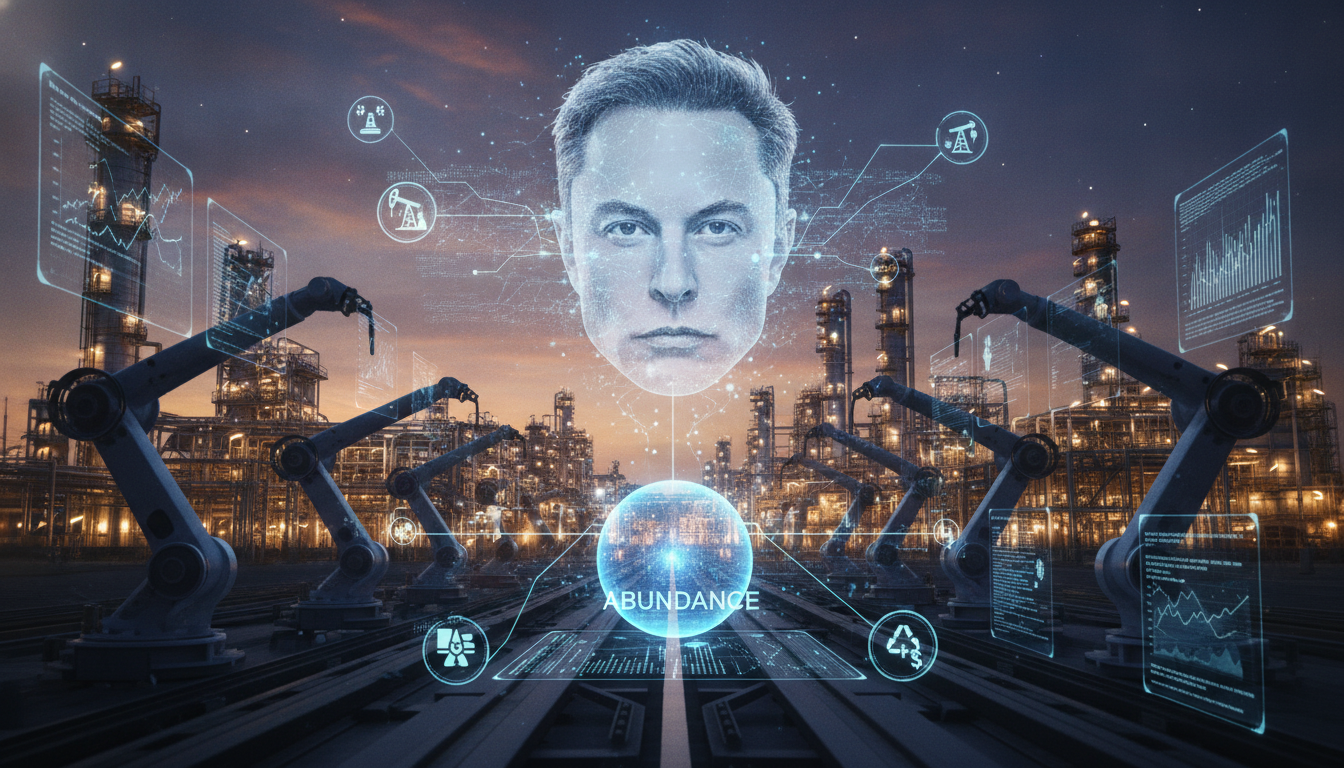
Musk, known for his audacious visions and stark warnings, recently shared his evolving perspective on AI’s unstoppable ascent. In a candid interview, the entrepreneurial titan acknowledged the “not zero” risk of catastrophic outcomes from advanced AI and robotics, a concern he has voiced consistently over the years. However, his current stance leans towards embracing the inevitable, framing it as a path to “incredible abundance for all.” This philosophy of moving forward, despite inherent risks, resonates with the calculated gambles inherent in oil and gas exploration and development.
The implications of such an “age of amazing abundance,” where theoretically “anyone can have anything they can think of,” could drastically reshape global energy consumption patterns and resource management. Musk predicts AI may surpass the combined intelligence of humanity within approximately five years. This accelerated trajectory toward superintelligence begs critical questions for energy investors: How would universal prosperity affect demand for crude oil, natural gas, and refined products? Could such an era lead to unprecedented energy requirements for advanced infrastructure, or conversely, could AI-driven efficiencies drastically reduce per capita energy footprints? These are not mere philosophical musings but vital strategic considerations for long-term portfolio planning within the energy sector.
Weighing AI Risks Against Energy Sector Volatility
Musk’s journey through AI prognostication has been marked by a spectrum of views, from likening AI development to “summoning the demon” in 2014, to asserting in 2018 that “AI is far more dangerous than nukes.” As recently as March 2025, he estimated a 10% to 20% probability of “killer robots annihilating humanity.” These stark figures, while concerning, offer a parallel for oil and gas investors accustomed to quantifying and navigating significant, albeit different, forms of risk. Geopolitical instability, volatile commodity prices, regulatory shifts, and environmental pressures all present “non-zero” probabilities of adverse outcomes for energy portfolios.
Intriguingly, Musk’s more recent forecasts have taken a decidedly utopian turn. This past January, he declared that saving for retirement could become “irrelevant,” a concept later challenged by figures like “The Big Short” investor Michael Burry. This month, Musk further elaborated, suggesting AI and robotics will render traditional work optional and usher in “universal high income.” While such claims may seem far-fetched from the perspective of managing an oil and gas investment portfolio, the underlying premise of profound economic transformation cannot be ignored. A world where labor costs are minimized by AI could dramatically alter industrial demand for energy, the economics of production, and the overall macroeconomic environment that underpins energy asset valuations.
When pressed on the inevitability of AI’s rise during The Economist interview, Musk’s response was pragmatic: “Let’s enjoy the ride.” He emphasized the “inexorable progress” in AI and robotics, acknowledging that attempts to halt it would be futile. This sentiment mirrors the reality for energy investors facing the ongoing energy transition and the relentless march of technological innovation within their own industry. Just as one cannot simply “stop” the development of AI, investors in oil and gas must actively adapt to evolving market dynamics, embrace new technologies in exploration and production, and strategically position their assets for future energy landscapes.
Governance, Values, and Strategic Alignment in Energy Investment
Musk’s candid discussion on the 10% to 20% risk of AI catastrophe, juxtaposed with his willingness to “board one of his own rockets with that chance of it blowing up,” underscores a critical aspect of his philosophy: if a phenomenon cannot be stopped, the focus must shift to mitigating adverse outcomes. “The only thing we can try to do is minimize the probability of the bad outcome,” he stated. This risk management approach is deeply familiar to oil and gas executives and investors who continuously strive to minimize operational hazards, environmental impact, and market exposure.
A particularly salient point for investors observing global governance trends is Musk’s skepticism regarding human control over AI within a decade. He dismisses the notion as an “exercise in vanity” for humans to believe they could manage superintelligent AI. Instead, his focus shifts to imbuing AI with positive values. “What we can and should try to do is to make sure that the AI has good values, that it cares about humanity, and that it wants us to be happy and prosper,” he explained. This emphasis on ethical development and value alignment resonates strongly with the increasing importance of ESG (Environmental, Social, and Governance) factors within the oil and gas industry. Just as energy companies are pressed to demonstrate responsible operations and contribute positively to society, the development of transformative technologies like AI must also adhere to a similar framework of ethical consideration.
Musk further suggested regular dialogue among leading AI executives to “discuss any safety and security issues,” seeing this collaboration as a mechanism for competitors to “keep each other honest.” This collaborative approach to systemic risk management offers a blueprint for industries facing complex challenges, including the energy sector. Dialogue on best practices, safety standards, and responsible innovation is crucial, whether it’s for managing advanced AI or ensuring the integrity of critical energy infrastructure.
For discerning oil and gas investors, Musk’s evolving perspective on AI serves as a powerful reminder that truly long-term capital allocation demands an understanding of macro-technological shifts. The economic ripples from an “age of abundance” or the challenges of managing superintelligence will undoubtedly influence global economic growth, industrial demand, and the very structure of society – all factors that directly impact the future valuation of energy assets. While the immediate focus remains on crude prices, drilling activity, and natural gas markets, keeping an eye on the horizon, where AI promises to reshape everything, is no longer a luxury but a strategic imperative for any investor navigating the complex energy landscape.


