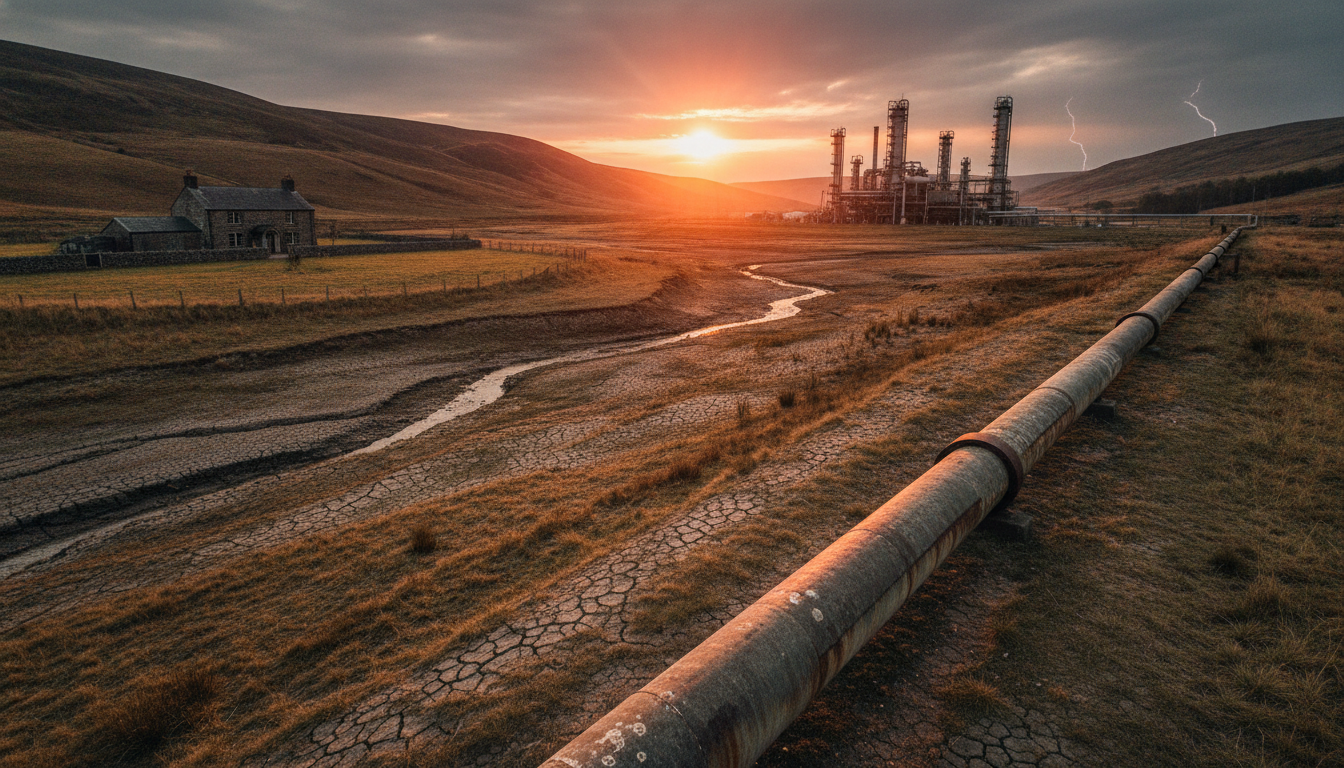
Welsh Drought Declaration Signals Urgent Energy and Resource Challenges for Investors
The landscape of resource management and energy demand is undergoing significant shifts, a reality underscored by the recent declaration of drought status across portions of Wales. This move by Natural Resources Wales (NRW) on Thursday, driven by record-low river flows, successive heatwaves, and widespread wildfires, particularly affects north Wales and the Upper Severn region. For oil and gas investors, this isn’t merely an environmental headline; it represents a tangible manifestation of climate change impacting energy systems, infrastructure, and commodity markets.
July is on track to be the driest month in Wales in nearly two centuries, a stark indicator of the extreme weather patterns gripping the region. The immediate consequences are already evident: struggling fish populations, threatened wildlife, and compromised agricultural yields. Adding to the urgency, multiple fires have continued to burn across the country for over a week, prompting the Welsh government to activate “crisis” protocols amidst concerns regarding the availability of firefighting helicopters. These environmental stressors inevitably translate into economic vulnerabilities and, crucially, influence energy demand and supply dynamics.
Europe’s Drying Summer and Cascading Energy Impacts
The situation in Wales is far from isolated. New scientific analyses confirm that extreme heat, significantly amplified by human-caused climate change, is systematically depleting water resources across Europe, intensifying an already severe continental drought. Deadly wildfires have ravaged Spain and France, while major rivers across the continent are experiencing critically low levels. In England, the National Drought Group, comprising key bodies like the Met Office, the National Farmers’ Union, and water companies, previously categorized parts of southern, central, and eastern England as experiencing “prolonged dry weather.” The systemic nature of this crisis suggests a profound and widespread impact on various sectors, with direct repercussions for energy infrastructure and investment.
Specifically, the two drought-stricken areas in Wales have received less than 2% of their anticipated rainfall for the current month. Rivers such as the Clwyd, Alwen, Alyn, Clywedog, Dyfi, and Conwy in north Wales, alongside the Wye, have either registered new monthly minimum flows or are fast approaching their record lows. This scarcity impacts more than just ecosystems; it can influence hydropower generation capacity, industrial water usage for cooling or processing, and even potentially disrupt logistics and transportation that rely on navigable waterways.
From Prolonged Dryness to Full-Blown Drought: A Critical Progression
Last week, NRW had already escalated north and south-east Wales to “prolonged dry weather” status—the stage immediately preceding a drought declaration. This triggered enhanced monitoring of waterways and protected ecological sites, along with planned releases of reservoir water to support struggling rivers. Rhian Thomas, NRW’s sustainable water and nature manager, emphasized the severe environmental strain: “The prolonged period of hot, dry weather we have experienced this summer is now having serious impacts on the environment across parts of Wales. We have seen rivers fall to exceptionally low levels, groundwater continuing to decline, and increasing reports of environmental impacts affecting wildlife, fisheries, farming and sensitive habitats. The recent wildfires across north Wales and south-east Wales are one of the clearest and most visible signs of how dry our landscapes have become.”
While drought lacks a fixed official threshold, NRW defines it through a convergence of indicators: a pronounced rainfall deficit, dwindling water availability, and noticeable impacts on rivers, groundwater, ecosystems, agriculture, and land management. These are the metrics investors should track, as they foreshadow operational challenges for various industries, including those requiring substantial water resources, either directly or indirectly.
Water Restrictions Signal Broader Economic Strain
Although Welsh Water reports overall healthy reservoir levels, the company has already imposed a hosepipe ban across parts of west Wales. The call for mindful water usage extends across England and Wales, with an estimated 23 million individuals expected to be under hosepipe restrictions by the weekend. Such widespread measures highlight the severity of the situation and the government’s intervention to manage essential resources. For energy investors, particularly those in power generation and industrial sectors, understanding these regulatory and resource constraints is paramount. Water scarcity can curtail operations, increase costs, and even necessitate shifts in energy sourcing if, for instance, certain cooling processes become unsustainable.
It’s worth noting that drought conditions plagued much of England, Wales, and eastern Scotland last summer, only officially receding in March after a period of significant autumn and winter rainfall. This cyclical nature, however, is projected to intensify. The Met Office forecasts that by 2070, UK summers could become 1C-6C (1.8F-10.8F) hotter and up to 60% drier compared to 1990 levels. This long-term outlook mandates strategic adjustments across all industries, including the oil and gas sector.
The Investment Imperative: Resilience in a Drying World
Professor Hannah Cloke, an expert in meteorology and climate science at the University of Reading, issues a stark warning: “Unless the UK collectively gets its act together, and builds greater resilience into its water system at every point, we face a more uncertain future in which the tap could run dry. There is a better future, where we use water better where it falls and don’t waste as much. But we need a fundamental shift in understanding from almost everyone to get there.”
For investors in oil and gas, this translates into several critical considerations. Enhanced energy demand for cooling during hotter, drier summers will likely boost natural gas consumption for power generation. Concurrently, diminished water availability could impact hydropower capacity, further increasing reliance on thermal power plants. Furthermore, the imperative to “build greater resilience” into water systems implies significant future infrastructure investment, much of which will be energy-intensive. Investors should scrutinize companies’ water management strategies, their exposure to water-stressed regions, and their contributions to, or reliance on, energy solutions for a climate-constrained future. The unfolding drought in Wales is a powerful reminder that climate change is not a distant threat but an immediate operational challenge, profoundly shaping energy markets and demanding foresight in investment decisions.
Source


