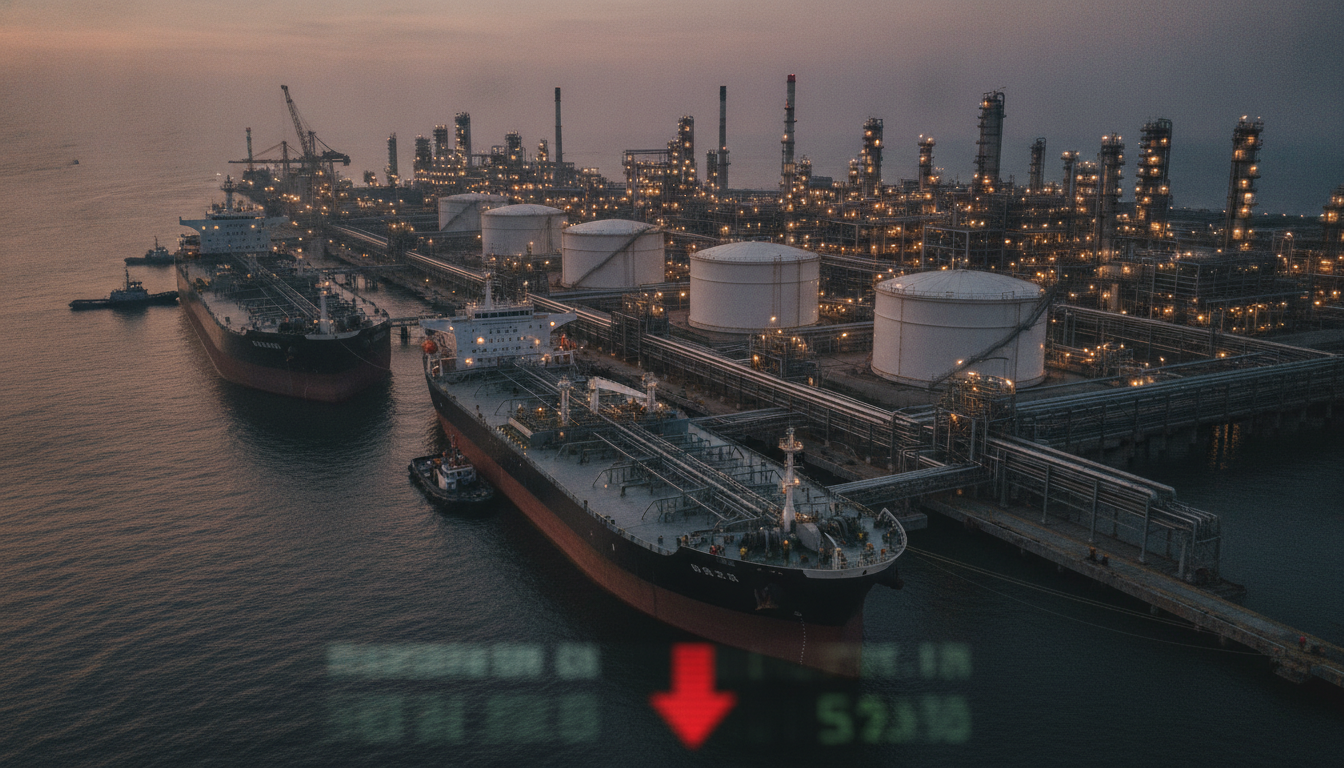
Market Arbitrage: Chinese Refiners Resell Middle Eastern Crude as Geopolitical Tensions Drive Prices Up
The global oil market is currently witnessing a shrewd maneuver by Chinese refiners, who are capitalizing on heightened geopolitical tensions in the Middle East by reselling crude oil originally purchased at lower prices. Reports indicate these firms are offloading Middle Eastern crude, already en route from the Persian Gulf, to buyers in South Korea and Taiwan, aiming to profit from the recent surge in benchmark prices. This strategic arbitrage highlights the dynamic interplay between geopolitical instability and energy commodity trading.
Shipments, including grades like Upper Zakum from the United Arab Emirates, are being offered for prompt delivery, potentially as early as this month. This proactive reselling strategy underscores the opportunistic nature of sophisticated market players who are quick to exploit price differentials stemming from supply chain uncertainties. The oil, having cleared the Gulf region, provides an attractive proposition for buyers seeking immediate supplies amidst a volatile pricing environment.
Profiting from Volatility: A $6 Premium Strategy
The financial mechanics behind this arbitrage are compelling for investors monitoring the Asian crude market. Market sources reveal that these Middle Eastern cargoes are being offered at a significant premium of $6 per barrel above the Dubai benchmark on a delivered-to-Asia basis. Crucially, many of these barrels were initially secured by Chinese entities at prices roughly at parity with the same Dubai benchmark through competitive tenders. This creates a substantial profit margin for the reselling firms, illustrating a well-executed strategy to benefit from rapid market shifts.
This substantial $6 per barrel premium represents a clear financial incentive driving the resale. Investors should recognize this move as a direct response to the market’s re-pricing of risk following escalations in the Middle East. The ability to lock in such a margin on pre-purchased crude underscores the agility and market acumen of these Chinese refiners, turning regional instability into a tangible financial gain.
Geopolitical Risks Reshape Crude Flows and Pricing
The impetus for these soaring crude prices lies squarely in the intensifying geopolitical landscape of the Middle East. Over the past week, escalating tensions between the United States and Iran have visibly disrupted traditional flows within the Persian Gulf, leading to a noticeable collapse in traffic through the critical Strait of Hormuz. This maritime choke point, essential for a significant portion of global oil transit, instantly injects a risk premium into crude pricing.
Adding to this instability, threats from Houthi militants have placed Saudi Arabian crude exports via the Red Sea at considerable risk. The dual pressure points of the Strait of Hormuz and the Red Sea introduce severe uncertainty into supply assurances from the region, directly translating into higher crude benchmarks. For investors, these developments signal sustained volatility and the potential for further price appreciation as global supply concerns mount, impacting refiner margins and shipping costs globally.
Strategic Replacements: The Shift Towards Russian ESPO Crude
While reselling Middle Eastern crude at a premium, Chinese refiners are simultaneously executing a shrewd replacement strategy. They are widely expected to backfill their domestic processing needs with Russian oil, particularly grades like ESPO, which offer a significantly cheaper alternative on a delivered basis. This strategic pivot further enhances the overall profitability of their market maneuver, effectively monetizing the Middle Eastern premium while securing more economical feedstock for their refineries.
The preference for Russian ESPO crude highlights evolving global oil trade dynamics, where economic incentives often override traditional sourcing patterns. Russia continues to provide attractive pricing for its crude, a factor that Chinese refiners are clearly leveraging to optimize their procurement costs and maximize margins. This dual strategy of selling high and buying low is a testament to the sophisticated risk management and trading capabilities within China’s vast energy sector.
Key Players Driving Market Activity
A closer look at the Chinese entities involved reveals some of the industry’s most prominent names. State-owned giants like Unipec, the trading arm of Sinopec, along with Cnooc Ltd., and independent powerhouse Shenghong Petrochemical Group Co., were among the initial buyers who secured cheap crude cargoes from the UAE in previous tenders. These firms are now at the forefront of the resale activity, showcasing their dominant role in shaping Asian crude market dynamics.
Evidence of this active trading was observed on S&P Global Energy unit Platts’ key crude trading window, where companies including Unipec and Shenghong engaged in selling activity. This public display of market participation by leading Chinese refiners underscores their strategic positioning and capacity to influence regional pricing and supply flows. Investors should pay close attention to the trading patterns of these major players as they navigate global energy market volatility.
Investment Outlook: Navigating Asian Crude Market Volatility
The current market landscape, characterized by Chinese refiners actively arbitraging Middle Eastern crude, presents a complex yet fascinating picture for oil and gas investors. This situation not only highlights the immediate profit-taking opportunities but also signals a fundamental recalibration of supply chains and pricing structures in Asia. The willingness of major players to pay a significant premium for immediate barrels underscores underlying supply anxieties, while the strategic shift towards Russian crude points to long-term recalibrations in global energy alliances.
For investors, understanding these market mechanisms is paramount. The continued impact of geopolitical events on crude benchmarks, the effectiveness of arbitrage strategies by large trading houses, and the evolving role of different crude suppliers in the Asian market will be key determinants of future profitability. The agility of Chinese refiners in adapting their procurement and sales strategies offers valuable insights into managing commodity risk and identifying value in an increasingly interconnected and volatile global energy economy.


