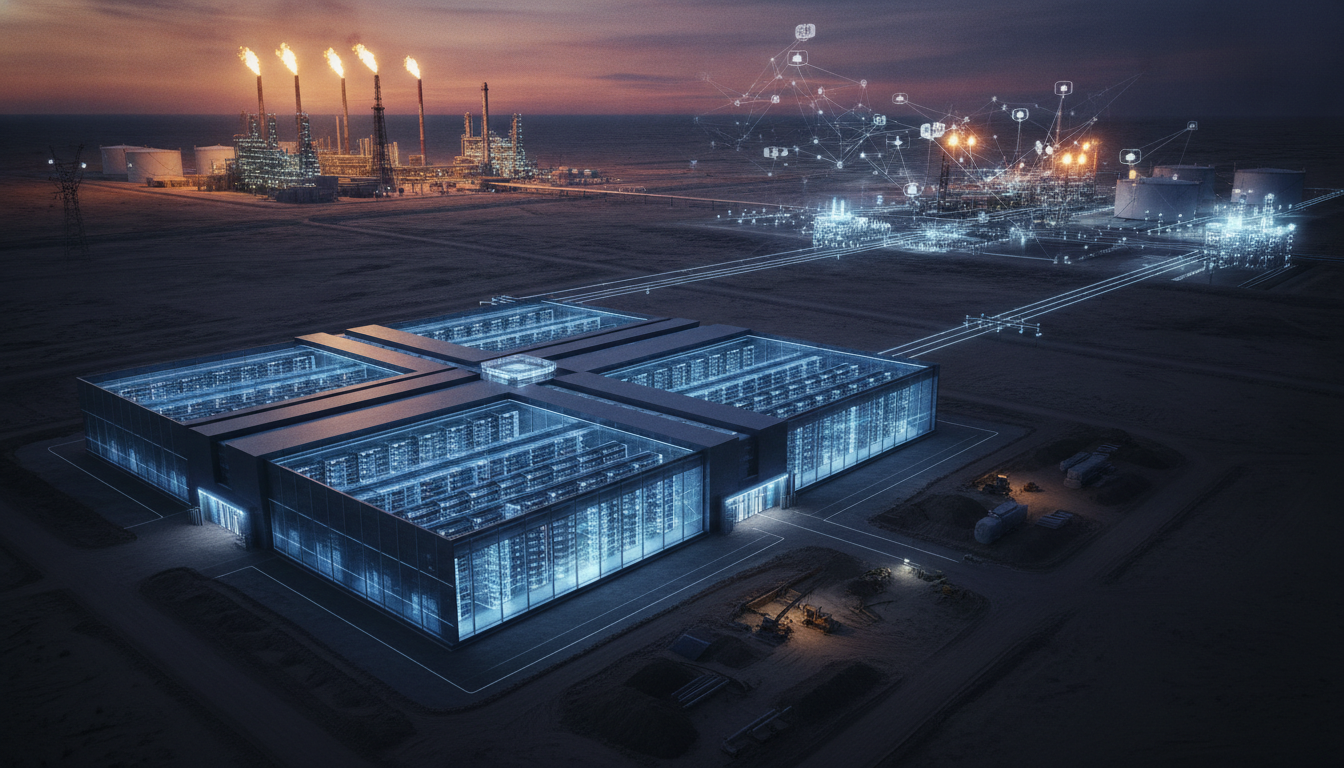
The relentless expansion of artificial intelligence infrastructure is poised to usher in a new era of unprecedented energy demand, and investors in the oil and gas sector must closely monitor these emerging trends. OpenAI, the developer behind ChatGPT, has unveiled colossal plans for a data center campus in rural Effingham County, Georgia, a strategic move that underscores the escalating energy needs of the AI revolution and the complex challenges of scaling such mega-projects.
Dubbed “Project Camellia,” this ambitious undertaking represents an investment of at least $20 billion, earmarked for an expansive facility just outside Savannah. The sheer scale of this project alone makes it a critical point of interest for energy market observers, signaling sustained, long-term capital deployment into energy-intensive infrastructure. What truly captures attention, however, is its staggering projected power requirement: a massive 3.2 gigawatts (GW). For context, this single data center’s demand could rival the output of multiple large-scale power plants, directly impacting regional electricity grids and, by extension, the demand for primary energy sources.
AI’s Insatiable Thirst: What 3.2 GW Means for Energy Markets
The 3.2 GW power demand for Project Camellia is not merely a technical specification; it is a profound indicator of the future trajectory for energy consumption. Such an immense requirement necessitates significant investment in new power generation capacity, transmission infrastructure, and grid enhancements. For natural gas investors, this translates into potentially increased demand for gas-fired power generation, especially in regions with robust pipeline infrastructure like Georgia, as utilities strive to meet rapidly accelerating industrial loads.
OpenAI has already secured a crucial agreement with Georgia Power to deliver electricity to its 1,400-acre campus. This phased delivery, scheduled between 2028 and 2032, provides a clear timeline for energy investors to anticipate a substantial ramp-up in regional power demand. The utility’s strategy for meeting this load—whether through new gas-fired plants, increased renewable integration, or a combination—will have direct implications for commodity markets and the broader energy supply chain.
Moreover, the energy intensity of AI data centers is fueling a global race to develop new power sources. While renewables are often a preferred long-term solution, the intermittency of solar and wind often requires reliable baseload generation, a role frequently filled by natural gas. Thus, the growth of AI could inadvertently underpin continued strong demand for natural gas as a reliable, dispatchable energy source supporting grid stability amidst massive new load additions.
Navigating the Social License Landscape: Lessons for Energy Investors
OpenAI’s proactive engagement strategy in Effingham County offers valuable insights for oil and gas investors navigating an increasingly scrutinized landscape for large industrial projects. Acknowledging widespread opposition to data centers across the U.S., OpenAI began discussions with state and local officials, community leaders, and schools well ahead of its public announcement. This approach aims to build trust early, a critical component for securing what the energy sector terms “social license to operate.”
The company’s detailed four-point pledge directly addresses common concerns that have stalled similar projects elsewhere. This includes a commitment that local residents will not face higher electricity bills, with OpenAI vowing to cover the full cost of infrastructure and service. They also assert “minimal” water usage through a closed-loop system, a claim that resonates with environmental stewardship efforts across all heavy industries, including O&G. For investors, these commitments highlight the rising bar for environmental and community engagement, indicating that the true cost of project development now incorporates significant social capital investments and risk mitigation strategies.
This strategic community outreach is not unique to AI. The oil and gas industry has long contended with local opposition to pipelines, drilling operations, and processing facilities. OpenAI’s experience mirrors the increasing difficulty of greenlighting any large-scale infrastructure project without robust community backing. Recent statistics underline this challenge: over 75 data center proposals, valued at an estimated $130 billion, faced delays or outright blockages in the first three months of a recent year due to local opposition. This widespread pushback, echoed by over 430 local Facebook groups dedicated to fighting AI data centers, suggests that even cutting-edge technology ventures are subject to the same local hurdles that impact traditional energy projects. New York’s recent statewide moratorium on large-scale data centers further exemplifies this growing regulatory and public scrutiny.
Economic Impact and Future Projections for Energy Demand
Beyond the direct energy implications, Project Camellia promises significant economic benefits, including thousands of construction jobs and more than 1,000 permanent operational roles upon full build-out. This economic stimulus is often a key selling point for large infrastructure projects, providing tangible local advantages that can help overcome resistance. For energy service companies and related industries, these projects represent new avenues for growth and contracting opportunities.
OpenAI’s intention to be one of the first data centers designed to “proactively reduce its power consumption before residential customers are impacted during periods of high demand” showcases an evolving approach to large-scale energy management. This commitment implies sophisticated demand-side management capabilities, potentially incorporating battery storage or advanced grid control systems, areas of growing interest for energy tech investors. The company’s pledge of $80 million in community benefits, alongside $71 million in AI coding tool credits for eligible Georgia students, further solidifies its local integration strategy.
In conclusion, the emergence of AI mega-projects like Project Camellia serves as a powerful testament to the transformative, and energy-intensive, future that lies ahead. For investors focused on oil, gas, and the broader energy landscape, these developments are not merely technological curiosities but critical drivers of future demand. They underscore the need for continued investment in robust, reliable power generation and transmission infrastructure, creating both challenges and unparalleled opportunities across the entire energy value chain. The race to power AI will undeniably reshape energy markets for decades to come, demanding vigilance and strategic positioning from astute energy investors.


