TGS Unleashes Advanced Seismic Power to Transform Newfoundland & Labrador Offshore Investment Landscape
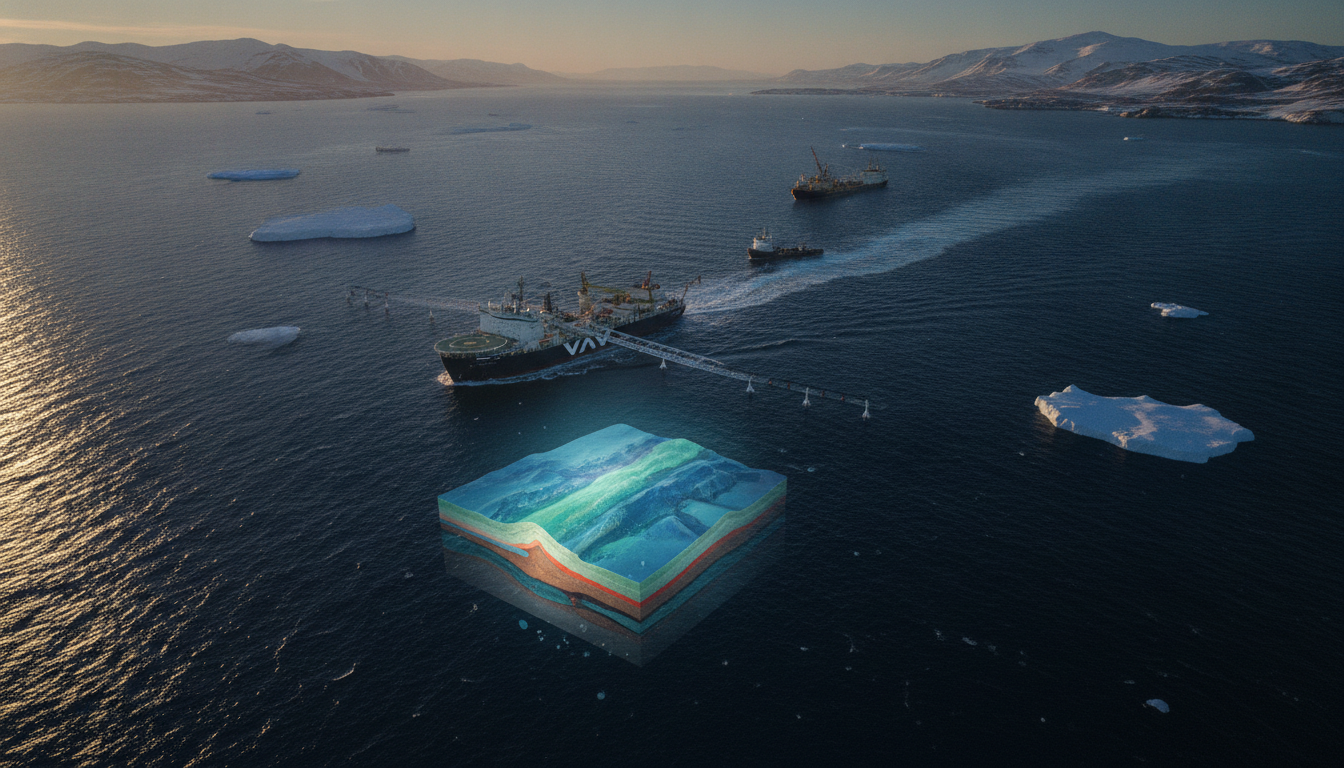
Oil and gas investors are keenly monitoring developments in the world’s most promising frontier basins, and the offshore Newfoundland and Labrador region in the North Atlantic stands out as a critical area for future hydrocarbon production. A significant step forward in de-risking and enhancing exploration opportunities in this vital basin has been announced by TGS, a global leader in energy data and intelligence. The company has officially commenced Phase 2 of its ambitious Orphan3D pre-stack depth migration (PSDM) reprocessing project, a massive undertaking set to upgrade an impressive 13,300 square kilometers of existing 3D seismic data.
This substantial investment by TGS signals a renewed commitment to unlocking the full potential of Newfoundland and Labrador’s deepwater plays. For exploration and production (E&P) companies, and by extension, their shareholders, the availability of high-fidelity subsurface data is paramount. It directly impacts drilling success rates, reduces geological uncertainty, and optimizes capital allocation in high-stakes offshore ventures. This project is not merely an incremental improvement; it represents a significant leap in imaging capabilities that will redefine how operators approach exploration and prospect evaluation in this prolific basin.
Revolutionizing Subsurface Intelligence with Cutting-Edge Technology
At the heart of TGS’s Orphan3D Phase 2 project lies the application of the industry’s most advanced depth imaging technologies. Investors need to understand the technical prowess behind this initiative. Key among these are sophisticated Full Waveform Inversion (FWI) techniques and TGS’s proprietary imaging workflows. These methodologies are designed to deliver unparalleled clarity of the subsurface, moving beyond conventional imaging to provide a more accurate and detailed geological picture. FWI, in particular, utilizes the full waveform of seismic data to build highly precise velocity models, dramatically improving the accuracy of depth positioning for structures and reservoirs.
The immediate benefits of integrating these advanced technologies are multi-fold for E&P companies scrutinizing investment opportunities. Improved subsurface imaging will lead to superior structural definition, enabling geoscientists to more accurately map traps and identify potential hydrocarbon accumulations. Furthermore, enhanced reservoir characterization will provide a clearer understanding of reservoir properties, such as porosity and permeability, before a drill bit ever touches the seabed. This level of geological insight is invaluable, translating directly into reduced exploration risk and more targeted, cost-effective drilling campaigns. For investors, this means a higher probability of commercial success for exploration wells drilled within the reprocessed area.
Targeting High-Potential Exploration Intervals and Future Licensing Rounds
TGS has strategically focused this reprocessing effort on critical Cretaceous and Jurassic exploration intervals, geological epochs known globally for hosting significant hydrocarbon resources. These intervals within the Newfoundland and Labrador basin hold substantial promise, exhibiting diverse structural and stratigraphic play types. The upgraded products from the Orphan3D project are expected to provide the granular detail necessary for more robust geological interpretations, empowering exploration companies to confidently evaluate opportunities across these varied play types, from large structural closures to subtle stratigraphic traps.
This project extends TGS’s long-standing strategic investment in the offshore Newfoundland and Labrador region, reinforcing its position as a key enabler of exploration. Critically, the initiative benefits from robust industry funding, underscoring the collective confidence in the basin’s potential and the imperative for superior data. The expectation is that this reprocessed dataset will serve as a powerful catalyst, sustaining and amplifying exploration interest and directly supporting future licensing activities in the region. For governments, this means a more attractive investment climate; for E&P companies, it means a clearer path to securing acreage with demonstrable prospectivity.
Leadership Vision and Timelines for Investor Planning
Kristian Johansen, CEO of TGS, articulated the company’s strategic vision, stating, “TGS remains committed to supporting exploration offshore Newfoundland and Labrador through continued investment in high-quality subsurface data. Working alongside industry and regional stakeholders, we are helping deliver the geoscience insights needed to attract investment, advance prospect evaluation and support the region’s long-term exploration success.” This statement underscores a collaborative approach, positioning TGS not just as a data provider, but as a strategic partner in the region’s energy future.
For investors and E&P strategists, timing is always crucial. TGS has provided a clear roadmap for data availability, enabling companies to factor these new insights into their future exploration plans. Early products from this sophisticated reprocessing program are anticipated to become available in 2027. The delivery of final migrated volumes, representing the complete, high-resolution dataset, is scheduled for the third quarter of 2027. This timeline allows exploration teams to integrate the superior data into their workflows well in advance of potential future bidding rounds or drilling campaigns, optimizing their strategic advantage.
In conclusion, TGS’s Phase 2 Orphan3D reprocessing project offshore Newfoundland and Labrador is more than a technical upgrade; it’s a strategic move designed to significantly enhance the investment appeal of one of the North Atlantic’s most prospective hydrocarbon provinces. By deploying cutting-edge seismic imaging and committing to timely data delivery, TGS is directly facilitating more informed investment decisions, lowering exploration risk, and paving the way for sustained, successful energy development in the region. This initiative represents a compelling opportunity for E&P companies to leverage superior data for competitive advantage and for investors to capitalize on the de-risked potential of Newfoundland and Labrador.


