Escalating Maritime Tensions Threaten Global Oil Supply and Drive Investor Uncertainty
Global energy investors are confronting a rapidly intensifying risk landscape as geopolitical tensions in key Middle Eastern maritime corridors escalate. Warnings from a U.S. Navy-led security group indicate Houthi militants in Yemen have completed preparations to target commercial shipping in the strategically vital Bab el-Mandeb Strait, while Iran simultaneously ramps up aggression in the Strait of Hormuz. This dual threat scenario introduces profound uncertainty into global oil markets, potentially impacting crude prices, shipping costs, and the stability of energy supply chains.
The Bab el-Mandeb: A New Front in Maritime Risk
The Joint Maritime Information Center (JMIC), a Bahrain-headquartered body providing crucial security updates to commercial vessels in the Middle East, has issued a stark warning regarding the Bab el-Mandeb Strait. According to the JMIC, intelligence sources close to the Houthi movement confirm their readiness to launch attacks, including the deployment of missiles and drones in close proximity to this narrow chokepoint. The Bab el-Mandeb is an indispensable maritime artery, linking the Red Sea directly to the Gulf of Aden, the Arabian Sea, and subsequently to global markets, making any disruption here a major concern for investors monitoring crude flows.
Houthi leadership has a history of threatening to close the Bab el-Mandeb during periods of heightened U.S.-Iran friction. Their recent declaration of a maritime embargo against Saudi Arabia on Monday underscores the gravity of the situation. This bold move explicitly targets the kingdom’s Red Sea oil exports, which have become an increasingly critical pressure release valve for global markets, especially as Iran’s own actions destabilize the Strait of Hormuz.
Saudi Arabia’s Strategic Diversion Under Threat
For years, Saudi Arabia has strategically utilized a pipeline connecting its eastern oil fields to the Yanbu terminal on the Red Sea, enabling it to bypass the Strait of Hormuz for a significant portion of its crude exports. This alternative route has been instrumental in safeguarding its supply reliability. Recent data from maritime intelligence firm Kpler highlights the increasing importance of this path: exports from Yanbu via the Bab el-Mandeb soared to an astonishing 3.5 million barrels per day in June, a dramatic increase compared to just 240,000 barrels per day during the same period last year. The Houthis’ explicit targeting of these vital exports puts a direct and substantial portion of global oil supply at risk.
While the JMIC initially assessed the threat to ships in the southern Red Sea and Bab el-Mandeb as “moderate,” noting that commercial traffic had continued without reported attacks in the two days following the embargo declaration, other intelligence providers paint a more immediate picture of commercial cautiousness. Kpler, a leading ship tracking firm, reported a significant 34% decline in traffic through the Bab el-Mandeb on Tuesday alone, compared to the previous day when the Houthi embargo was announced. Further corroborating this market reaction, maritime intelligence company Windward confirmed that four tankers carrying Saudi cargo – a combined 3.8 million barrels of crude oil, gasoil, and naphtha – altered course and turned around before reaching the Bab el-Mandeb on Tuesday, indicating a tangible impact on shipping behavior and market sentiment.
Hormuz: The Persistent, Intensifying Pressure Point
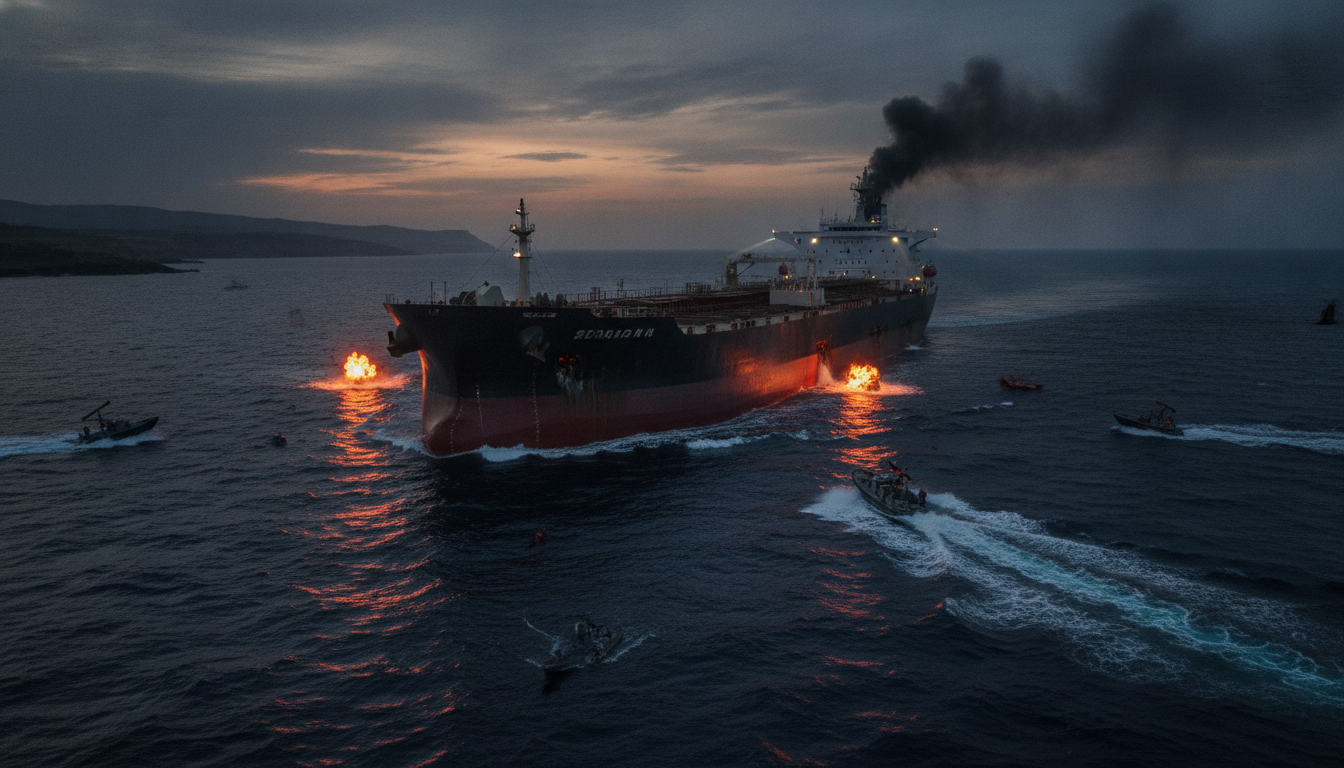
Compounding the Bab el-Mandeb threat, Iran has simultaneously intensified its campaign against tankers in the Strait of Hormuz. This critical waterway, through which approximately one-fifth of the world’s oil transits, has witnessed a deliberate escalation of Iranian aggression. Recent incidents include attacks on three crude oil, refined products, and chemical tankers off the coasts of Oman and the United Arab Emirates this week. These latest actions contribute to a disturbing pattern; according to the International Maritime Organization, a United Nations agency, a total of a dozen ships have been subjected to attacks in and around Hormuz since July 6, resulting in the tragic deaths of two seafarers and more than a dozen injuries. Iran’s clear objective appears to be forcing commercial vessels to navigate through its territorial waters, asserting control and increasing its leverage over global energy flows.
Investment Implications: Heightened Volatility and Supply Premiums
For energy investors, this escalating two-front maritime crisis translates directly into heightened market volatility and an increased geopolitical risk premium on crude oil prices. The strategic convergence of threats against both the Strait of Hormuz and the Bab el-Mandeb implies that there are fewer viable alternative shipping routes for a significant portion of the world’s oil supply. Any successful interdiction at either chokepoint could trigger substantial supply disruptions, driving up Brent and WTI benchmarks, increasing insurance costs for tankers, and introducing severe logistical challenges for global energy companies.
Investors must closely monitor diplomatic efforts, any potential military responses from international coalitions, and the immediate shipping data emerging from these critical regions. The direct targeting of Saudi exports through the Red Sea pipeline is particularly concerning, as it removes a crucial element of flexibility that Saudi Arabia has relied upon to maintain export stability. The current environment demands a comprehensive understanding of the intricate links between geopolitical tensions, maritime security, and the fundamental dynamics of global oil supply and demand.
Conclusion: A Precarious Future for Global Oil Security
The simultaneous threats to the Bab el-Mandeb and the persistent aggression in the Strait of Hormuz paint a precarious picture for global oil security. This confluence of risks from key Middle Eastern actors underscores the fragile nature of international energy flows and the constant need for vigilance. As Houthi militants prepare for action and Iran continues its assertive stance, the global energy market stares down an unpredictable future, where the stability of vital maritime chokepoints directly dictates the health of the world’s economy and the profitability of oil and gas investments.