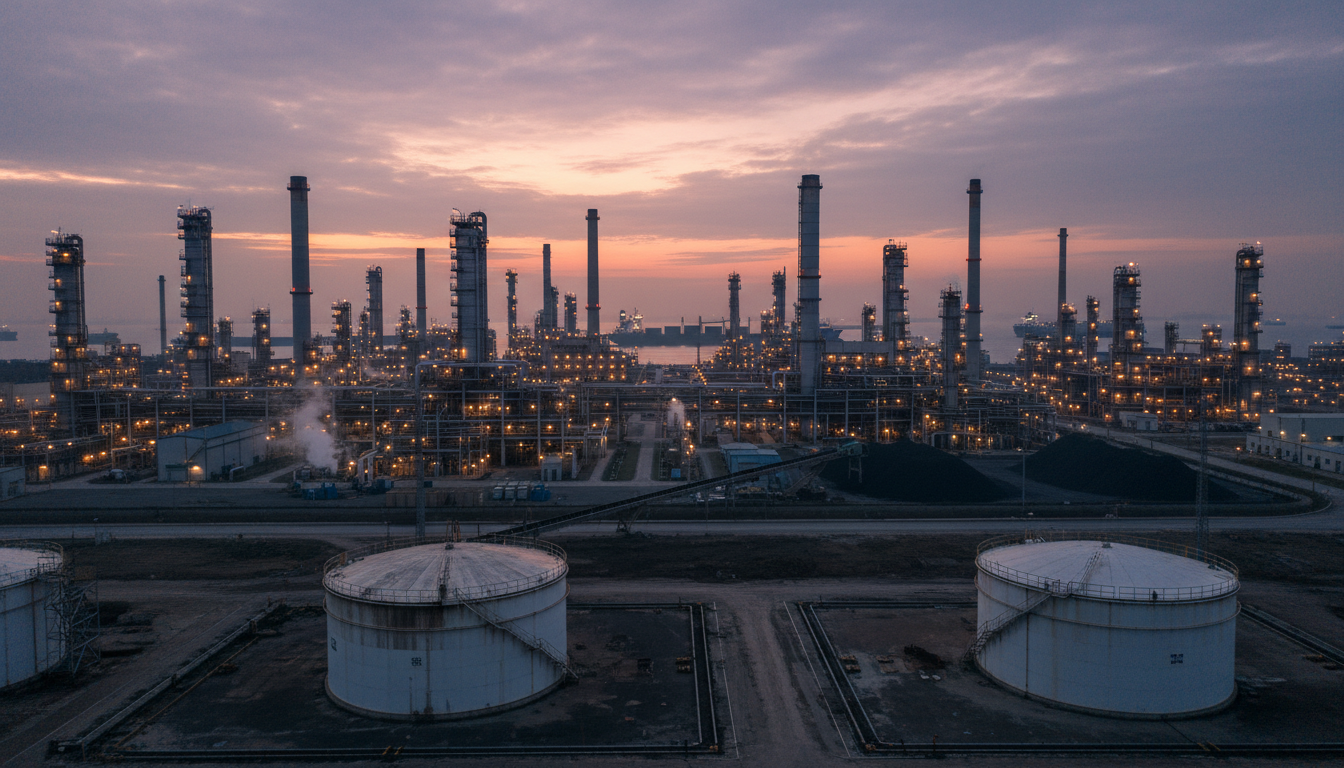
The geopolitical tremors emanating from the Strait of Hormuz are reverberating throughout the global energy landscape, acutely impacting Asia’s colossal oil demand centers. China’s independent refining sector, often referred to as “teapots,” now faces an unprecedented financial squeeze, forcing them to curtail production despite explicit government directives. This critical development signals escalating stress in the world’s largest oil consumer market, with significant implications for global petroleum product supply and investor sentiment in the energy sector.
Independent Refiners Under Immense Financial Pressure
In Shandong province, the heartland of China’s independent refining capacity, average operating rates have plummeted. Industry sources indicate a decline to approximately 50%, a notable drop from the 55% observed just last month in April. This reduction is a direct consequence of severely compressed margins and a noticeable weakening in demand for refined products. As the ongoing conflict continues to disrupt crucial shipping lanes, the financial viability of these processors deteriorates further, with analysts estimating substantial losses ranging between $74 and $88 for every ton of crude oil processed. This represents a significant erosion of profitability, pushing many operations into an unsustainable financial territory.
The “teapot” refineries are a vital component of China’s energy matrix, collectively contributing substantially to the nation’s gasoline and diesel supply. Their current predicament underscores a critical vulnerability in the supply chain. Investors tracking the downstream sector must recognize that such steep operational losses cannot be absorbed indefinitely, forcing these enterprises to make difficult decisions that prioritize financial survival over regulatory compliance. The downward trajectory of operating rates suggests a broader malaise, pointing to potential further cuts as market conditions show little sign of immediate improvement.
Navigating Beijing’s Mandate: Profit vs. Policy
Adding another layer of complexity to the refiners’ dilemma is the stringent oversight from Chinese authorities. Earlier pronouncements from Beijing reportedly mandated private refiners to maintain high levels of gasoline and diesel supply, even if it meant operating at a loss. The explicit warning: any reduction in run rates could lead to a slashing of their crude import quotas. These coveted quotas, issued quarterly or semi-annually, are essential for securing raw material supplies and are a lifeline for these refiners. To risk such penalties signals the extreme duress faced by these companies.
Despite the long-term threat to their crude import allocations, it has become apparent that the financial strain has reached a breaking point. Market observations suggest that independent refiners are now electing to cut output, effectively prioritizing the mitigation of immediate, unbearable losses over the potential future forfeiture of import quotas. This strategic shift highlights the severe financial pressure on these players and their stark acknowledgment that sustained operations at current loss levels are simply unfeasible. This challenging choice creates a precarious balance between governmental energy security mandates and commercial profitability, a dynamic energy investors must closely monitor.
Asia’s Vulnerability Amidst Supply Chokeholds
The broader Asian continent, representing the world’s largest collective oil demand center, is experiencing the most acute impacts of the Strait of Hormuz’s paralysis. This critical maritime choke point, through which a significant portion of global oil trade transits, is indispensable for the region’s energy security. Asia’s profound dependency on Middle Eastern crude—accounting for approximately 65% of its total oil imports—exacerbates its vulnerability to any disruptions in this vital waterway. Such extensive reliance means that instability in the Persian Gulf has immediate and far-reaching consequences across the continent.
Early projections for April suggest that the conflict’s ripple effects could compel crude oil run cuts totaling an staggering 6 million barrels per day (bpd) across Asian refineries. This colossal reduction in processing capacity reflects severe supply chain disruptions and the inherent challenges in rerouting or substituting crude volumes on such a massive scale. For global energy markets, a cut of this magnitude in refining activity within Asia would inevitably tighten product markets, likely driving up prices for gasoline, diesel, and other essential petroleum products, impacting economies worldwide.
China’s Strategic Reserves: A Limited Shield
While China finds itself at the epicenter of Asia’s refining woes, it possesses a notable strategic advantage compared to its regional counterparts: a substantial crude oil stockpile. Accumulated diligently over recent years, this reserve is estimated to hold approximately a billion barrels of crude. This impressive strategic petroleum reserve (SPR) offers a critical supply cushion, providing China with a degree of insulation from immediate and severe supply shocks that might otherwise cripple its economy.
However, even a reserve of this scale has its limitations. The Chinese government is currently engaged in a delicate balancing act: drawing upon these strategic reserves to ensure a steady supply to the domestic market and avert sharp price spikes, while simultaneously conserving a critical resource for potential prolonged disruptions. Investors should recognize that while this stockpile buys time, it is not an inexhaustible solution. A sustained closure or severe disruption in the Strait of Hormuz would eventually diminish even China’s substantial reserves, ultimately exposing the nation to the full force of global supply constraints and higher international crude prices.
Investment Outlook: Shifting Sands in Global Energy Markets
The evolving situation in China’s refining sector, driven by geopolitical instability and domestic policy dilemmas, presents a complex picture for energy investors. The forced production cuts by independent refiners, coupled with significant financial losses, signal heightened operational risks in the downstream segment. While China’s strategic reserves offer temporary relief, the long-term implications of sustained regional supply disruptions and the potential for a global tightening in refined product markets cannot be overstated.
Market participants should closely monitor crude oil price differentials, refinery crack spreads, and inventory levels for refined products across Asia. The interplay between government intervention, commercial viability, and geopolitical events will continue to shape investment opportunities and risks within the global oil and gas value chain. Companies with diversified supply chains, robust balance sheets, and flexible refining capabilities may be better positioned to navigate these turbulent waters, while those heavily exposed to specific regional vulnerabilities or less resilient financial structures could face significant headwinds. This period demands a vigilant and adaptive investment strategy in the energy sector.


