India’s Western Powerhouse Accelerates Grid Transformation with Massive Battery Storage Deployment
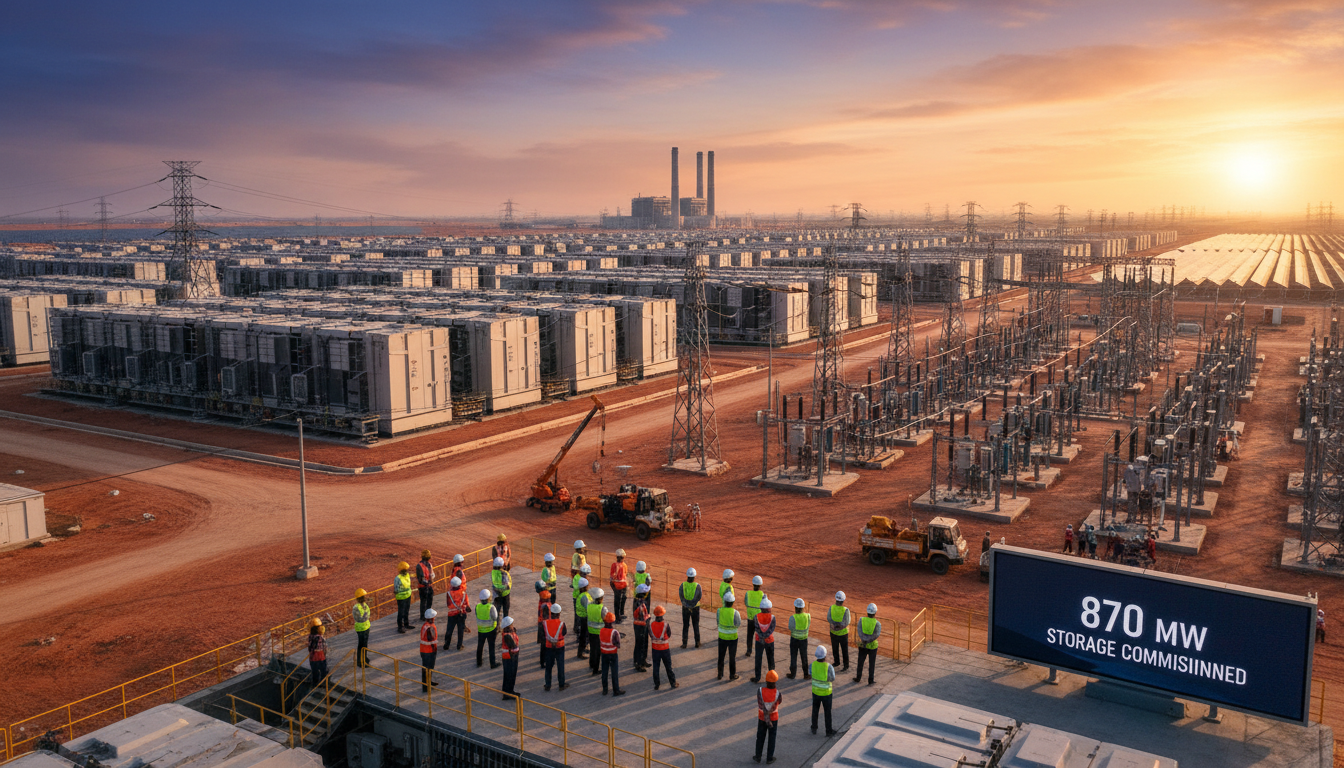
India’s dynamic energy landscape is witnessing a profound shift, with the state of Gujarat spearheading an ambitious rollout of battery energy storage systems (BESS). This strategic infrastructure development, now totaling an impressive 870 megawatts (MW) across five operational sites, marks a significant stride towards fortifying renewable energy integration and bolstering grid stability. For investors closely monitoring global energy transitions, Gujarat’s aggressive posture provides a compelling indicator of India’s commitment to modernizing its power infrastructure and securing its energy future.
This substantial deployment forms a critical pillar of Prime Minister Narendra Modi’s overarching national vision: achieving a monumental 500 gigawatts (GW) of non-fossil fuel power capacity by the close of the decade. Such a target necessitates not only massive renewable generation but also robust, flexible storage solutions to manage intermittency and ensure reliable supply. Gujarat’s actions demonstrate a clear, actionable roadmap for fulfilling this national ambition, positioning the state as a crucial proving ground for scalable energy storage technologies.
Strategic Investment in Future Energy Security
Beyond the currently operational facilities, the state has already registered an additional 13 battery storage projects. These future installations are strategically dispersed across key districts including Ahmedabad, Gandhinagar, Banaskantha, Patan, and Kutch, signaling a comprehensive, state-wide commitment to energy independence and resilience. This expansive pipeline underscores a long-term investment strategy aimed at creating a decentralized yet integrated energy network capable of supporting sustained economic growth.
Recent progress includes the successful commissioning of a new BESS facility at Charal, located within Ahmedabad district’s Sanand taluka. This new asset complements four existing systems already contributing to the grid at Modhera in Mehsana district and Lakhpat in Kutch. Such rapid execution highlights the governmental and industrial capacity to deploy advanced energy solutions efficiently. Furthermore, Gujarat’s forward-thinking approach is enshrined in its Gujarat Integrated Renewable Energy Policy, 2025, which actively fosters the development of advanced energy storage infrastructure. This policy framework facilitates approvals for both standalone battery projects and systems seamlessly integrated with new and existing renewable energy generation sites, creating a fertile environment for sustained investment and innovation.
Unlocking Commercial and Industrial Opportunities in Energy Storage
A significant upcoming development poised to reshape local energy markets involves empowering commercial and industrial (C&I) consumers. Once standard operating procedures for registration are finalized and approved, these large-scale electricity users will gain the ability to establish their own battery storage units in conjunction with their solar and wind energy projects. This move is a game-changer, potentially decentralizing energy storage and offering C&I entities greater control over their energy costs and supply reliability.
For investors, this opens up a new segment of the energy market, fostering demand for specialized BESS solutions, installation services, and operational support. It signifies a strategic shift from a purely utility-centric grid to one that increasingly incorporates prosumers, driving innovation and competition. Companies capable of offering integrated renewable and storage solutions to the C&I sector are likely to find significant growth avenues in the coming years, mirroring similar trends observed in more mature renewable energy markets globally.
The Critical Role of Battery Energy Storage in a Volatile Energy Landscape
Battery Energy Storage Systems are not merely supplementary; they are foundational to the successful integration of intermittent renewable sources like solar and wind power. The inherent fluctuations in solar generation, peaking during daylight hours and plummeting after sunset, create significant challenges for grid operators. BESS addresses this directly by storing excess electricity generated during periods of high production and dispatching it during times of peak demand, particularly in the evening when conventional power sources often struggle to meet the surge.
Beyond load balancing, these storage systems are instrumental in reducing stress on the broader electricity grid, enhancing both voltage and frequency regulation—critical parameters for grid health and stability. Furthermore, they offer invaluable emergency backup support during unexpected disruptions, a capability that significantly elevates overall energy security and reliability. For investors evaluating the long-term viability of renewable energy portfolios, understanding the indispensable role of BESS in ensuring grid resilience is paramount.
A Framework for Scalable and Efficient Deployment
Gujarat’s strategic deployment methodology emphasizes efficiency and competitive market dynamics. Companies are being selected through a rigorous competitive bidding process, ensuring cost-effectiveness and innovation in project execution. A key operational strategy involves situating storage systems in close proximity to renewable energy generation projects. This intentional co-location significantly minimizes transmission losses, thereby maximizing the delivered energy and enhancing overall operational efficiency—a crucial factor for project profitability and grid performance.
The methodical identification of suitable locations for these BESS installations is a collaborative effort led by the Gujarat Energy Transmission Corporation (GETCO) and various power distribution companies. Their decisions are meticulously guided by detailed assessments of existing grid requirements and network capacity, ensuring that new storage assets are placed where they can deliver the most impact and value. This systematic, data-driven approach positions Gujarat, and by extension India, at the forefront of intelligent grid modernization, offering a compelling narrative for investors seeking opportunities in a rapidly evolving global energy paradigm. The commitment to building a resilient, renewable-powered future in India presents a robust case for long-term capital allocation in energy storage and associated infrastructure.


